Downloadable worksheets, booklets and classroom plans, ready to use before, during or after the visit.
Here you will find a wide variety of resources and tools designed to enrich students' learning. Our educational materials are carefully prepared and are tools for both pupils and teachers: they include activities, teaching guides and support material. Our aim is to make it easier to access useful resources that motivate and encourage learning about nature.
We are the first zoo in Spain with an itinerary adapted for people with ASD.
The documents in this library are currently in Spanish. English and French versions will be added over time.
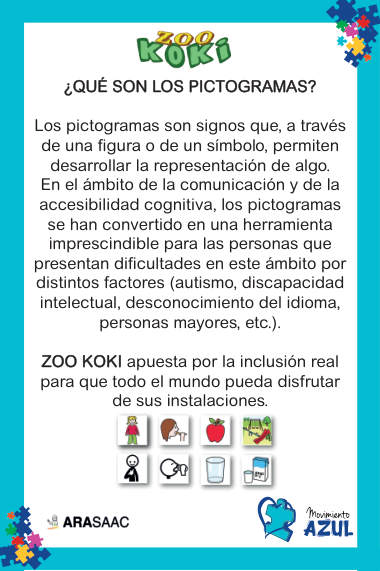 All agesWhat are pictograms?Explains what pictograms are and how they help everyone enjoy the zoo. Download PDF
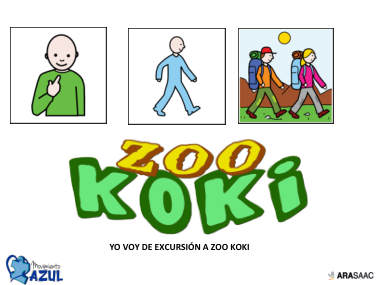 All agesAnticipation guide — full versionExplains step by step, with pictograms, what the zoo trip will be like so you can go with peace of mind. Download PDF
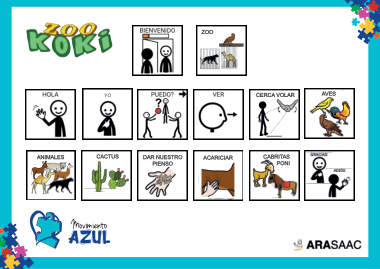 All agesAnticipation guide — simplified versionA short, highly visual version of the anticipation guide, with few sentences and pictograms. Download PDF
 All agesGuide to the zoo's animalsA tour of the zoo's animals with visual supports and pictograms. Download PDF
 Ages 6-7Exercise workbookA notebook to colour, search and match pictures and words with the zoo's animals. Download PDF
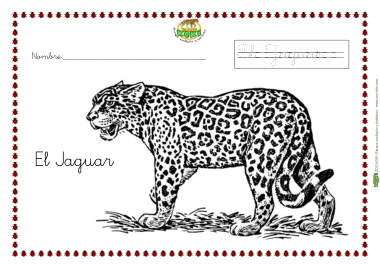 Ages 6-7Worksheet 01 — The jaguarA worksheet to colour and work with the jaguar, the zoo's big cat. Download PDF
 Ages 6-7Worksheet 02 — The zooA worksheet to draw the animal you liked best at the zoo. Download PDF
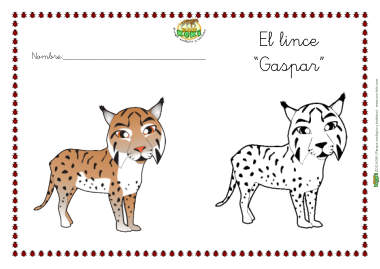 Ages 6-7Worksheet 03 — The lynx “Gaspar”A worksheet to colour and get to know the lynx “Gaspar”. Download PDF
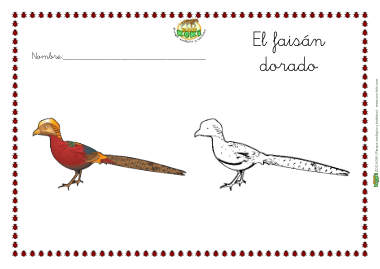 Ages 6-7Worksheet 04 — The golden pheasantA worksheet to colour and work with the golden pheasant. Download PDF
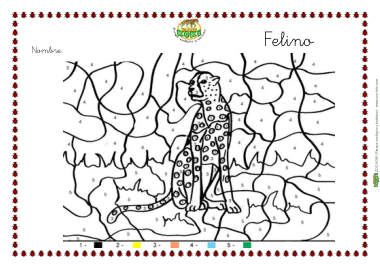 Ages 6-7Worksheet 05 — The felineA worksheet to colour and work with one of the zoo's felines. Download PDF
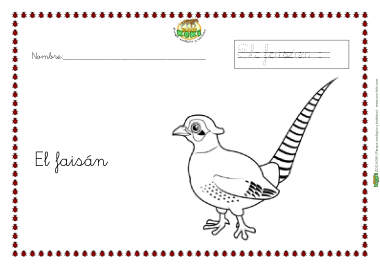 Ages 6-7Worksheet 06 — The pheasantA worksheet to colour and work with the pheasant. Download PDF
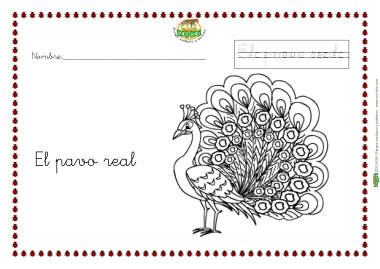 Ages 6-7Worksheet 07 — The peacockA worksheet to colour and work with the peacock. Download PDF
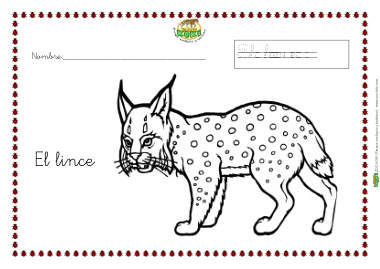 Ages 6-7Worksheet 08 — The lynxA worksheet to colour and work with the lynx. Download PDF
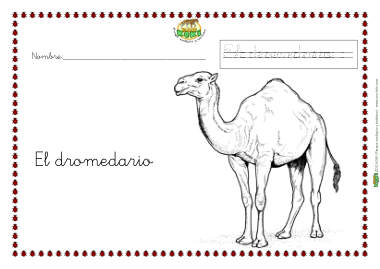 Ages 6-7Worksheet 09 — The dromedaryA worksheet to colour and work with the dromedary. Download PDF
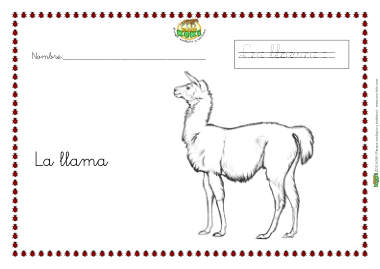 Ages 6-7Worksheet 10 — The llamaA worksheet to colour and work with the llama. Download PDF
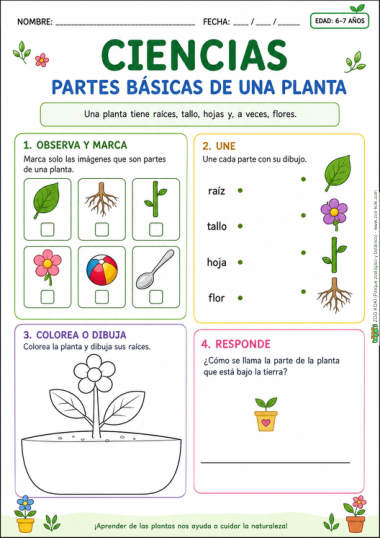 Ages 6-7Basic parts of a plantIdentify the root, stem, leaves and flowers and what each part is for. Download PDF
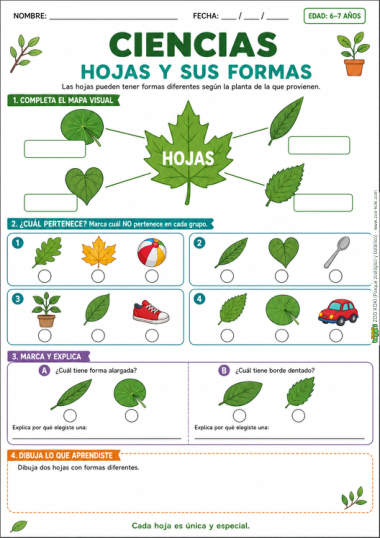 Ages 6-7Leaves and their shapesSee what leaves are like and why their shape changes from one plant to another. Download PDF
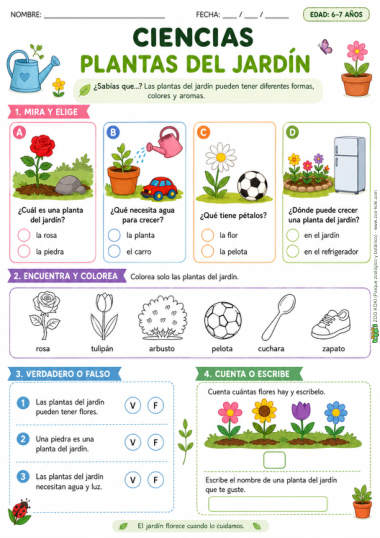 Ages 6-7Garden plantsMeet plants from the zoo's garden and learn to recognise them. Download PDF
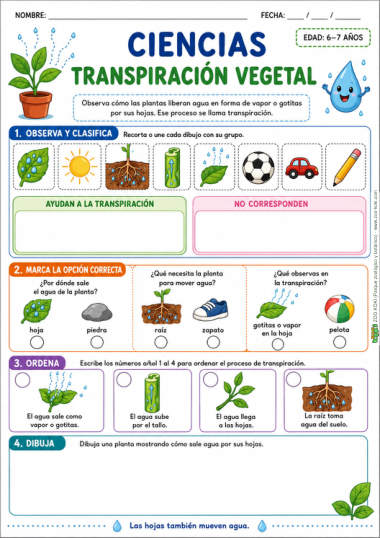 Ages 6-7Plant transpirationFind out how plants lose water through their leaves and why it matters. Download PDF
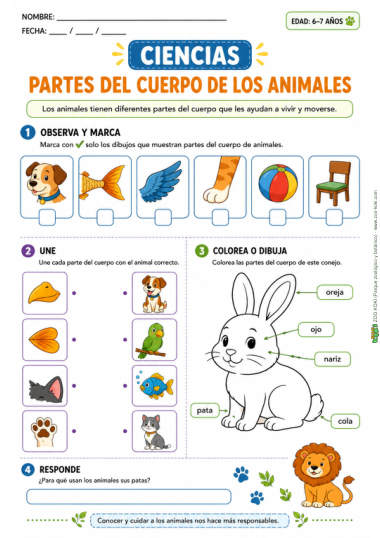 Ages 6-7Animal body partsRecognise the body parts of different animals and what each one is for. Download PDF
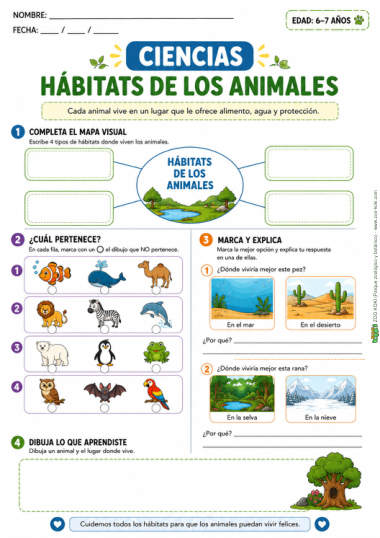 Ages 6-7Animal habitatsFind out where each animal lives and what it needs from its home to survive. Download PDF
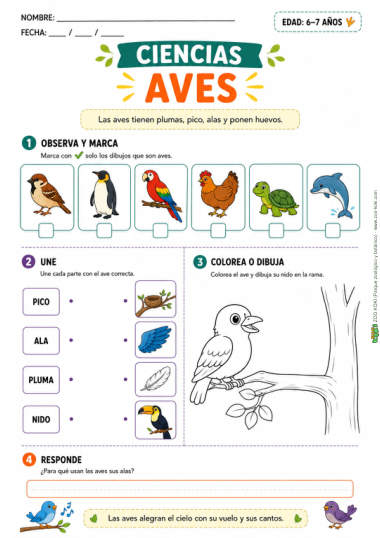 Ages 6-7AvesLearn what makes birds special: feathers, beak, eggs and flight. Download PDF
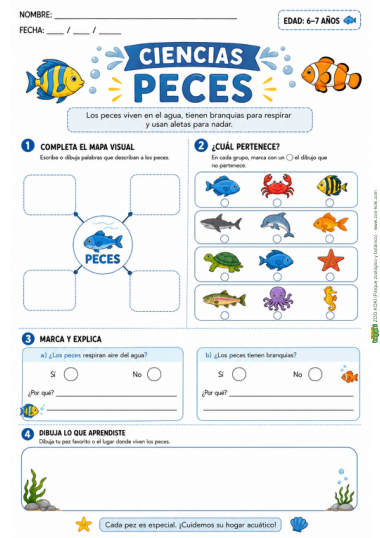 Ages 6-7FishFind out how fish live and what makes them different from other animals. Download PDF
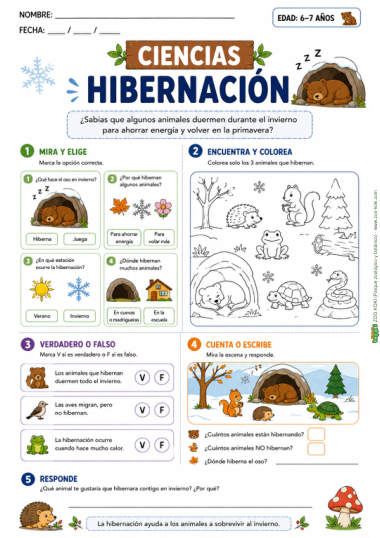 Ages 6-7HibernationUnderstand why some animals sleep through winter and how they survive the cold. Download PDF
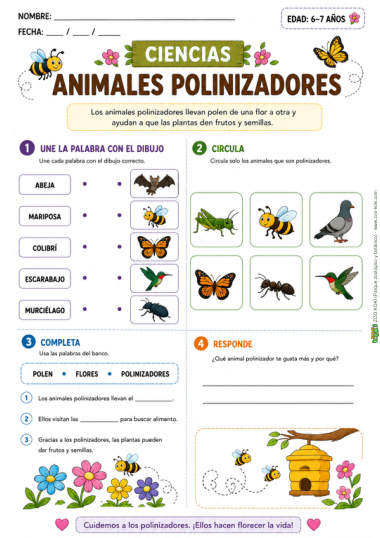 Ages 6-7Pollinating animalsFind out which animals carry pollen from flower to flower and why they are so important. Download PDF
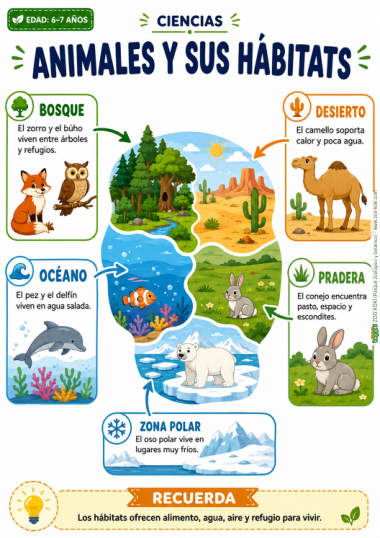 Ages 6-7Animals and their habitatsA visual map of forest, desert, ocean, grassland and polar zone with their animals. Download PDF
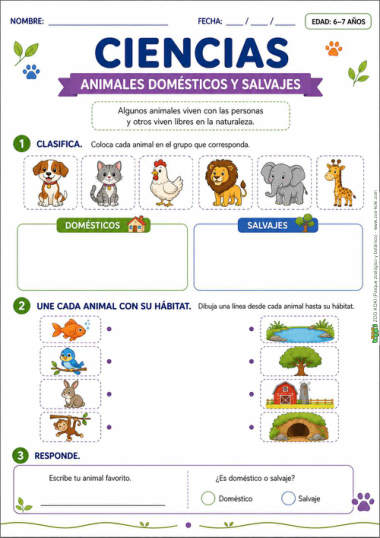 Ages 6-7Domestic and wild animalsLearn to tell domestic animals from wild ones and where each one lives. Download PDF
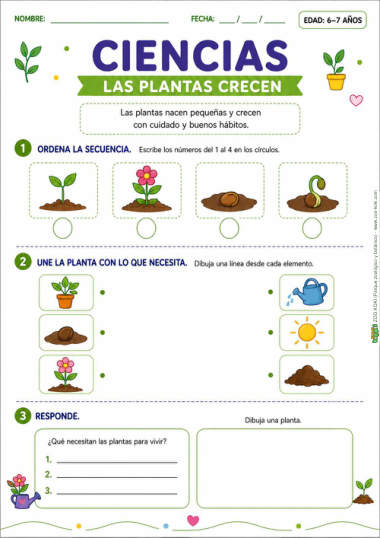 Ages 6-7Plants growPut a plant's growth in order and find out what it needs to live. Download PDF
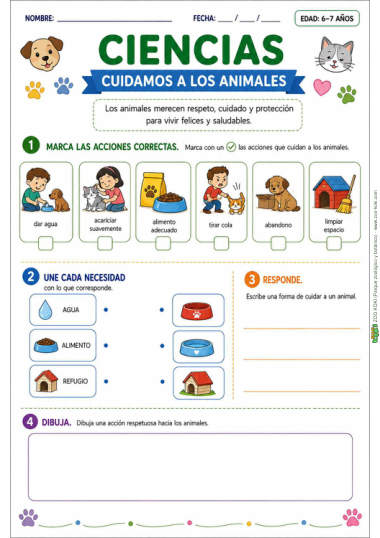 Ages 6-7We look after animalsTick the right actions for looking after and respecting animals. Download PDF
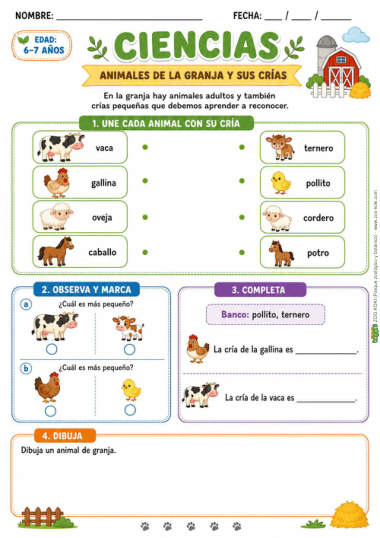 Ages 6-7Farm animals and their youngMatch farm animals with their young and with what they give us. Download PDF
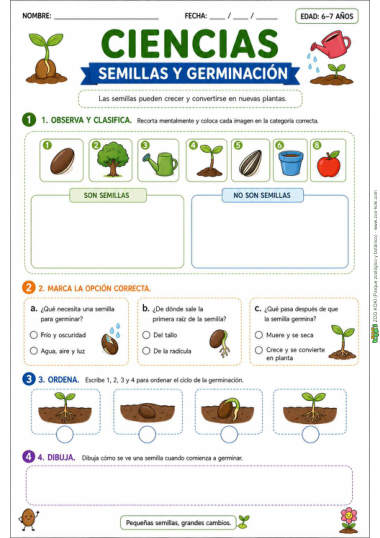 Ages 6-7Seeds and germinationWatch how a seed germinates and what it needs to become a plant. Download PDF
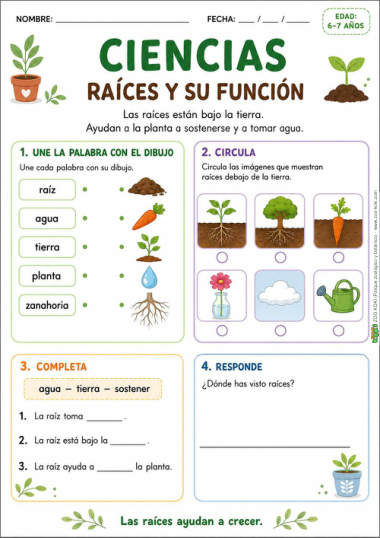 Ages 6-7Roots and what they doFind out what roots are for and how they take water from the soil. Download PDF
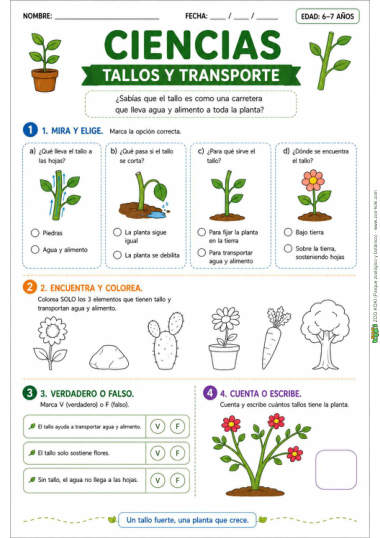 Ages 6-7Stems and transportUnderstand how the stem carries water and food to the whole plant. Download PDF
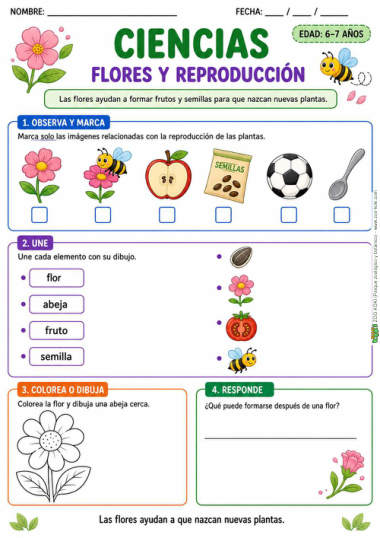 Ages 6-7Flowers and reproductionRecognise the parts of a flower and how flowering plants reproduce. Download PDF
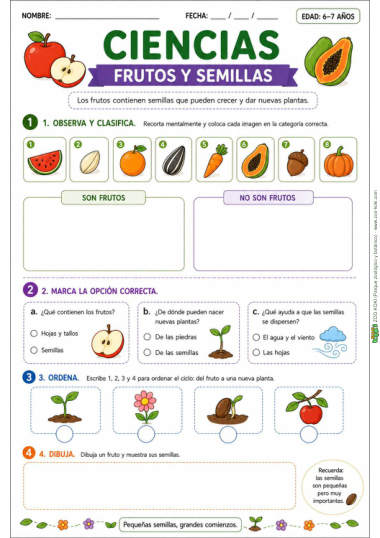 Ages 6-7Fruits and seedsMatch each fruit with its seeds and understand how they protect the future plant. Download PDF
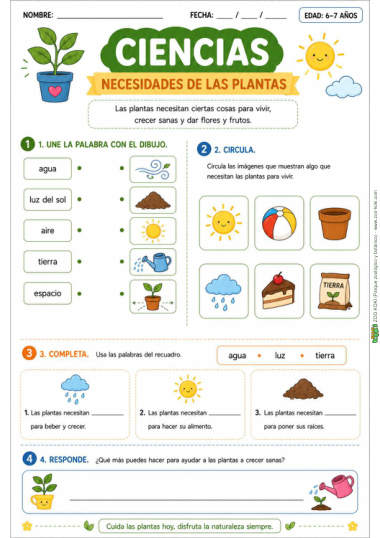 Ages 6-7What plants needFind out what plants need to live: light, water, air and soil. Download PDF
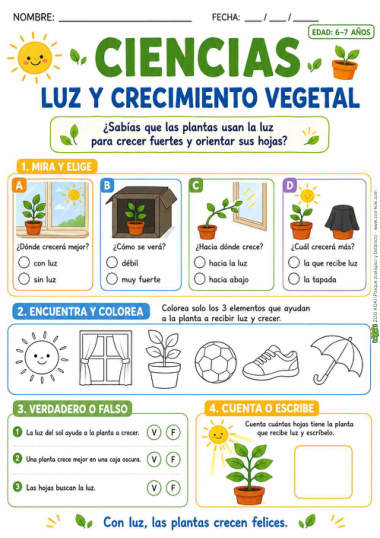 Ages 6-7Light and plant growthExperiment with how light affects the way plants grow. Download PDF
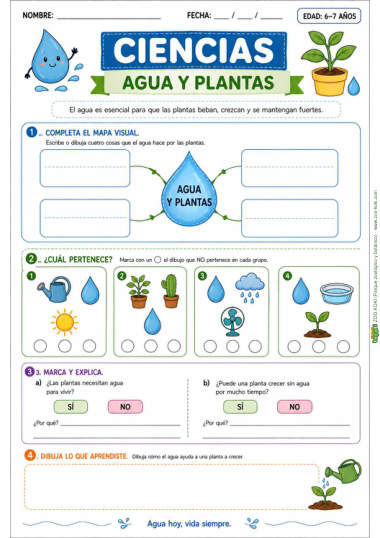 Ages 6-7Water and plantsFind out how plants absorb, carry and use water. Download PDF
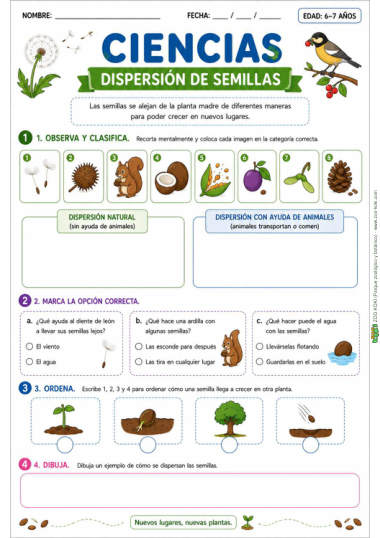 Ages 6-7Seed dispersalFind out how wind, water and animals spread seeds. Download PDF
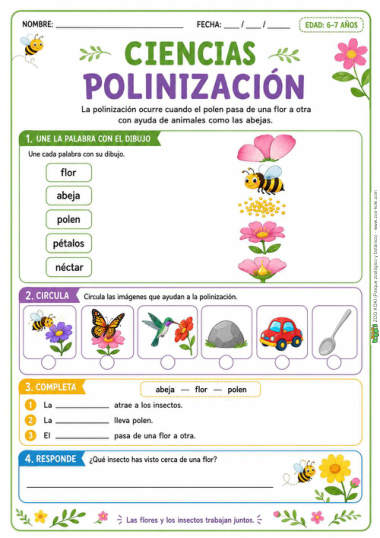 Ages 6-7PollinationFind out how pollen travels from flower to flower so that fruits and seeds can form. Download PDF
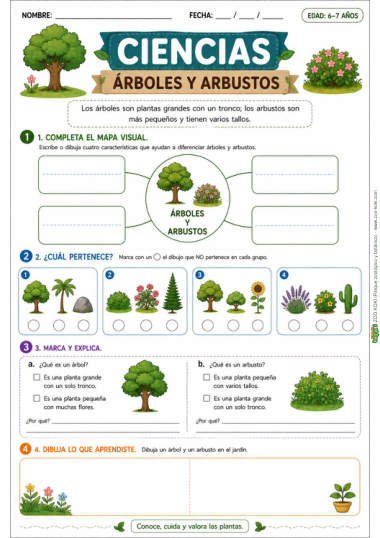 Ages 6-7Trees and shrubsCompare trees, shrubs and herbs and learn to recognise their parts. Download PDF
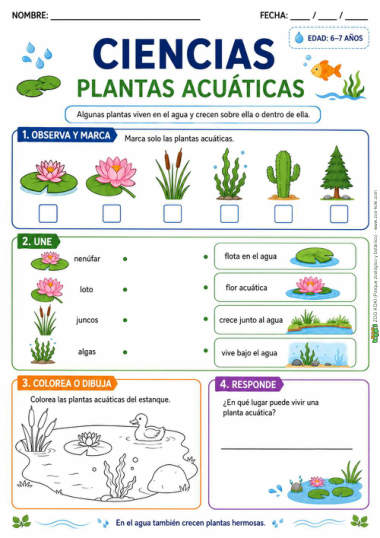 Ages 6-7Water plantsGet to know the plants that live in water and how they have adapted to it. Download PDF
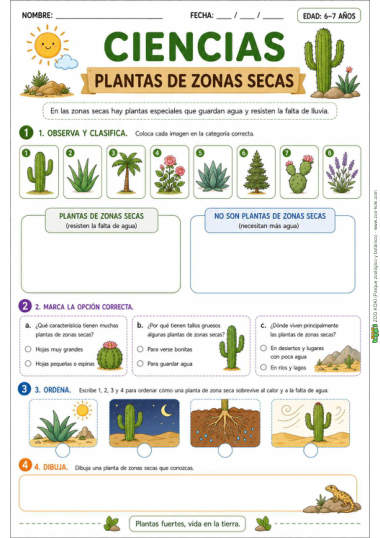 Ages 6-7Plants of dry regionsLearn how plants that live with very little water adapt. Download PDF
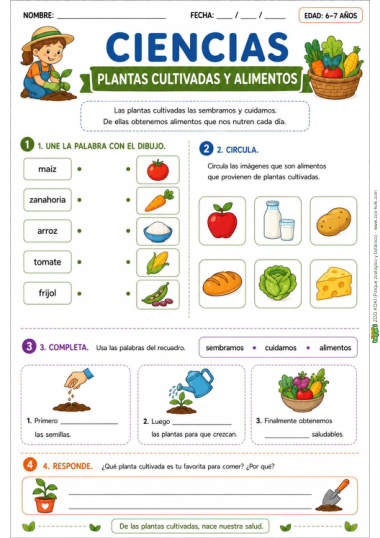 Ages 6-7Cultivated plants and foodMatch cultivated plants with the foods we get from them. Download PDF
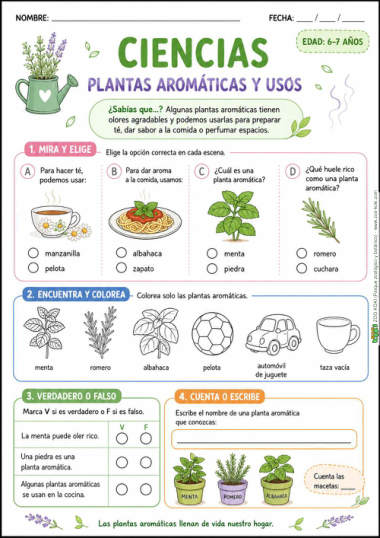 Ages 6-7Aromatic plants and their usesGet to know aromatic plants and what they are used for in cooking and health. Download PDF
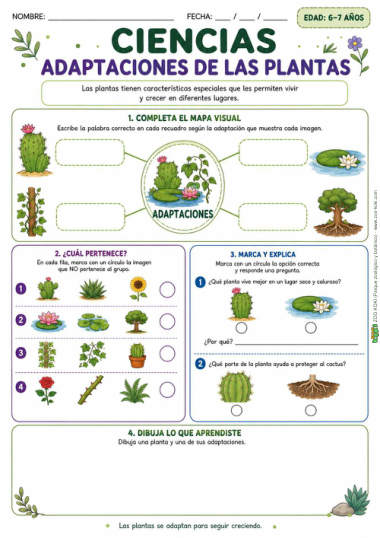 Ages 6-7Plant adaptationsFind out how plants adapt to different climates and places. Download PDF
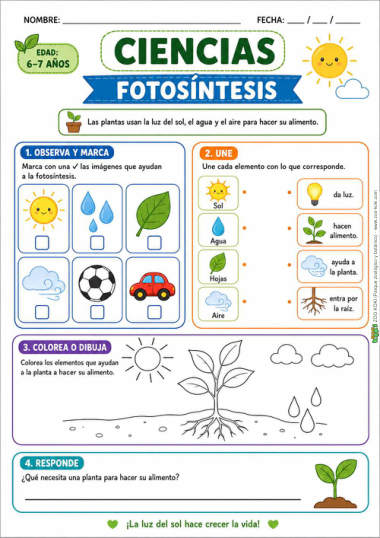 Ages 6-7PhotosynthesisUnderstand how plants make their food from light, water and air. Download PDF
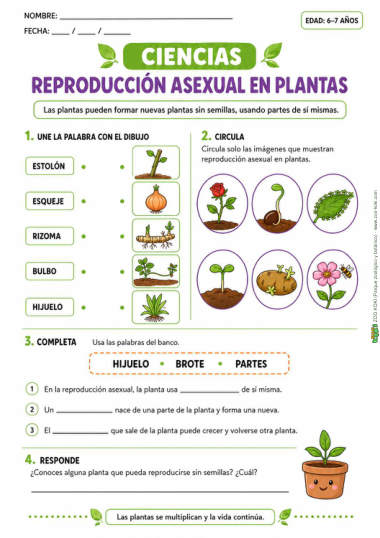 Ages 6-7Asexual reproduction in plantsFind out how new plants grow without seeds, from cuttings, bulbs or stems. Download PDF
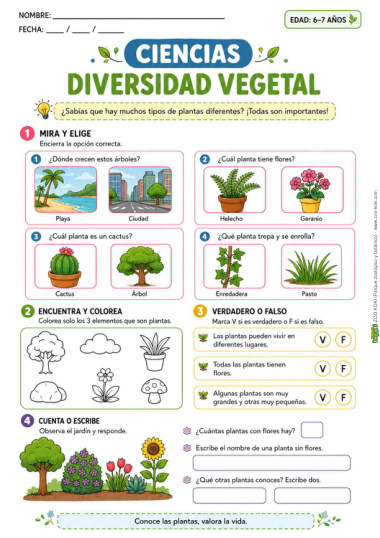 Ages 6-7Plant diversitySort plants by their features and discover their great variety. Download PDF
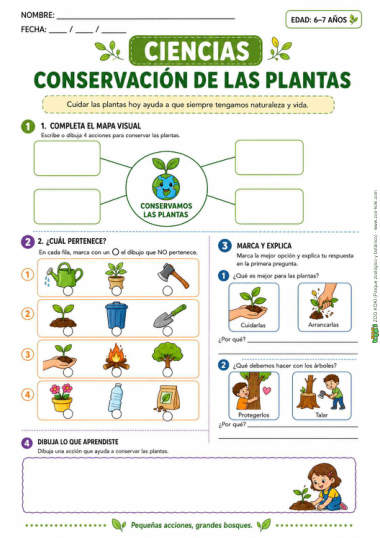 Ages 6-7Plant conservationFind out why plants need protecting and how they are conserved. Download PDF
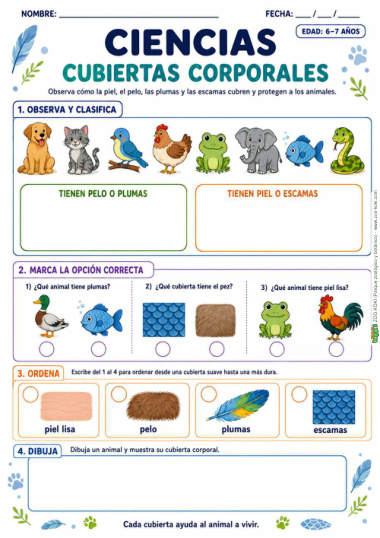 Ages 6-7Body coveringsSort animals by whether they have fur, feathers, scales or smooth skin. Download PDF
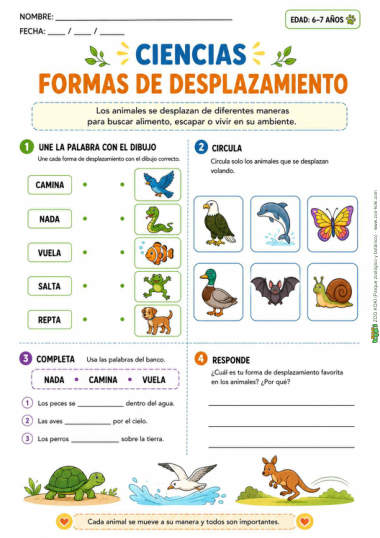 Ages 6-7Ways of movingFind out how animals move: they walk, fly, swim or crawl. Download PDF
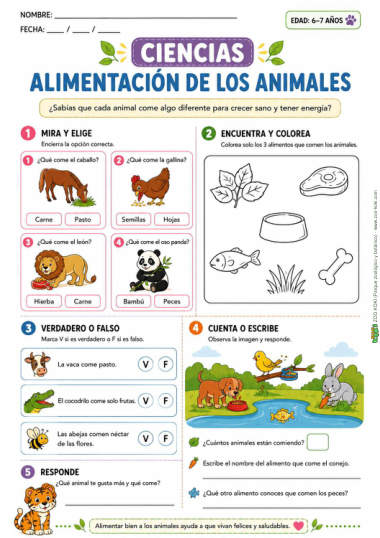 Ages 6-7What animals eatTell carnivores, herbivores and omnivores apart and learn what each one eats. Download PDF
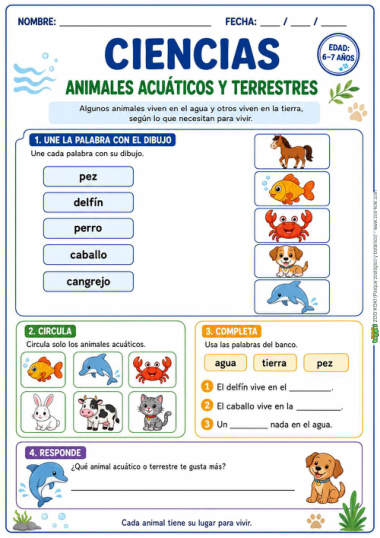 Ages 6-7Aquatic and land animalsCompare how animals of the water and the land live and move. Download PDF
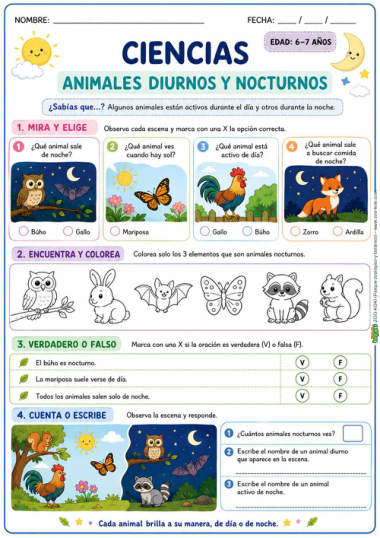 Ages 6-7Day and night animalsFind out which animals are active by day and which at night. Download PDF
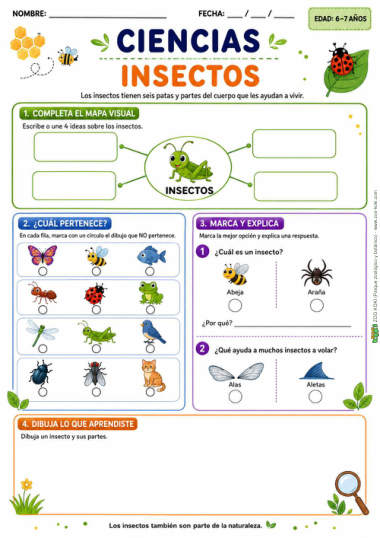 Ages 6-7InsectsRecognise the parts of an insect's body and what makes insects different. Download PDF
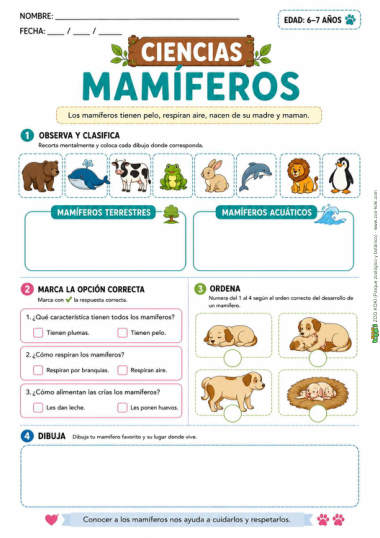 Ages 6-7MammalsFind out what mammals have in common and what sets them apart from other animals. Download PDF
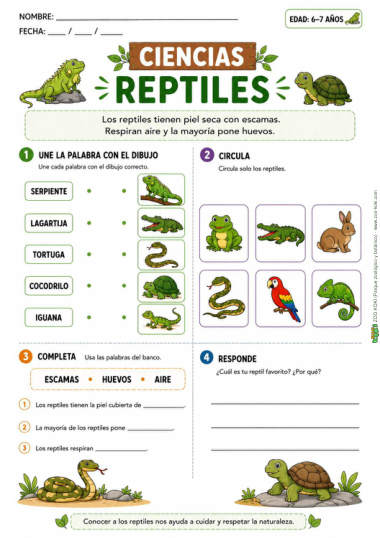 Ages 6-7ReptilesLearn what reptiles are like and how they live. Download PDF
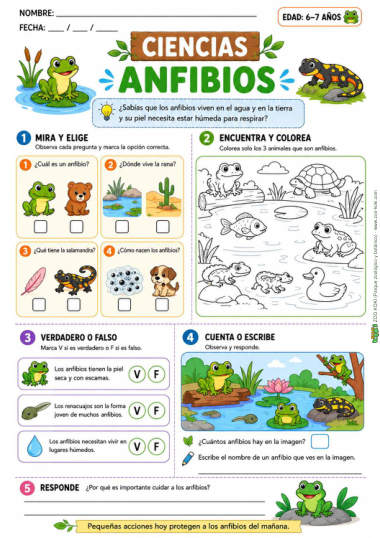 Ages 6-7AmphibiansFind out how amphibians live and how they change during their lives. Download PDF
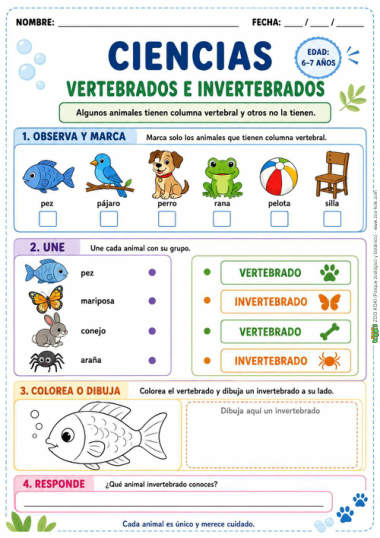 Ages 6-7Vertebrates and invertebratesLearn to classify animals according to whether or not they have an internal skeleton. Download PDF
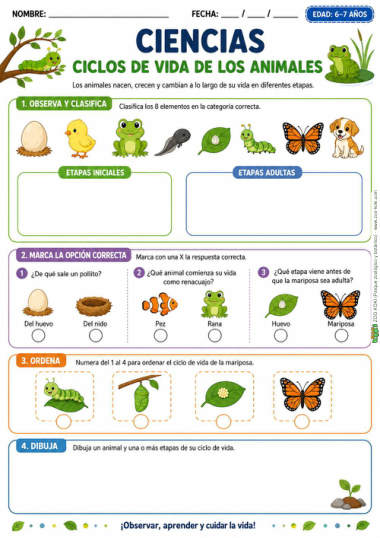 Ages 6-7Animal life cyclesPut the life stages of different animals in order, from birth to adulthood. Download PDF
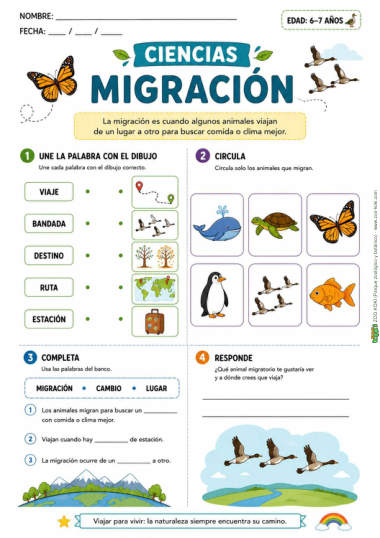 Ages 6-7MigrationUnderstand why some animals travel long distances every year. Download PDF
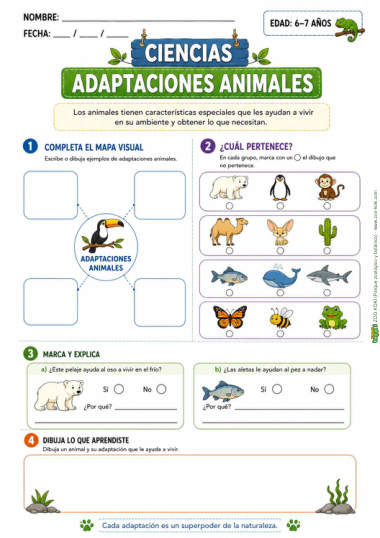 Ages 6-7Animal adaptationsFind out how animals adapt to their surroundings to survive. Download PDF
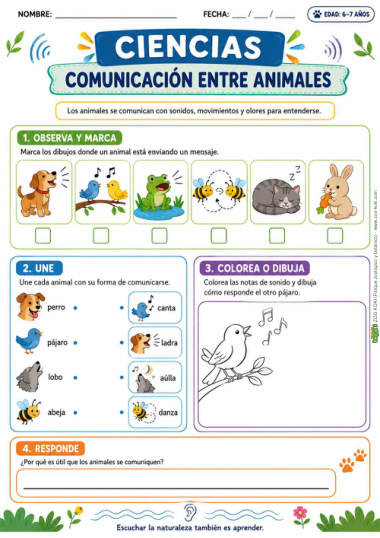 Ages 6-7Communication between animalsFind out how animals communicate with sounds, gestures and smells. Download PDF
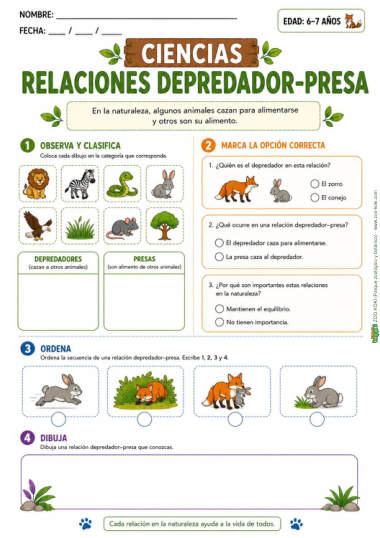 Ages 6-7Predator–prey relationshipsUnderstand the relationship between hunter and hunted in nature. Download PDF
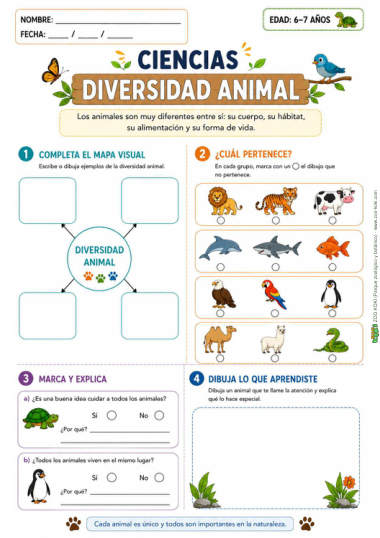 Ages 6-7Animal diversityDiscover the great variety of animals and how they are grouped. Download PDF
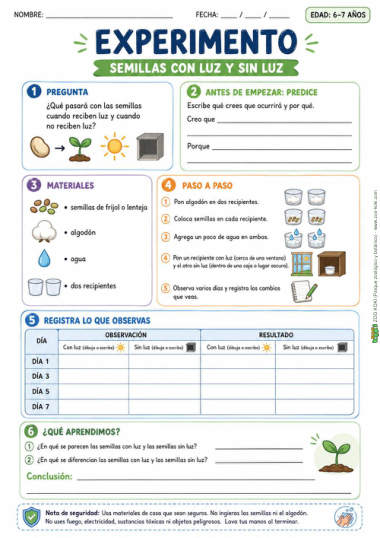 Ages 6-7Seeds with and without lightA guided experiment: predict, test and record what you observe. Download PDF
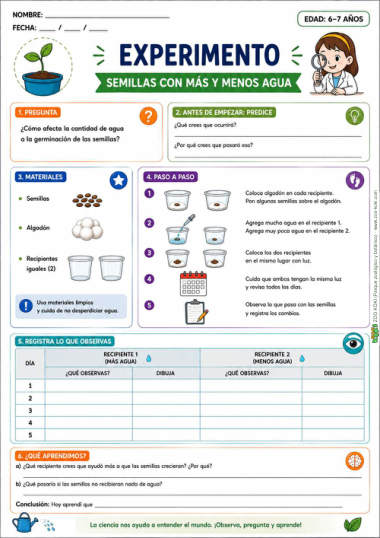 Ages 6-7Seeds with more and less waterExperiment: how does a seed's germination change with the water it gets? Download PDF
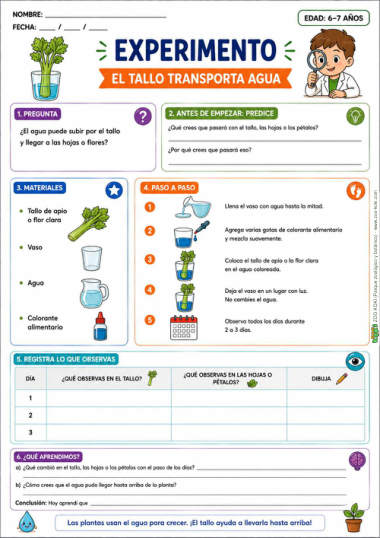 Ages 6-7The stem carries waterExperiment: check how water rises up the stem to the leaves and flowers. Download PDF
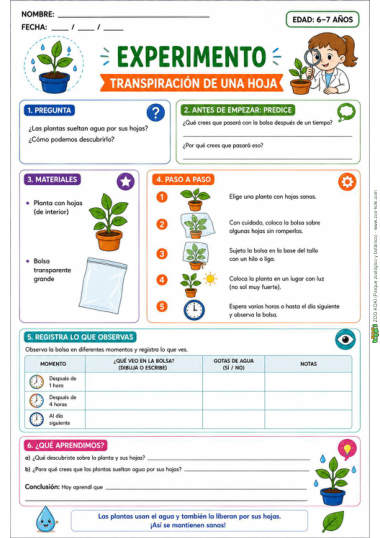 Ages 6-7Transpiration of a leafExperiment: watch how a leaf loses water and find out why plants transpire. Download PDF
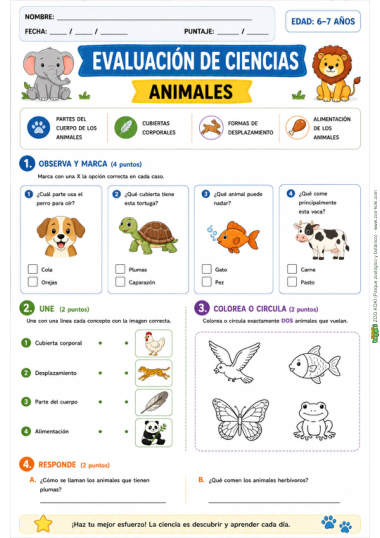 Ages 6-7Assessment: AnimalsA simple test to check what has been learned about animals. Download PDF
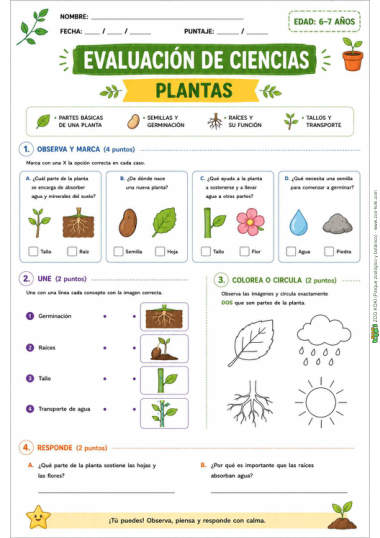 Ages 6-7Assessment: plantsA science assessment on plants, with different question types and a suggested score. Download PDF
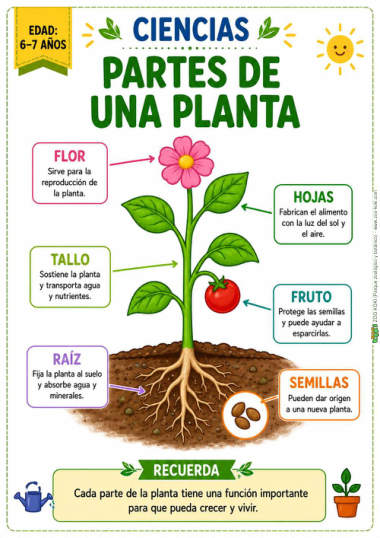 Ages 6-7Poster: Parts of a plantA classroom poster that explains the concept visually, with a “Remember” box. Download PDF
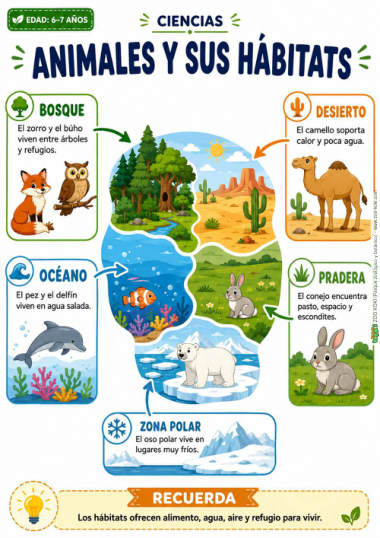 Ages 6-7Poster: Animals and their habitatsA classroom poster that explains the concept visually, with a “Remember” box. Download PDF
 Ages 8-9Exercise workbookAn activity notebook to use in class before or after the visit. Download PDF
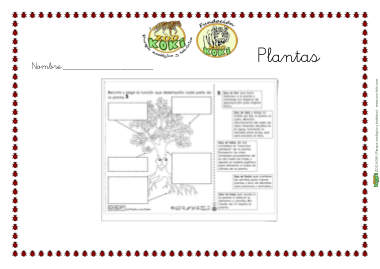 Ages 8-9Worksheet 01 — Plants 1First worksheet in the plants series: observe and complete. Download PDF
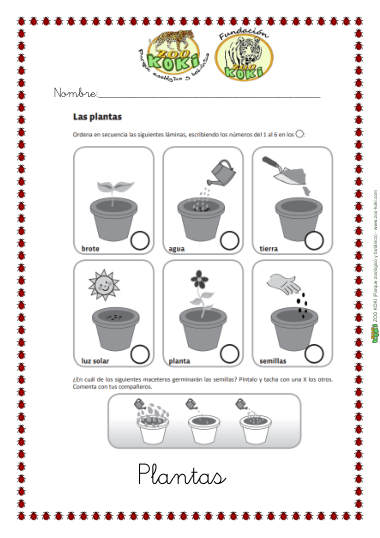 Ages 8-9Worksheet 02 — Plants 2Second worksheet in the plants series, with new activities to complete. Download PDF
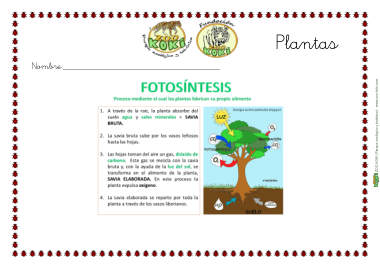 Ages 8-9Worksheet 03 — Plants 3Third worksheet in the plants series, to review what has been learned. Download PDF
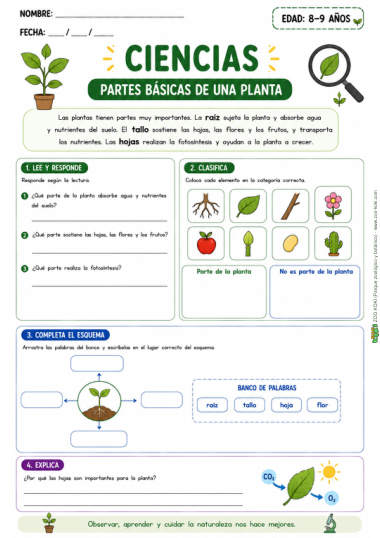 Ages 8-9Basic parts of a plantIdentify the root, stem, leaves and flowers and what each part is for. Download PDF
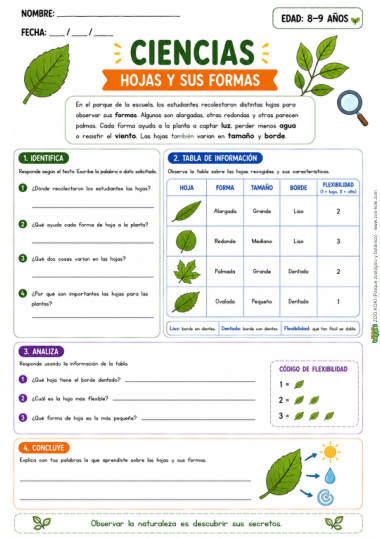 Ages 8-9Leaves and their shapesSee what leaves are like and why their shape changes from one plant to another. Download PDF
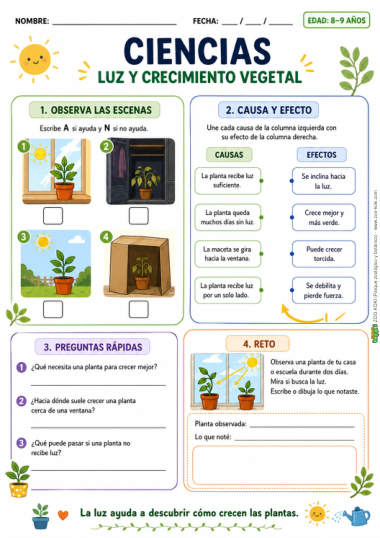 Ages 8-9Light and plant growthExperiment with how light affects the way plants grow. Download PDF
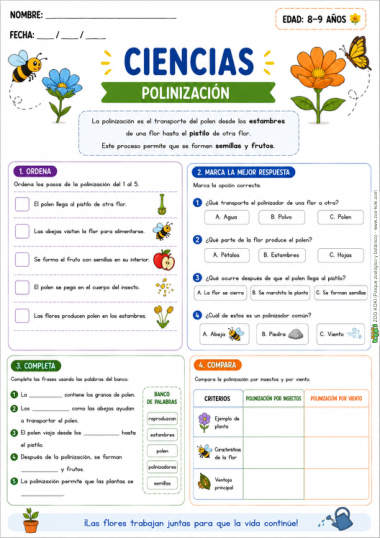 Ages 8-9PollinationFind out how pollen travels from flower to flower so that fruits and seeds can form. Download PDF
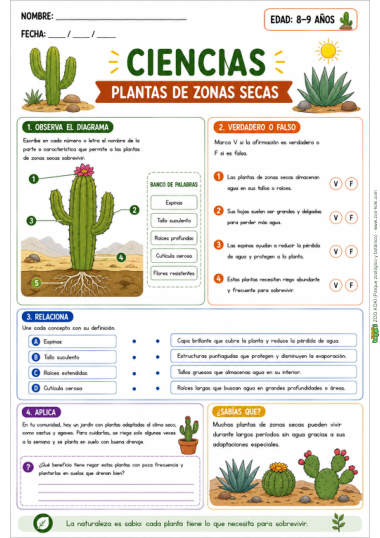 Ages 8-9Plants of dry regionsLearn how plants that live with very little water adapt. Download PDF
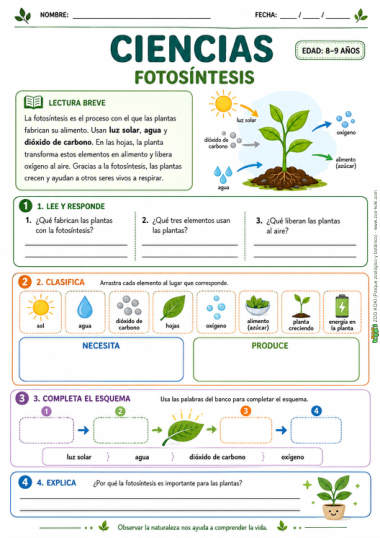 Ages 8-9PhotosynthesisUnderstand how plants make their food from light, water and air. Download PDF
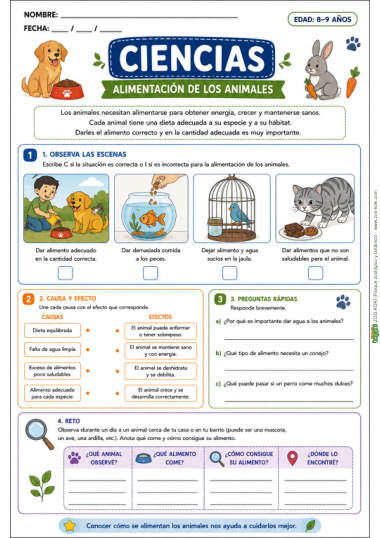 Ages 8-9What animals eatTell carnivores, herbivores and omnivores apart and learn what each one eats. Download PDF
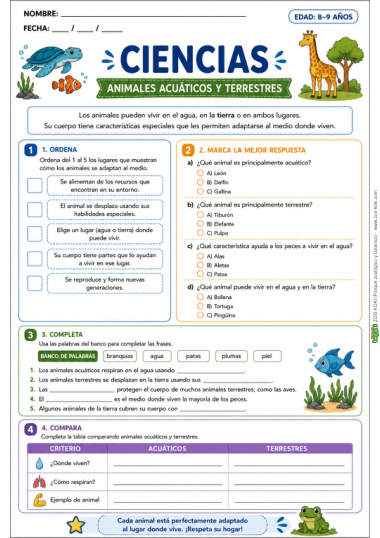 Ages 8-9Aquatic and land animalsCompare how animals of the water and the land live and move. Download PDF
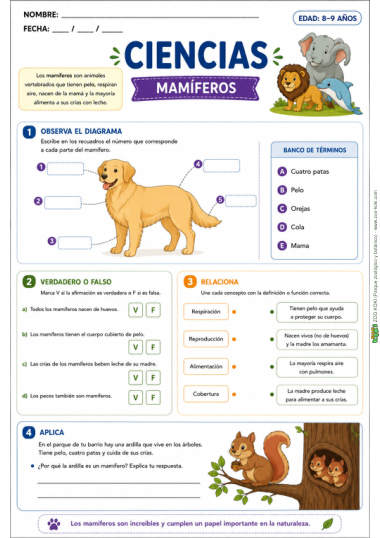 Ages 8-9MammalsFind out what mammals have in common and what sets them apart from other animals. Download PDF
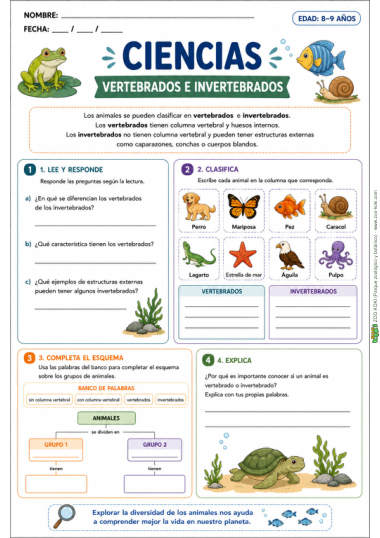 Ages 8-9Vertebrates and invertebratesLearn to classify animals according to whether or not they have an internal skeleton. Download PDF
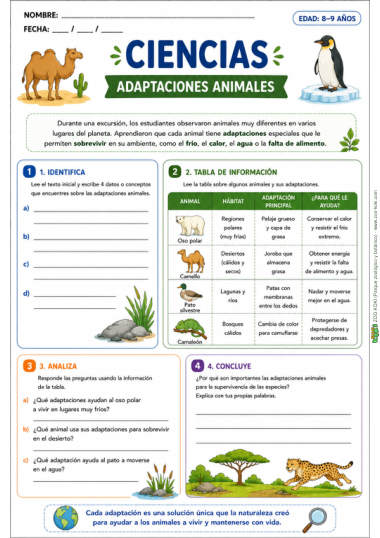 Ages 8-9Animal adaptationsFind out how animals adapt to their surroundings to survive. Download PDF
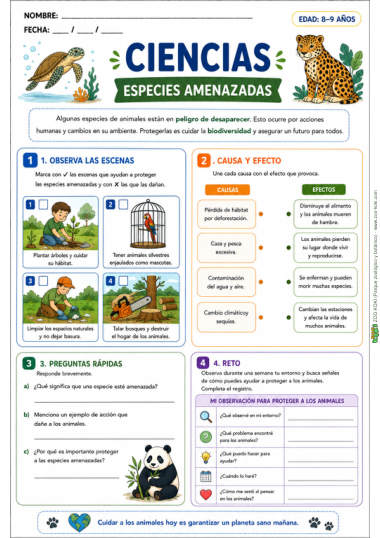 Ages 8-9Endangered speciesLearn why some species are in danger and what we can do to protect them. Download PDF
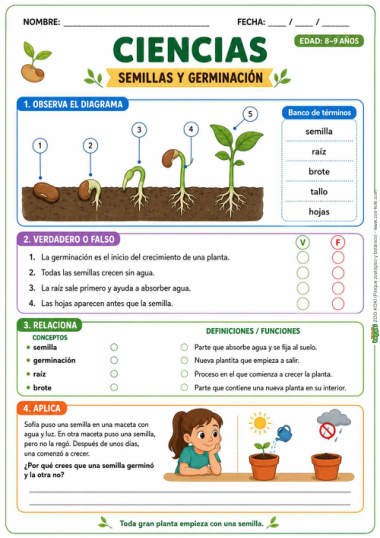 Ages 8-9Seeds and germinationWatch how a seed germinates and what it needs to become a plant. Download PDF
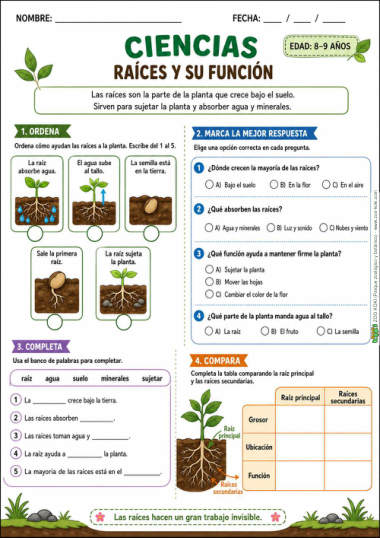 Ages 8-9Roots and what they doFind out what roots are for and how they take water from the soil. Download PDF
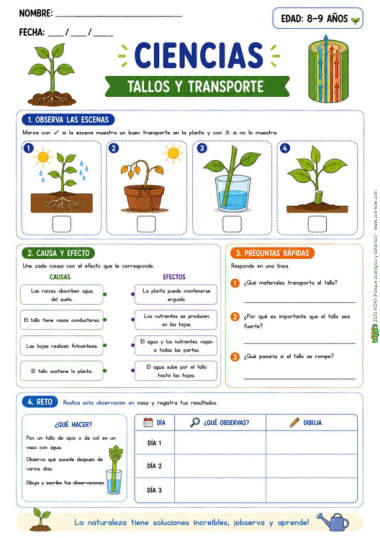 Ages 8-9Stems and transportUnderstand how the stem carries water and food to the whole plant. Download PDF
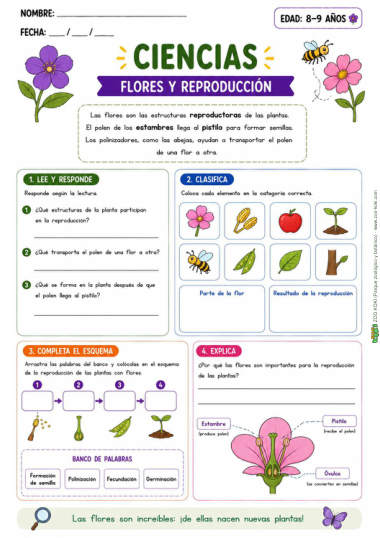 Ages 8-9Flowers and reproductionRecognise the parts of a flower and how flowering plants reproduce. Download PDF
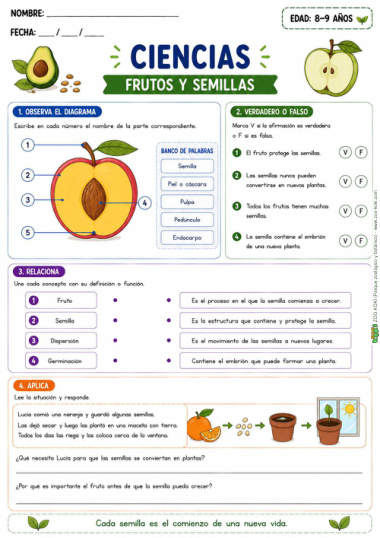 Ages 8-9Fruits and seedsMatch each fruit with its seeds and understand how they protect the future plant. Download PDF
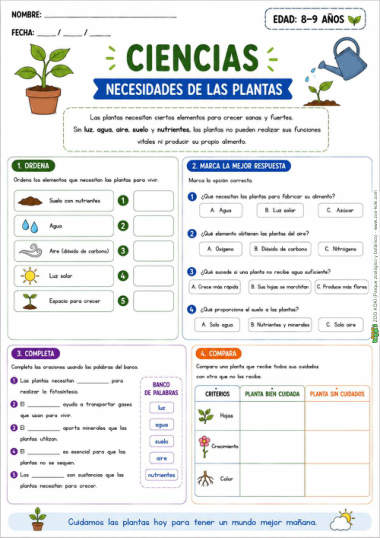 Ages 8-9What plants needFind out what plants need to live: light, water, air and soil. Download PDF
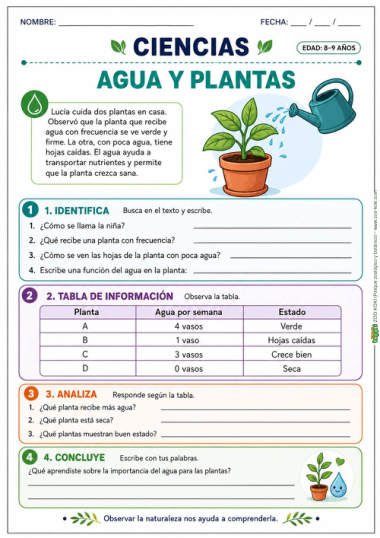 Ages 8-9Water and plantsFind out how plants absorb, carry and use water. Download PDF
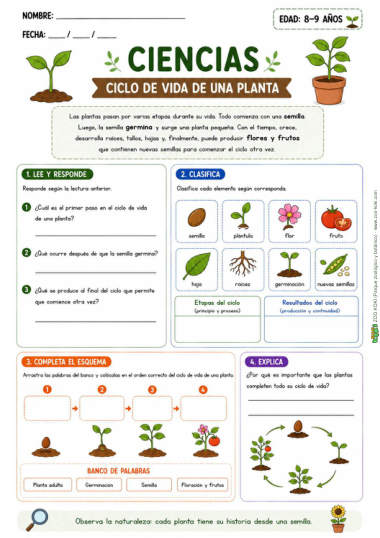 Ages 8-9Life cycle of a plantPut the stages of a plant's life in order, from seed to seed. Download PDF
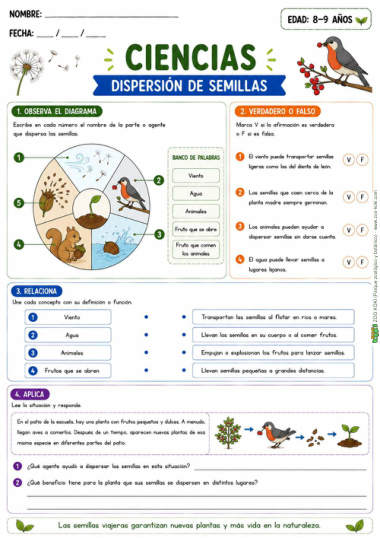 Ages 8-9Seed dispersalFind out how wind, water and animals spread seeds. Download PDF
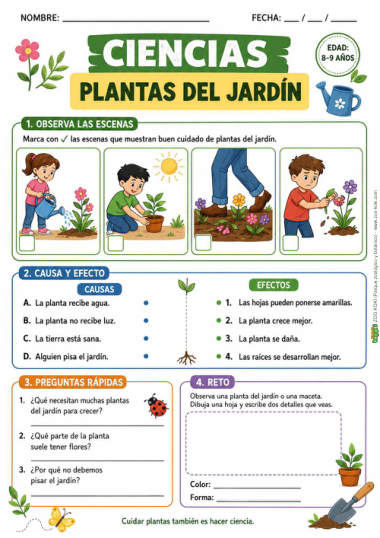 Ages 8-9Garden plantsMeet plants from the zoo's garden and learn to recognise them. Download PDF
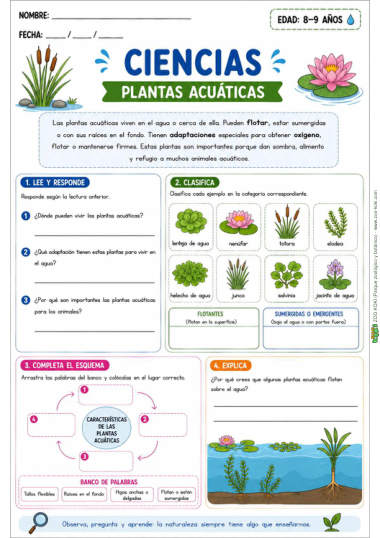 Ages 8-9Water plantsGet to know the plants that live in water and how they have adapted to it. Download PDF
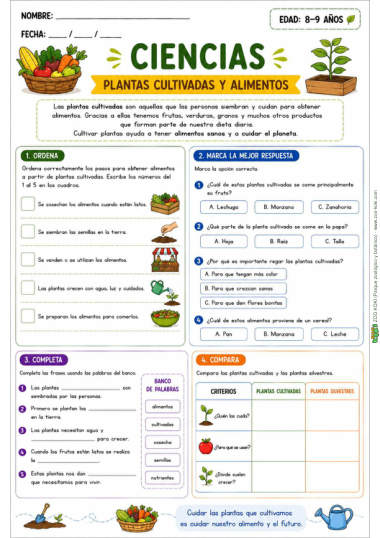 Ages 8-9Cultivated plants and foodMatch cultivated plants with the foods we get from them. Download PDF
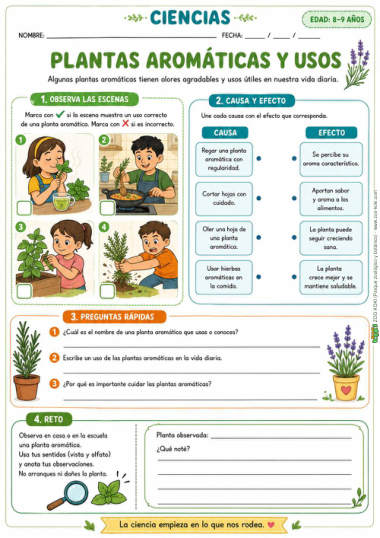 Ages 8-9Aromatic plants and their usesGet to know aromatic plants and what they are used for in cooking and health. Download PDF
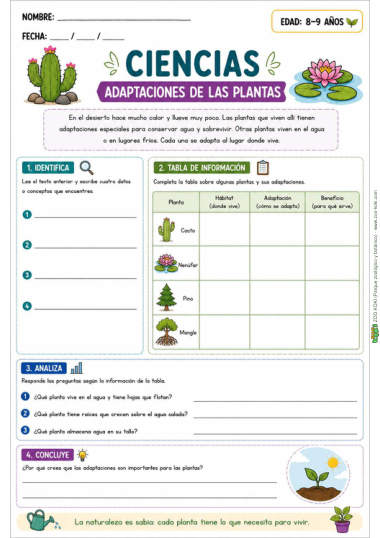 Ages 8-9Plant adaptationsFind out how plants adapt to different climates and places. Download PDF
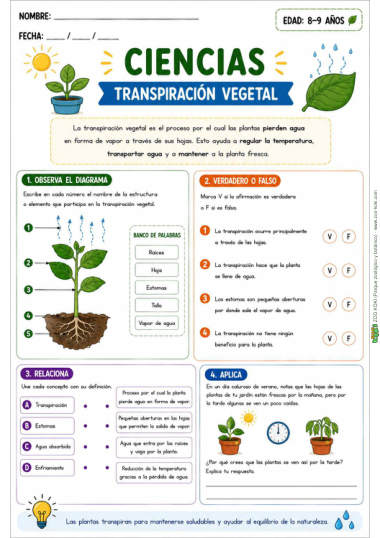 Ages 8-9Plant transpirationFind out how plants lose water through their leaves and why it matters. Download PDF
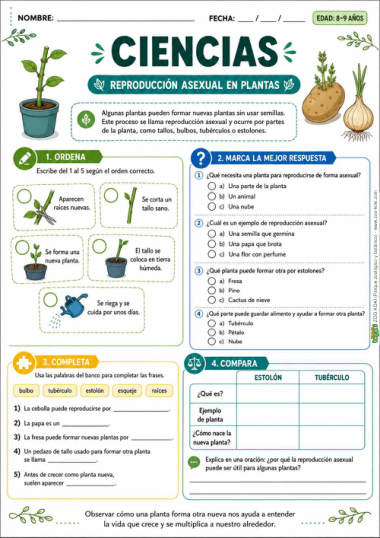 Ages 8-9Asexual reproduction in plantsFind out how new plants grow without seeds, from cuttings, bulbs or stems. Download PDF
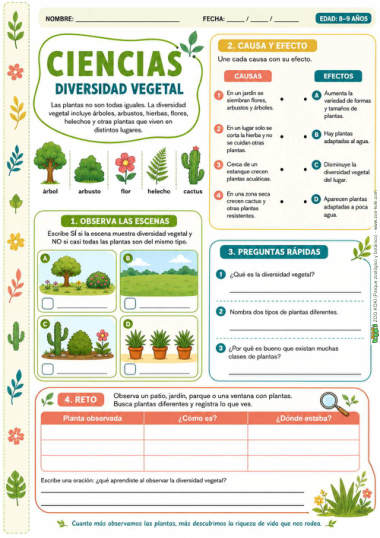 Ages 8-9Plant diversitySort plants by their features and discover their great variety. Download PDF
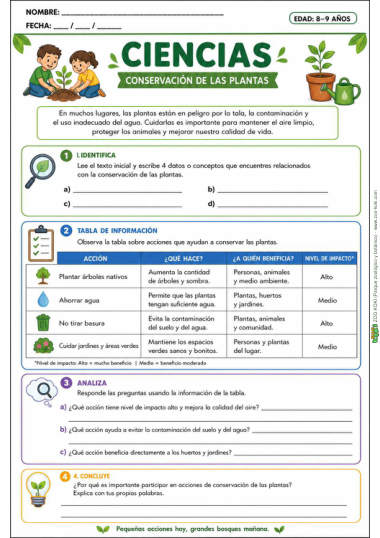 Ages 8-9Plant conservationFind out why plants need protecting and how they are conserved. Download PDF
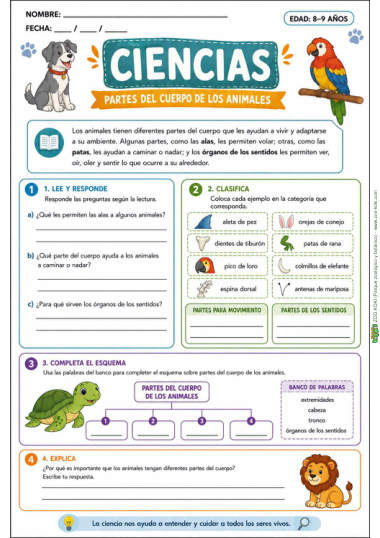 Ages 8-9Animal body partsRecognise the body parts of different animals and what each one is for. Download PDF
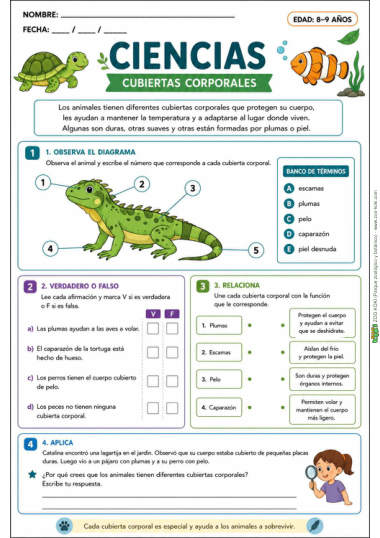 Ages 8-9Body coveringsSort animals by whether they have fur, feathers, scales or smooth skin. Download PDF
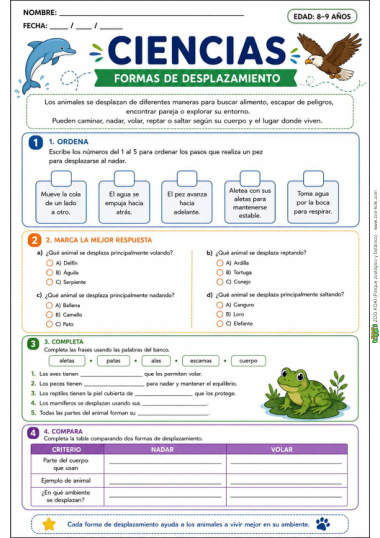 Ages 8-9Ways of movingFind out how animals move: they walk, fly, swim or crawl. Download PDF
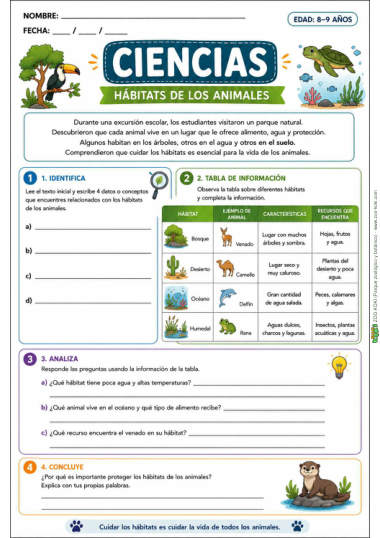 Ages 8-9Animal habitatsFind out where each animal lives and what it needs from its home to survive. Download PDF
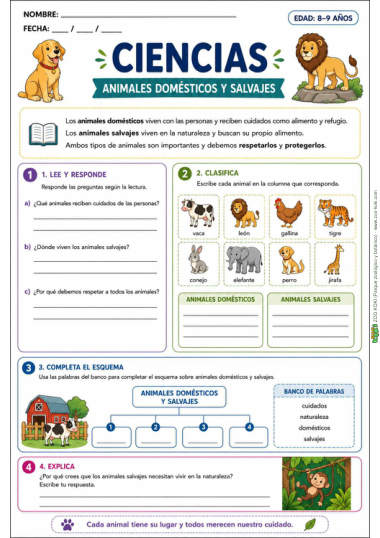 Ages 8-9Domestic and wild animalsLearn to tell domestic animals from wild ones and where each one lives. Download PDF
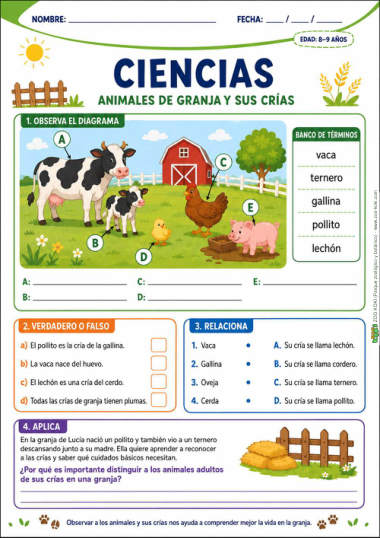 Ages 8-9Farm animals and their youngMatch farm animals with their young and with what they give us. Download PDF
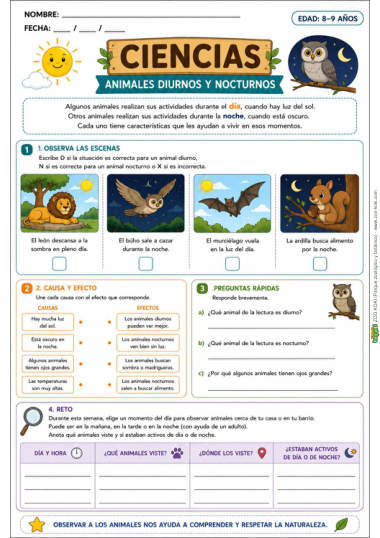 Ages 8-9Day and night animalsFind out which animals are active by day and which at night. Download PDF
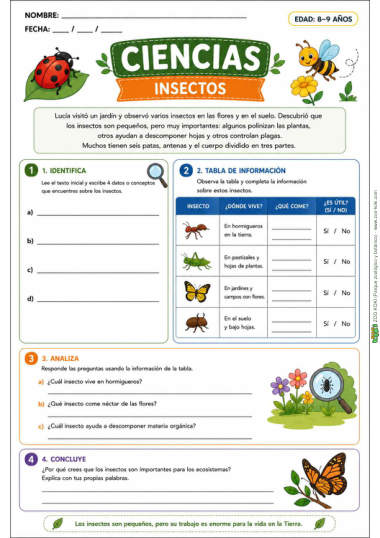 Ages 8-9InsectsRecognise the parts of an insect's body and what makes insects different. Download PDF
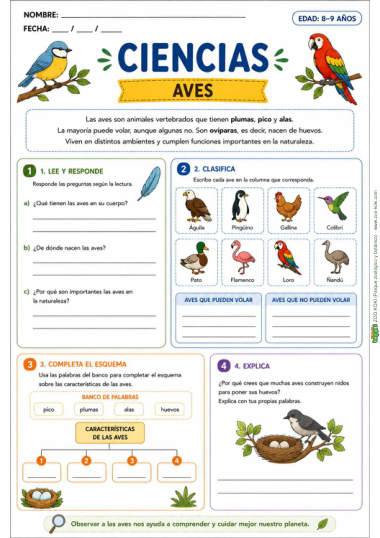 Ages 8-9AvesLearn what makes birds special: feathers, beak, eggs and flight. Download PDF
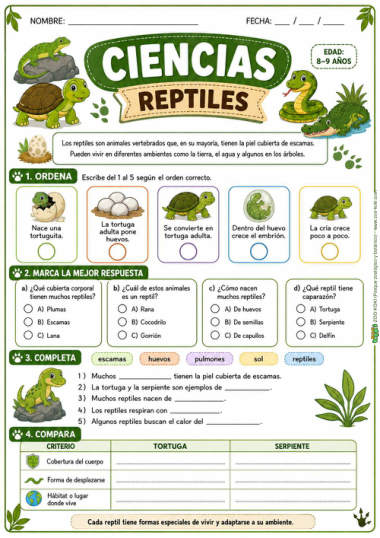 Ages 8-9ReptilesLearn what reptiles are like and how they live. Download PDF
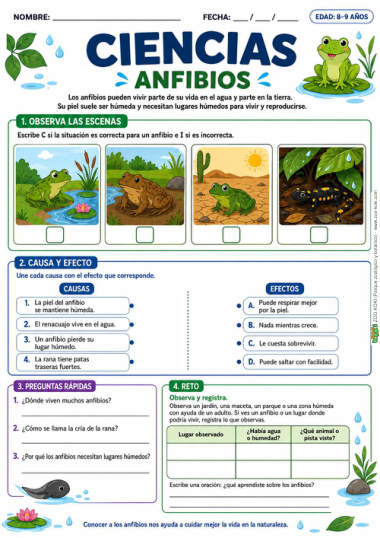 Ages 8-9AmphibiansFind out how amphibians live and how they change during their lives. Download PDF
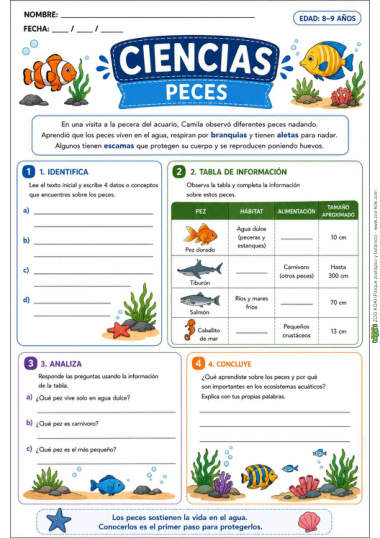 Ages 8-9FishFind out how fish live and what makes them different from other animals. Download PDF
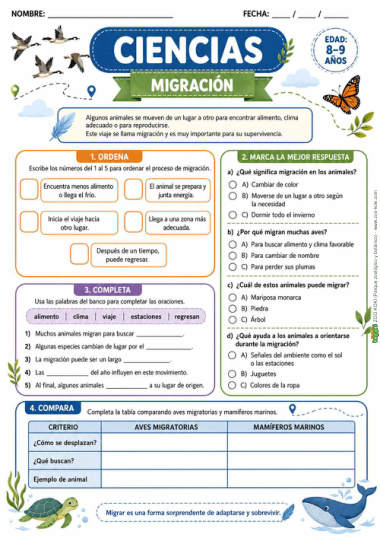 Ages 8-9MigrationUnderstand why some animals travel long distances every year. Download PDF
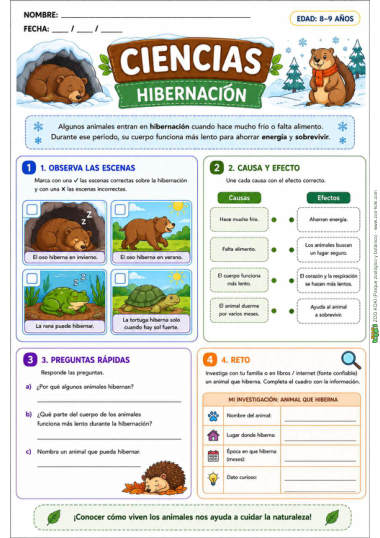 Ages 8-9HibernationUnderstand why some animals sleep through winter and how they survive the cold. Download PDF
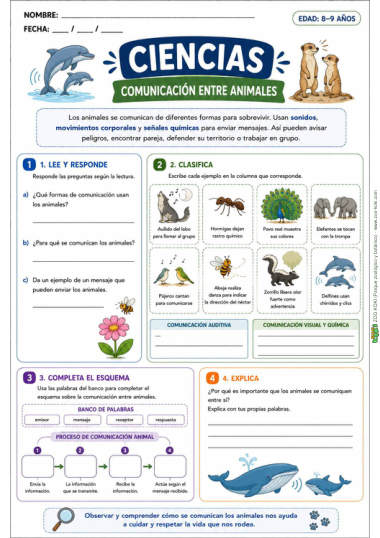 Ages 8-9Communication between animalsFind out how animals communicate with sounds, gestures and smells. Download PDF
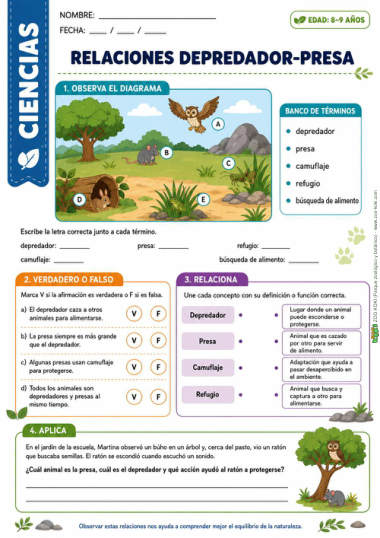 Ages 8-9Predator–prey relationshipsUnderstand the relationship between hunter and hunted in nature. Download PDF
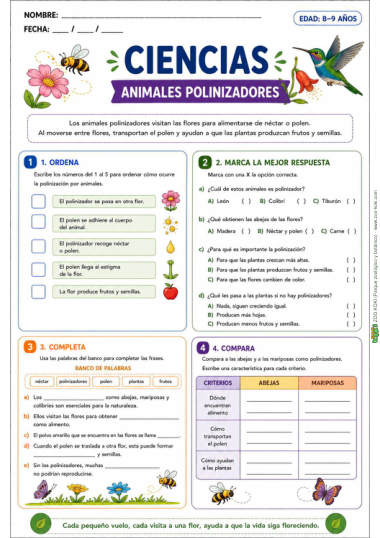 Ages 8-9Pollinating animalsFind out which animals carry pollen from flower to flower and why they are so important. Download PDF
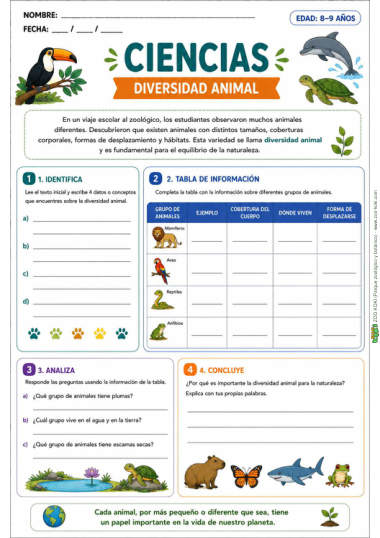 Ages 8-9Animal diversityDiscover the great variety of animals and how they are grouped. Download PDF
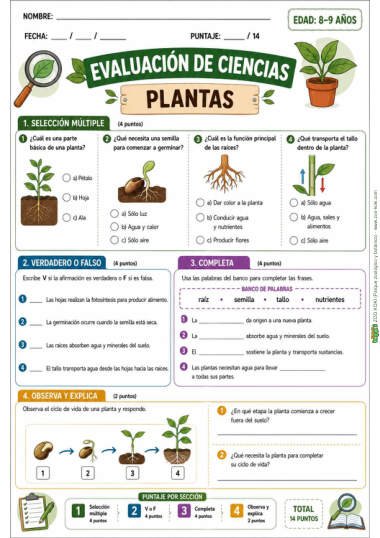 Ages 8-9Assessment: plantsA science assessment on plants, with different question types and a suggested score. Download PDF
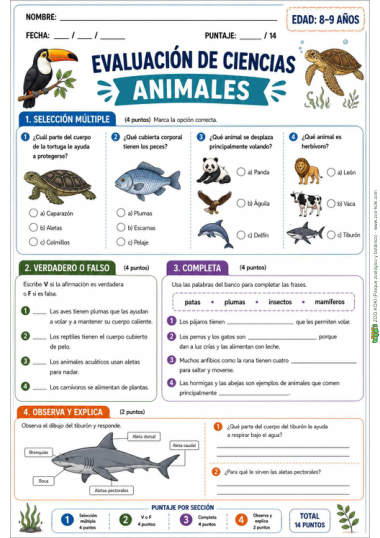 Ages 8-9Animals assessmentAn assessment on animals, with multiple-choice, matching and true-or-false questions. Download PDF
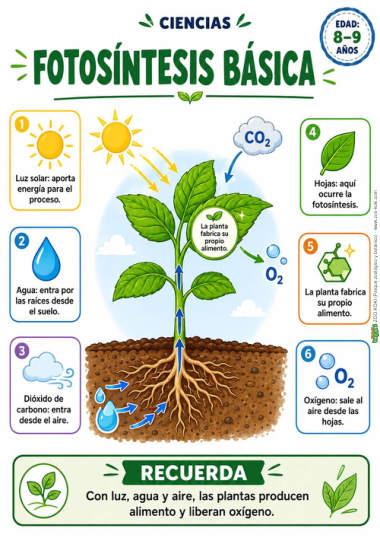 Ages 8-9Poster: Basic photosynthesisA classroom poster that explains the concept visually, with a “Remember” box. Download PDF
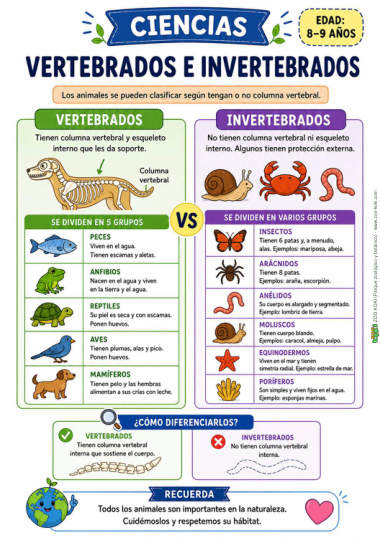 Ages 8-9Poster: Vertebrates and invertebratesA classroom poster that explains the concept visually, with a “Remember” box. Download PDF
 Ages 10-11Exercise workbookA notebook on the classification of living things: species, characteristics and groups. Download PDF
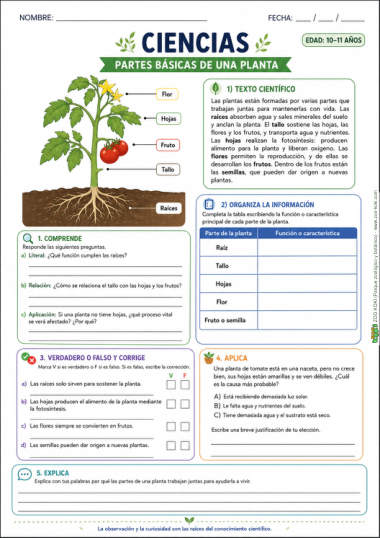 Ages 10-11Basic parts of a plantIdentify the root, stem, leaves and flowers and what each part is for. Download PDF
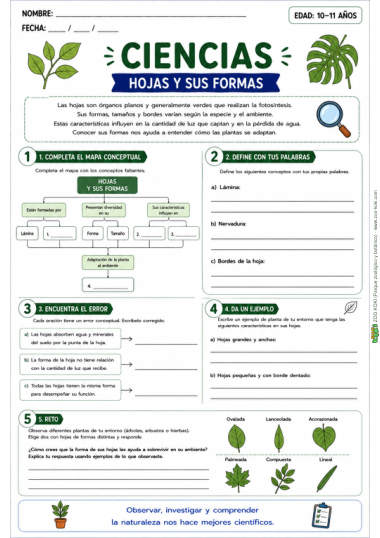 Ages 10-11Leaves and their shapesSee what leaves are like and why their shape changes from one plant to another. Download PDF
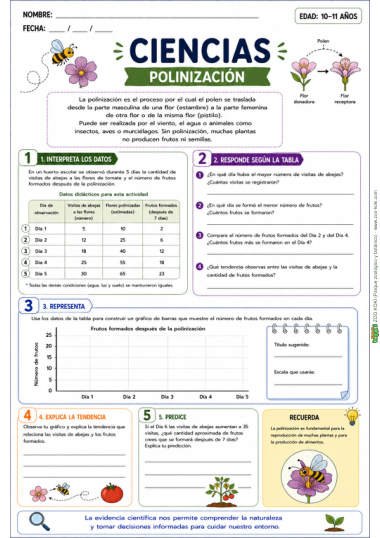 Ages 10-11PollinationFind out how pollen travels from flower to flower so that fruits and seeds can form. Download PDF
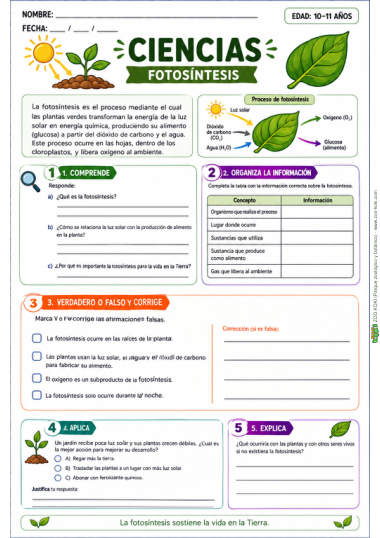 Ages 10-11PhotosynthesisUnderstand how plants make their food from light, water and air. Download PDF
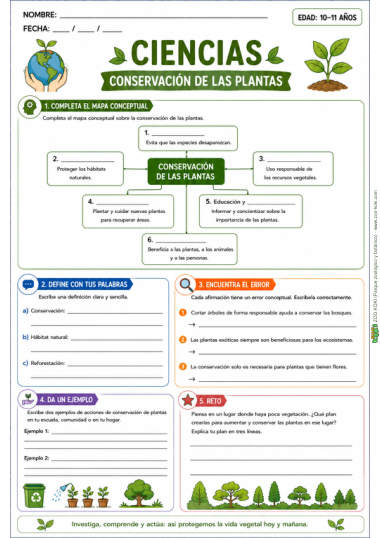 Ages 10-11Plant conservationFind out why plants need protecting and how they are conserved. Download PDF
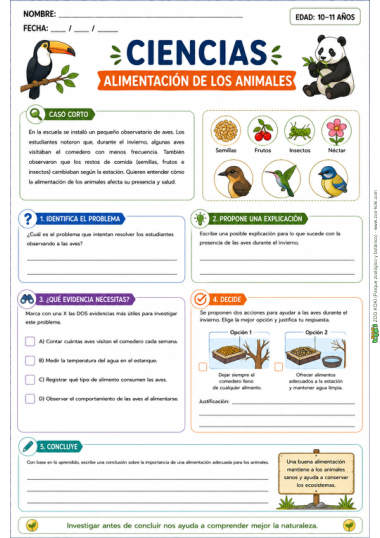 Ages 10-11What animals eatTell carnivores, herbivores and omnivores apart and learn what each one eats. Download PDF
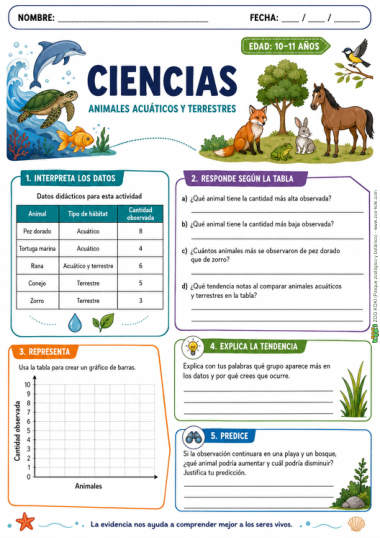 Ages 10-11Aquatic and land animalsCompare how animals of the water and the land live and move. Download PDF
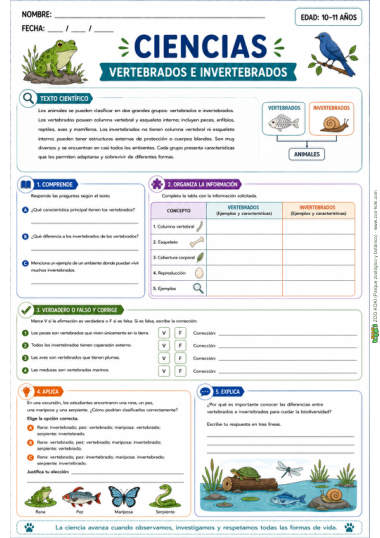 Ages 10-11Vertebrates and invertebratesLearn to classify animals according to whether or not they have an internal skeleton. Download PDF
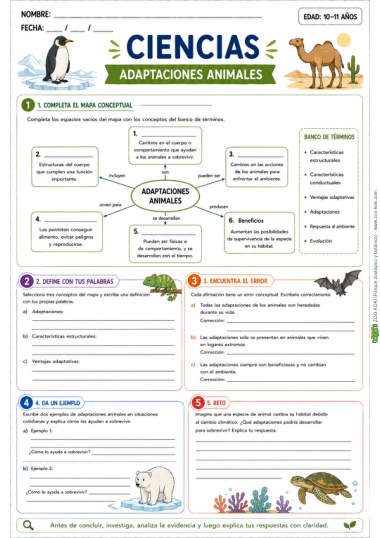 Ages 10-11Animal adaptationsFind out how animals adapt to their surroundings to survive. Download PDF
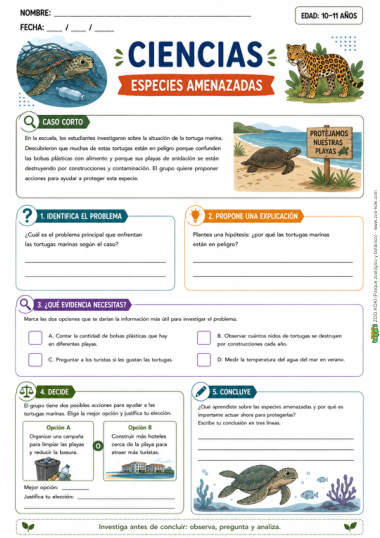 Ages 10-11Endangered speciesLearn why some species are in danger and what we can do to protect them. Download PDF
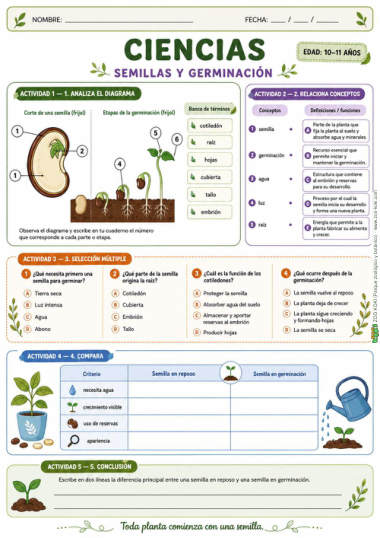 Ages 10-11Seeds and germinationWatch how a seed germinates and what it needs to become a plant. Download PDF
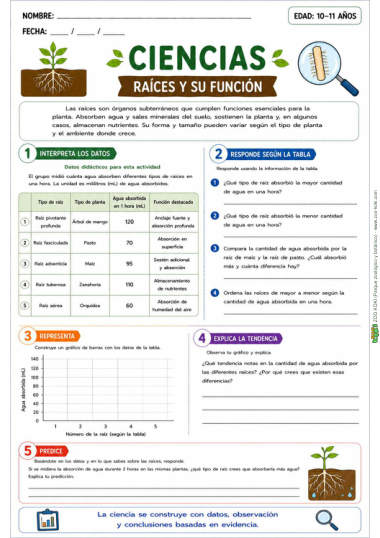 Ages 10-11Roots and what they doFind out what roots are for and how they take water from the soil. Download PDF
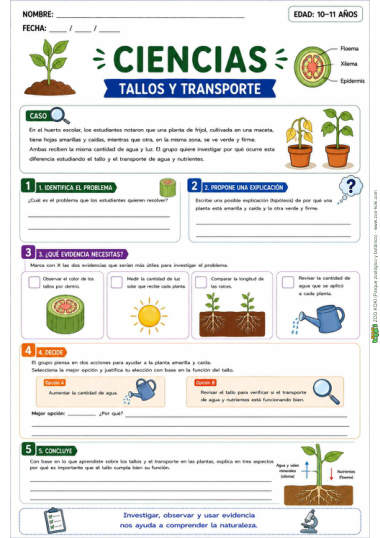 Ages 10-11Stems and transportUnderstand how the stem carries water and food to the whole plant. Download PDF
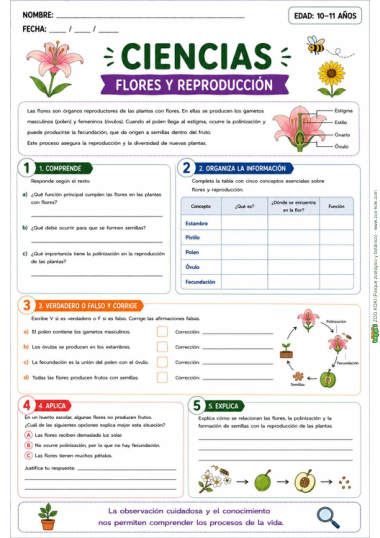 Ages 10-11Flowers and reproductionRecognise the parts of a flower and how flowering plants reproduce. Download PDF
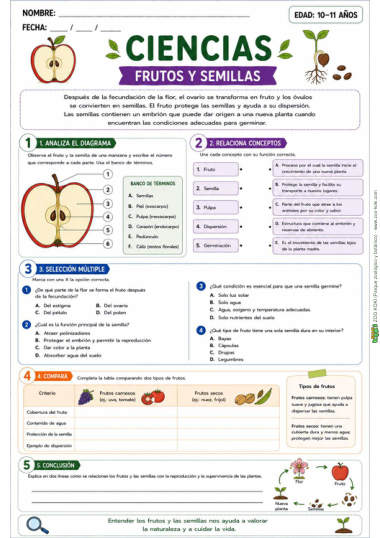 Ages 10-11Fruits and seedsMatch each fruit with its seeds and understand how they protect the future plant. Download PDF
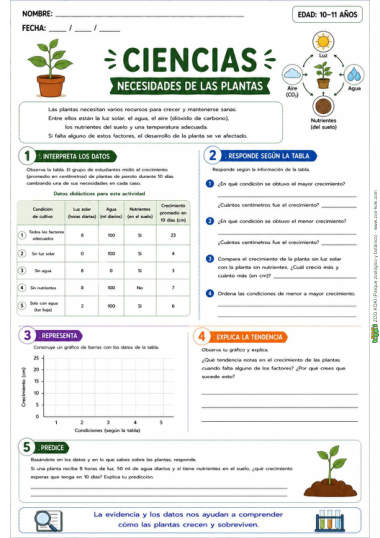 Ages 10-11What plants needFind out what plants need to live: light, water, air and soil. Download PDF
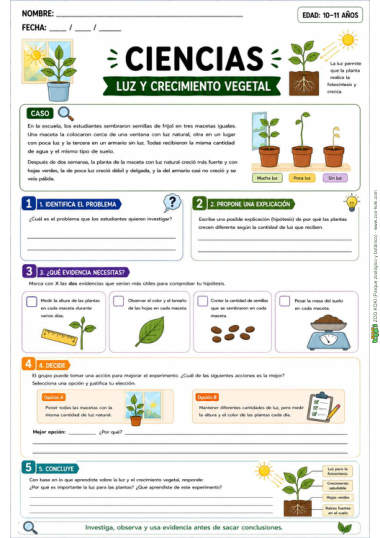 Ages 10-11Light and plant growthExperiment with how light affects the way plants grow. Download PDF
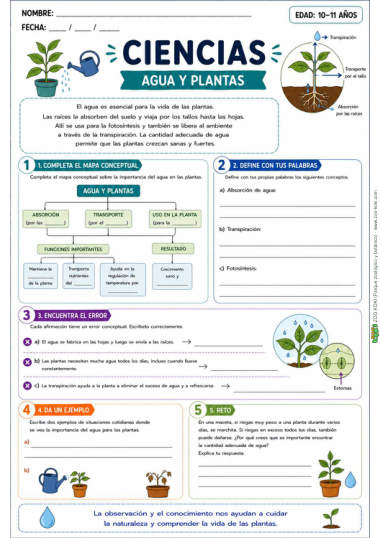 Ages 10-11Water and plantsFind out how plants absorb, carry and use water. Download PDF
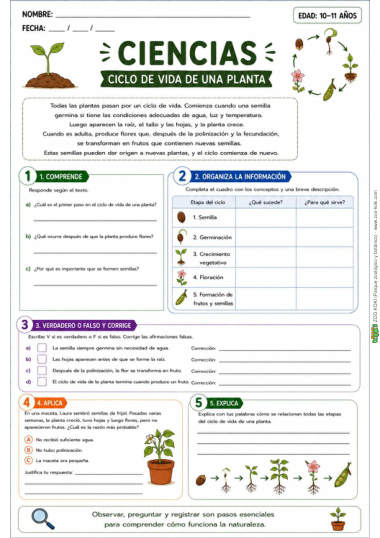 Ages 10-11Life cycle of a plantPut the stages of a plant's life in order, from seed to seed. Download PDF
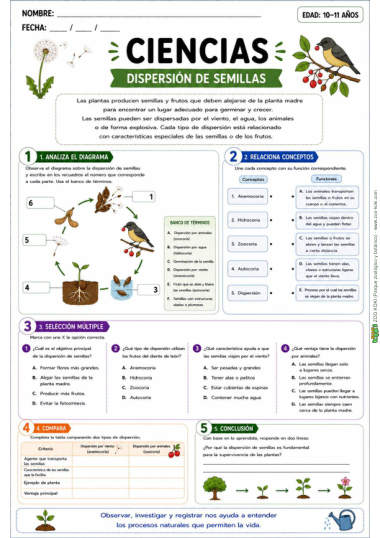 Ages 10-11Seed dispersalFind out how wind, water and animals spread seeds. Download PDF
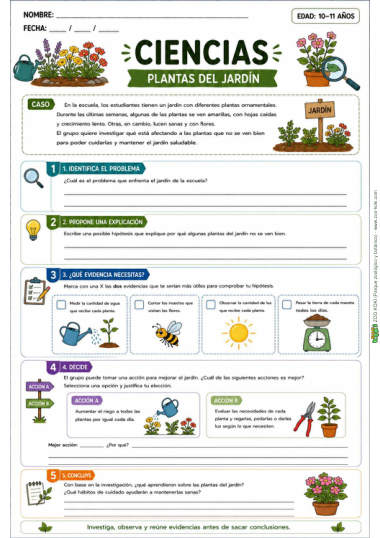 Ages 10-11Garden plantsMeet plants from the zoo's garden and learn to recognise them. Download PDF
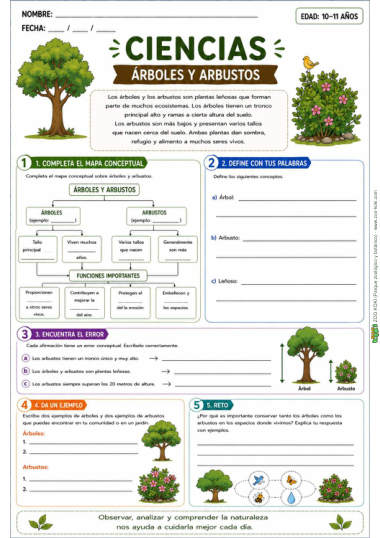 Ages 10-11Trees and shrubsCompare trees, shrubs and herbs and learn to recognise their parts. Download PDF
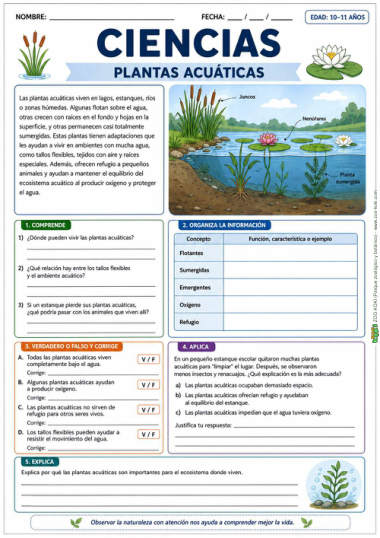 Ages 10-11Water plantsGet to know the plants that live in water and how they have adapted to it. Download PDF
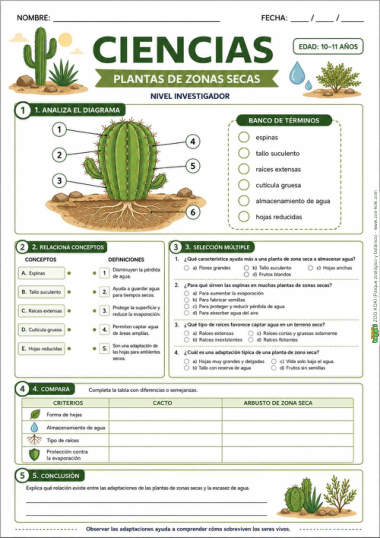 Ages 10-11Plants of dry regionsLearn how plants that live with very little water adapt. Download PDF
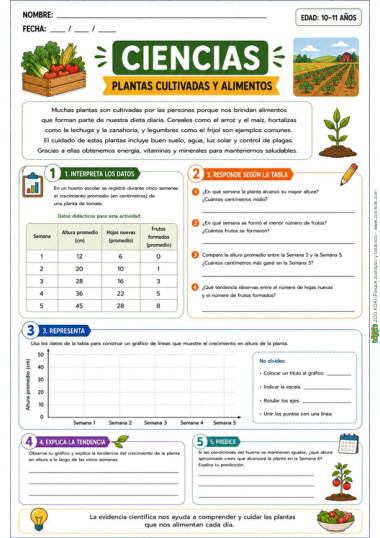 Ages 10-11Cultivated plants and foodMatch cultivated plants with the foods we get from them. Download PDF
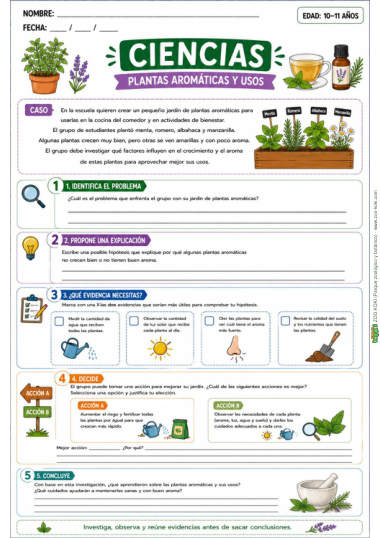 Ages 10-11Aromatic plants and their usesGet to know aromatic plants and what they are used for in cooking and health. Download PDF
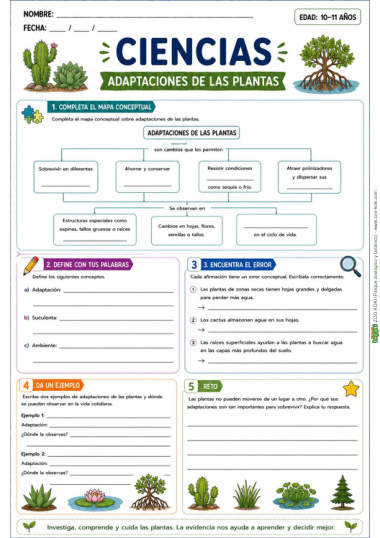 Ages 10-11Plant adaptationsFind out how plants adapt to different climates and places. Download PDF
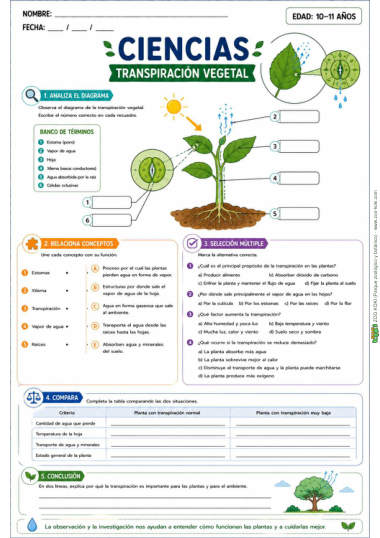 Ages 10-11Plant transpirationFind out how plants lose water through their leaves and why it matters. Download PDF
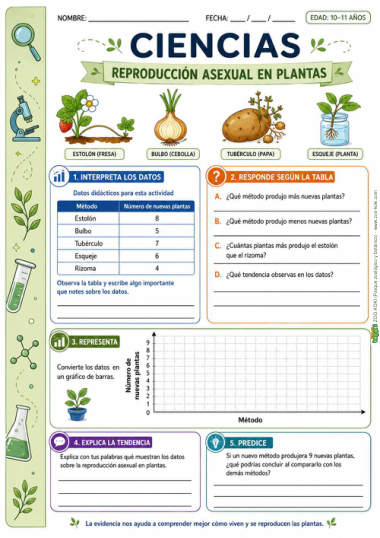 Ages 10-11Asexual reproduction in plantsFind out how new plants grow without seeds, from cuttings, bulbs or stems. Download PDF
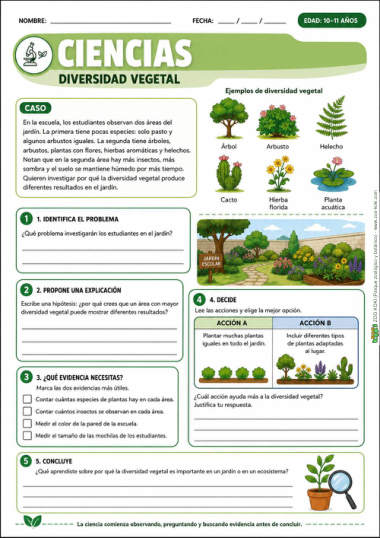 Ages 10-11Plant diversitySort plants by their features and discover their great variety. Download PDF
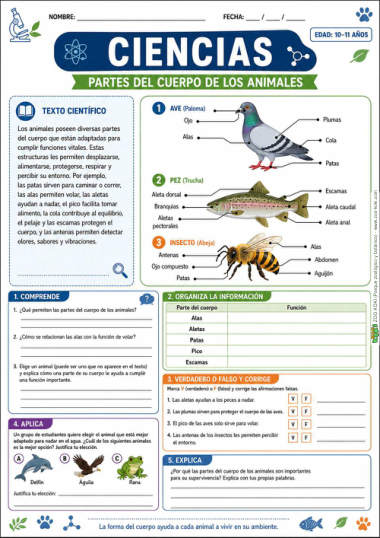 Ages 10-11Animal body partsRecognise the body parts of different animals and what each one is for. Download PDF
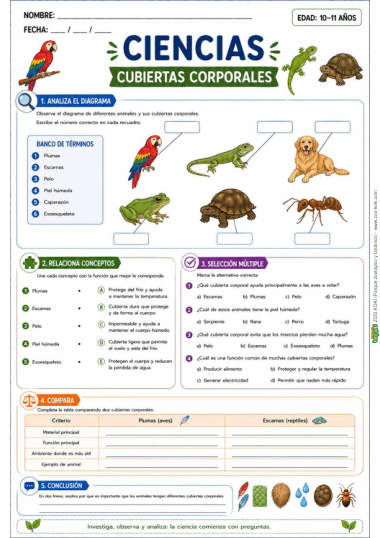 Ages 10-11Body coveringsSort animals by whether they have fur, feathers, scales or smooth skin. Download PDF
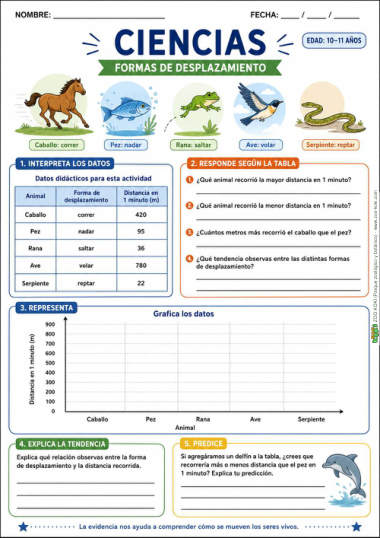 Ages 10-11Ways of movingFind out how animals move: they walk, fly, swim or crawl. Download PDF
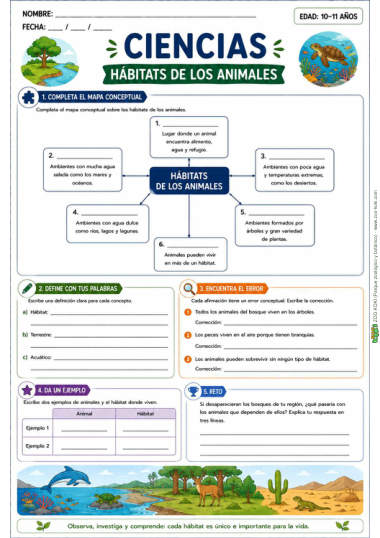 Ages 10-11Animal habitatsFind out where each animal lives and what it needs from its home to survive. Download PDF
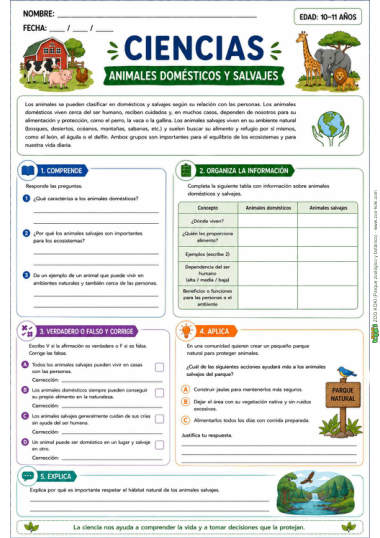 Ages 10-11Domestic and wild animalsLearn to tell domestic animals from wild ones and where each one lives. Download PDF
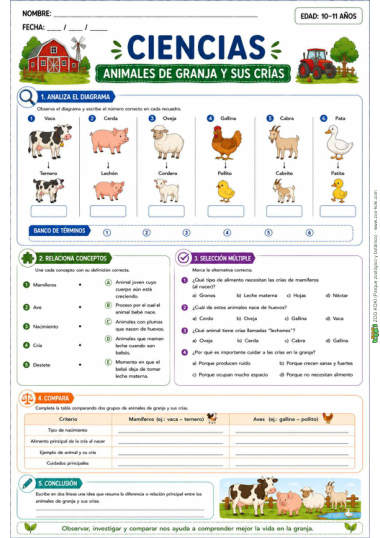 Ages 10-11Farm animals and their youngMatch farm animals with their young and with what they give us. Download PDF
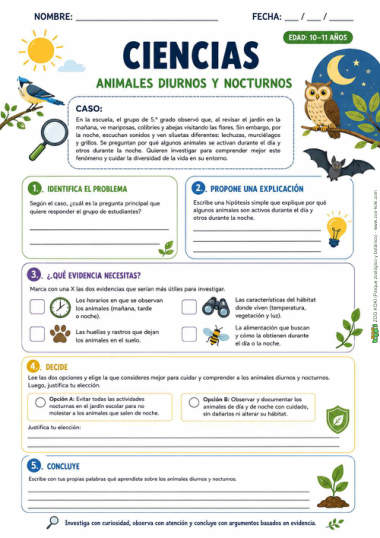 Ages 10-11Day and night animalsFind out which animals are active by day and which at night. Download PDF
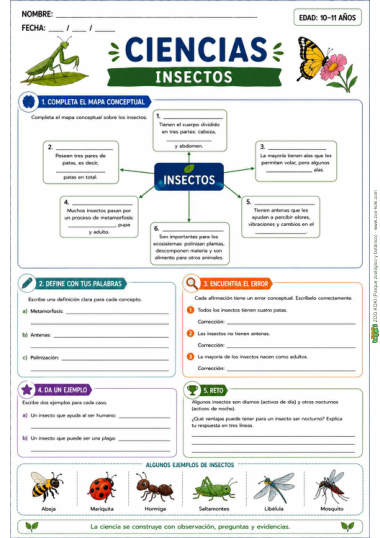 Ages 10-11InsectsRecognise the parts of an insect's body and what makes insects different. Download PDF
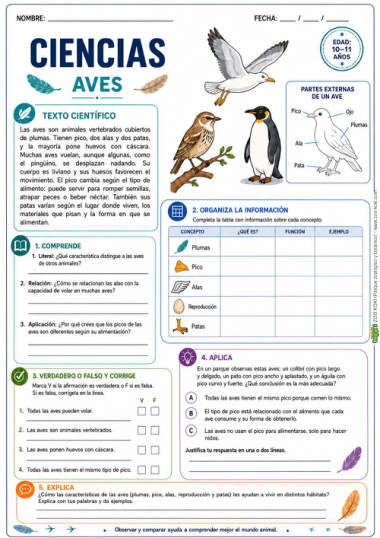 Ages 10-11AvesLearn what makes birds special: feathers, beak, eggs and flight. Download PDF
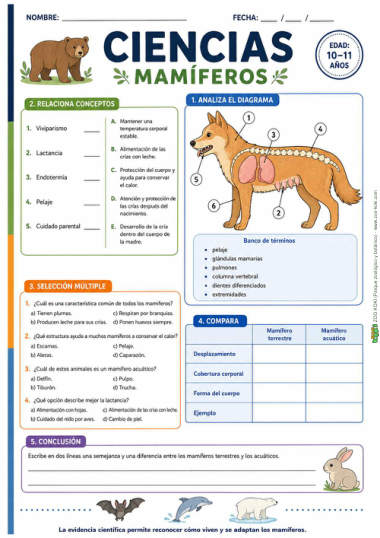 Ages 10-11MammalsFind out what mammals have in common and what sets them apart from other animals. Download PDF
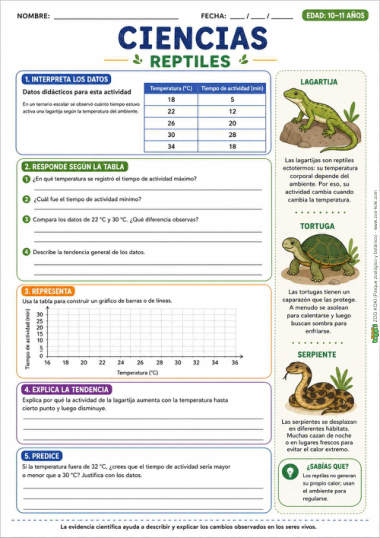 Ages 10-11ReptilesLearn what reptiles are like and how they live. Download PDF
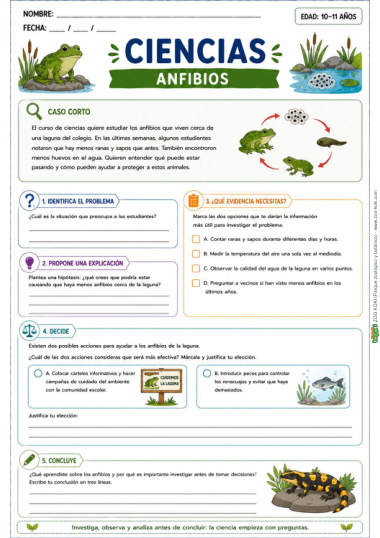 Ages 10-11AmphibiansFind out how amphibians live and how they change during their lives. Download PDF
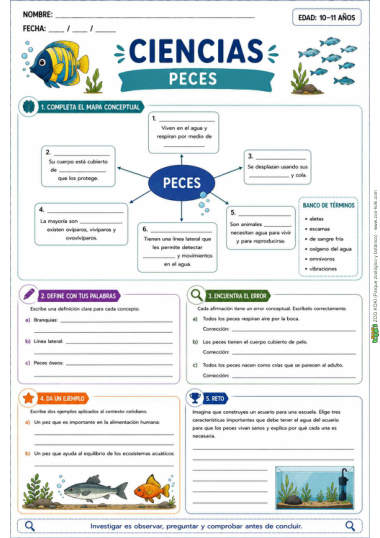 Ages 10-11FishFind out how fish live and what makes them different from other animals. Download PDF
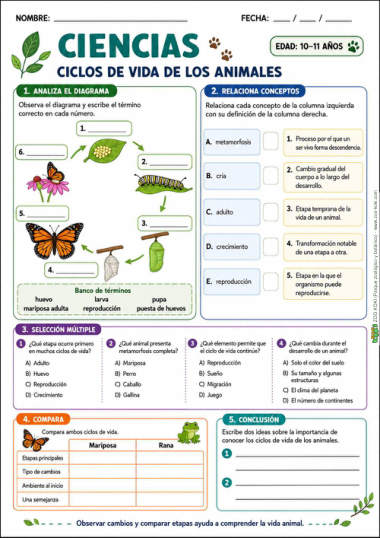 Ages 10-11Animal life cyclesPut the life stages of different animals in order, from birth to adulthood. Download PDF
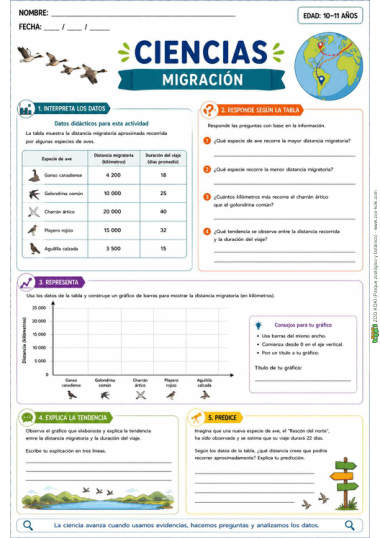 Ages 10-11MigrationUnderstand why some animals travel long distances every year. Download PDF
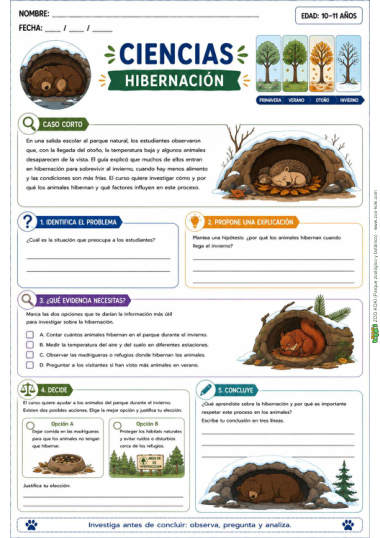 Ages 10-11HibernationUnderstand why some animals sleep through winter and how they survive the cold. Download PDF
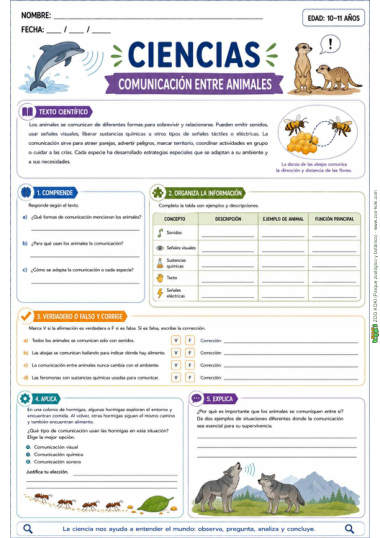 Ages 10-11Communication between animalsFind out how animals communicate with sounds, gestures and smells. Download PDF
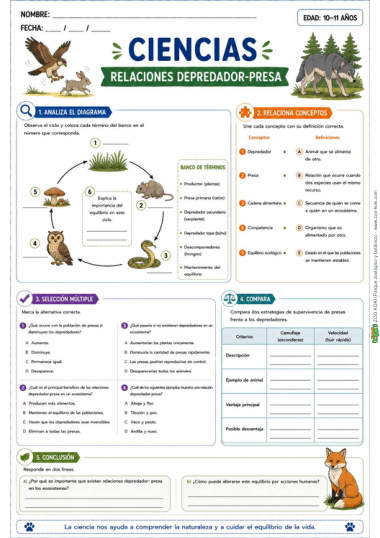 Ages 10-11Predator–prey relationshipsUnderstand the relationship between hunter and hunted in nature. Download PDF
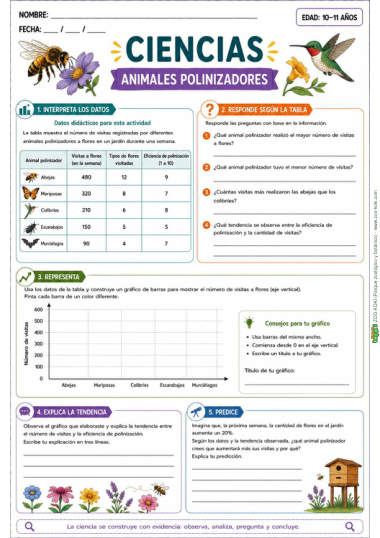 Ages 10-11Pollinating animalsFind out which animals carry pollen from flower to flower and why they are so important. Download PDF
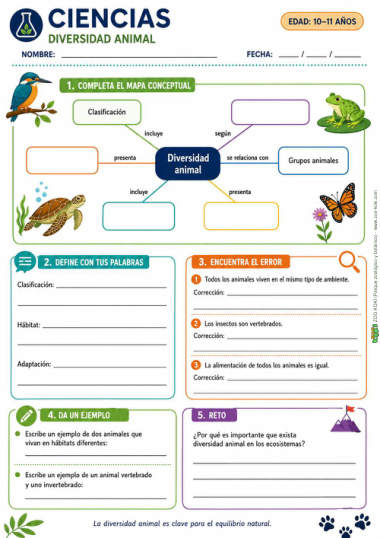 Ages 10-11Animal diversityDiscover the great variety of animals and how they are grouped. Download PDF
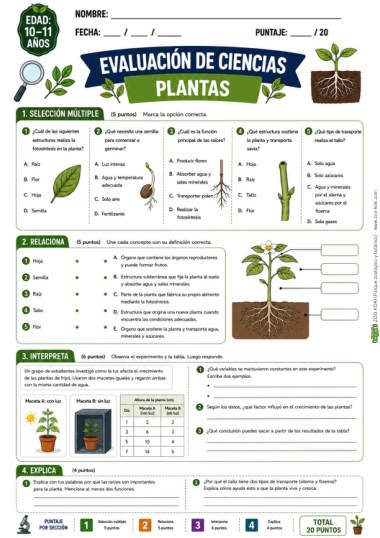 Ages 10-11Assessment: plantsA science assessment on plants, with different question types and a suggested score. Download PDF
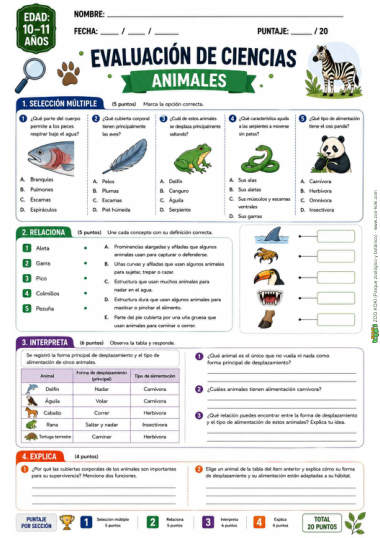 Ages 10-11Animals assessmentAn assessment on animals, with multiple-choice, matching and true-or-false questions. Download PDF
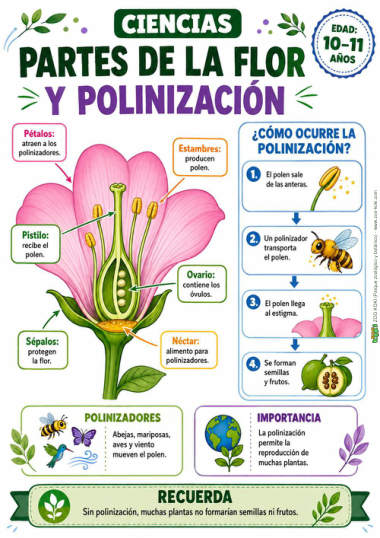 Ages 10-11Poster: Parts of a flower and pollinationA classroom poster that explains the concept visually, with a “Remember” box. Download PDF
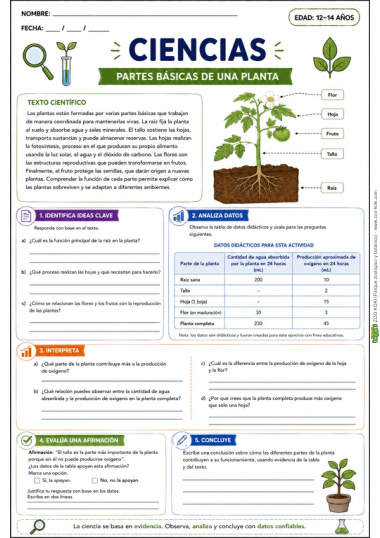 Ages 12-14Basic parts of a plantIdentify the root, stem, leaves and flowers and what each part is for. Download PDF
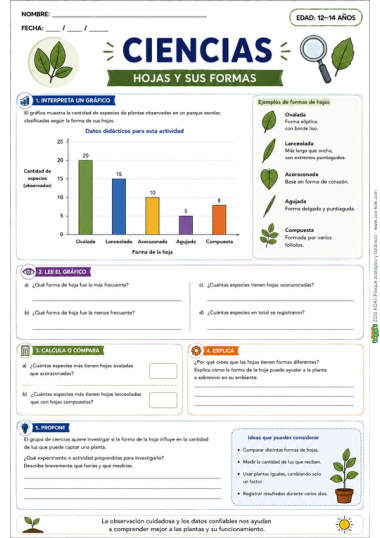 Ages 12-14Leaves and their shapesSee what leaves are like and why their shape changes from one plant to another. Download PDF
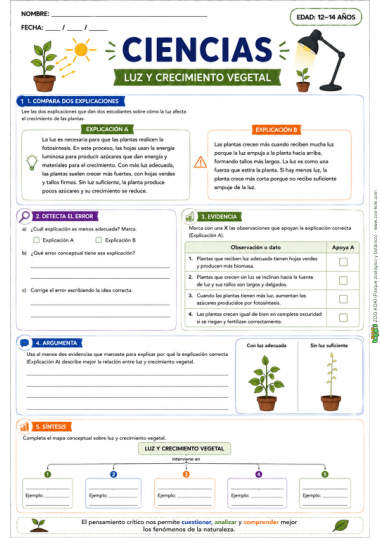 Ages 12-14Light and plant growthExperiment with how light affects the way plants grow. Download PDF
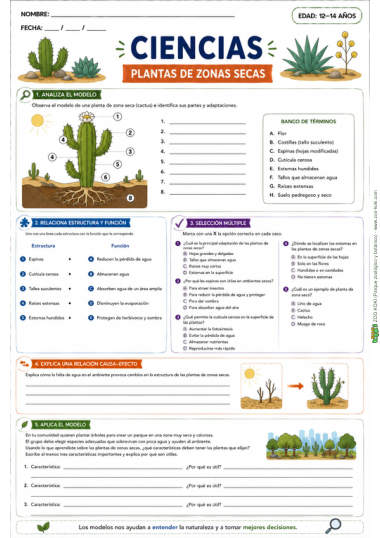 Ages 12-14Plants of dry regionsLearn how plants that live with very little water adapt. Download PDF
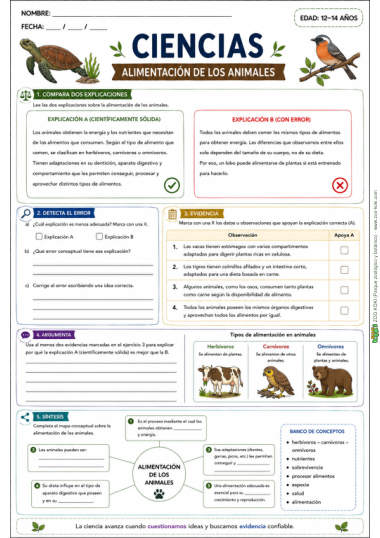 Ages 12-14What animals eatTell carnivores, herbivores and omnivores apart and learn what each one eats. Download PDF
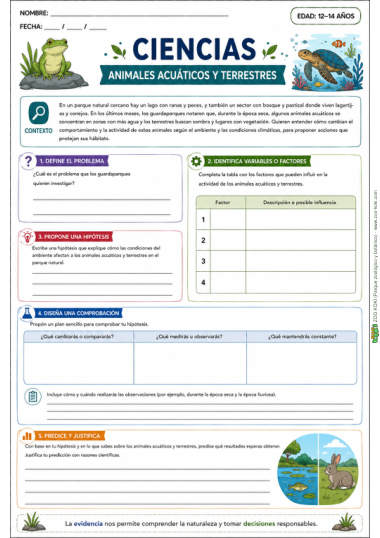 Ages 12-14Aquatic and land animalsCompare how animals of the water and the land live and move. Download PDF
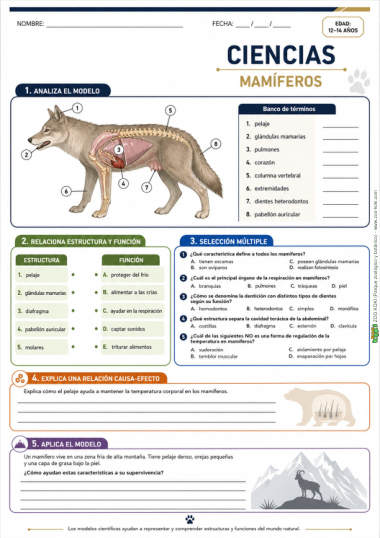 Ages 12-14MammalsFind out what mammals have in common and what sets them apart from other animals. Download PDF
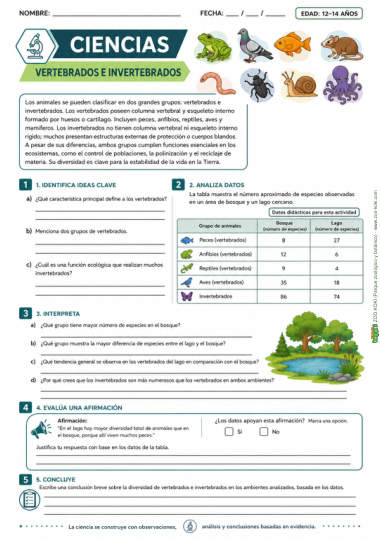 Ages 12-14Vertebrates and invertebratesLearn to classify animals according to whether or not they have an internal skeleton. Download PDF
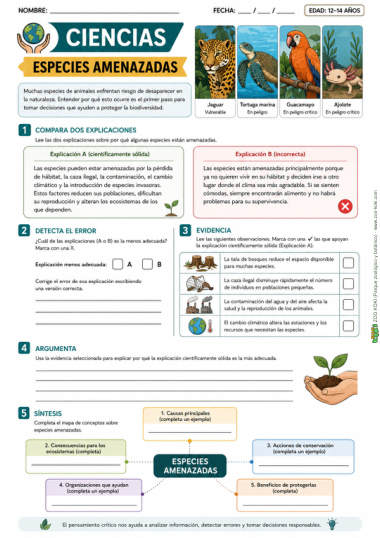 Ages 12-14Endangered speciesLearn why some species are in danger and what we can do to protect them. Download PDF
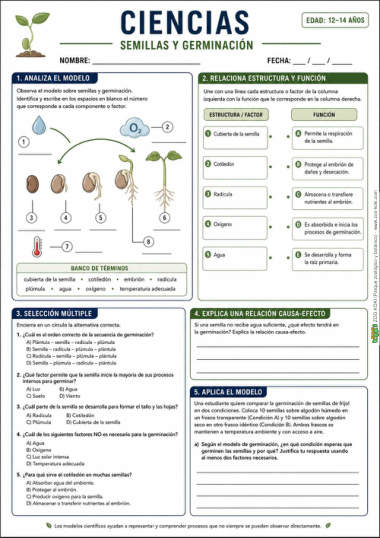 Ages 12-14Seeds and germinationWatch how a seed germinates and what it needs to become a plant. Download PDF
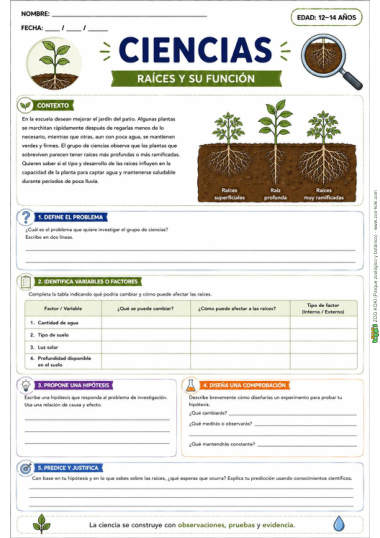 Ages 12-14Roots and what they doFind out what roots are for and how they take water from the soil. Download PDF
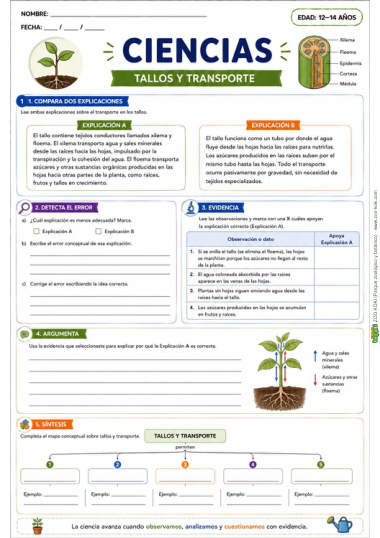 Ages 12-14Stems and transportUnderstand how the stem carries water and food to the whole plant. Download PDF
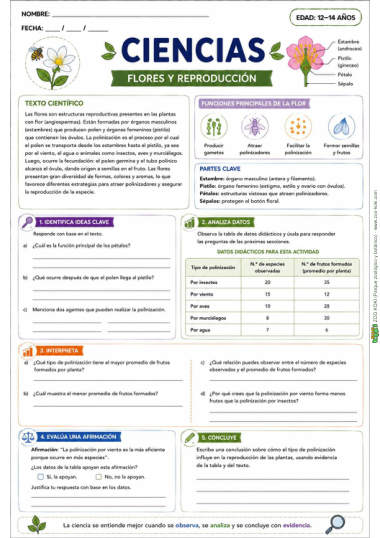 Ages 12-14Flowers and reproductionRecognise the parts of a flower and how flowering plants reproduce. Download PDF
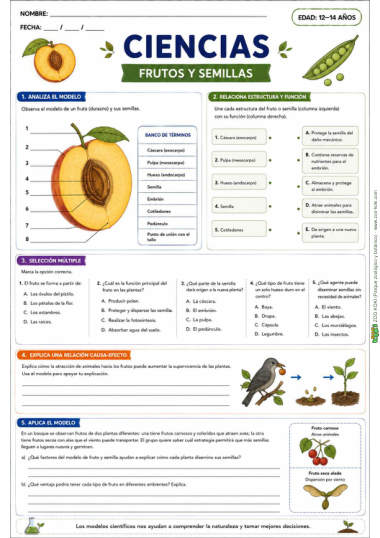 Ages 12-14Fruits and seedsMatch each fruit with its seeds and understand how they protect the future plant. Download PDF
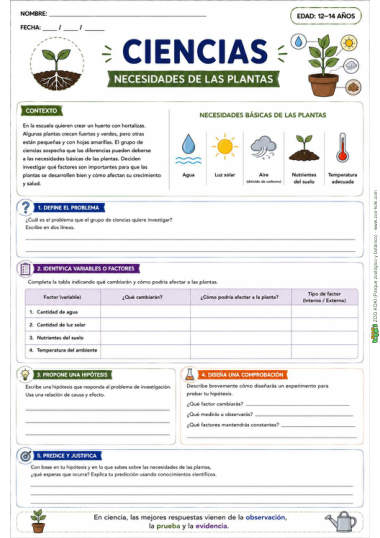 Ages 12-14What plants needFind out what plants need to live: light, water, air and soil. Download PDF
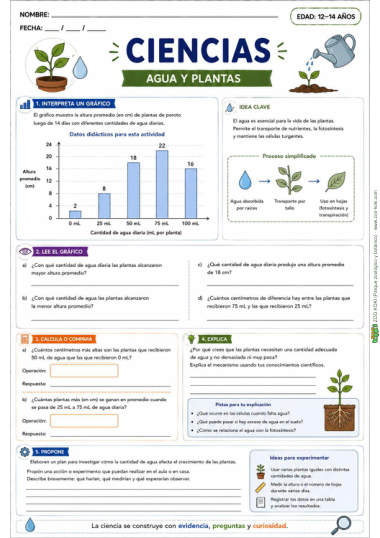 Ages 12-14Water and plantsFind out how plants absorb, carry and use water. Download PDF
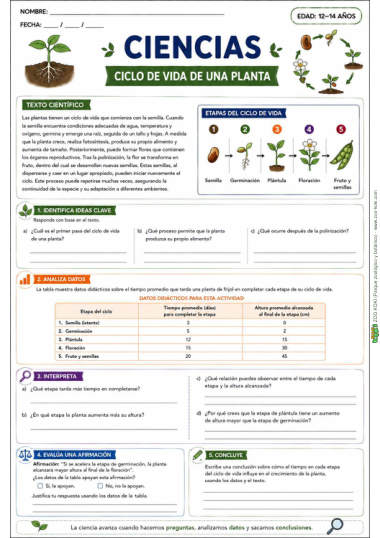 Ages 12-14Life cycle of a plantPut the stages of a plant's life in order, from seed to seed. Download PDF
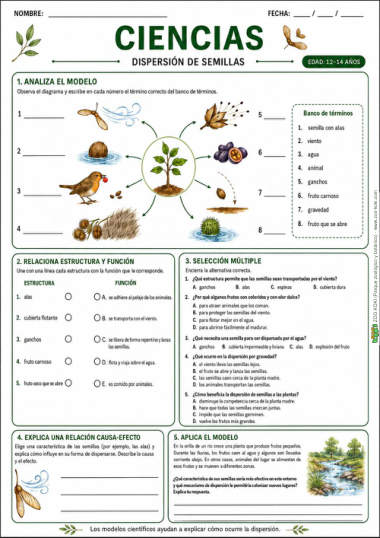 Ages 12-14Seed dispersalFind out how wind, water and animals spread seeds. Download PDF
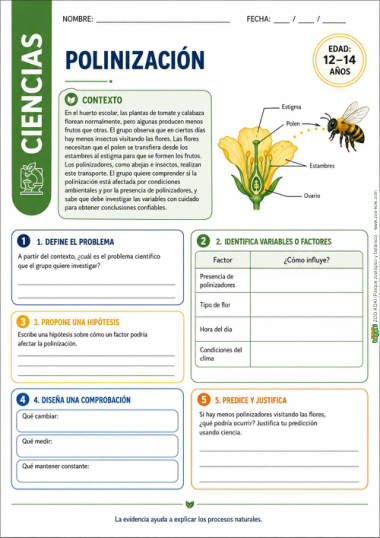 Ages 12-14PollinationFind out how pollen travels from flower to flower so that fruits and seeds can form. Download PDF
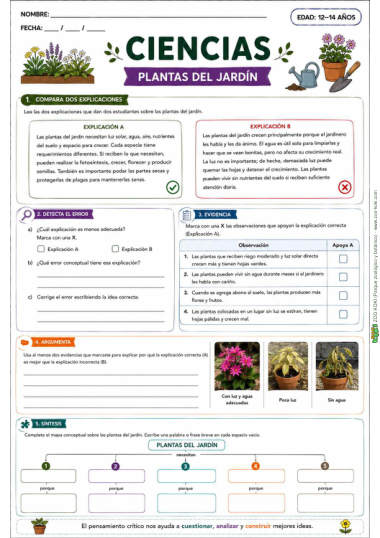 Ages 12-14Garden plantsMeet plants from the zoo's garden and learn to recognise them. Download PDF
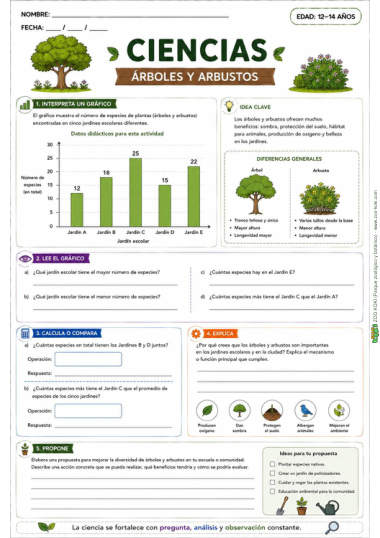 Ages 12-14Trees and shrubsCompare trees, shrubs and herbs and learn to recognise their parts. Download PDF
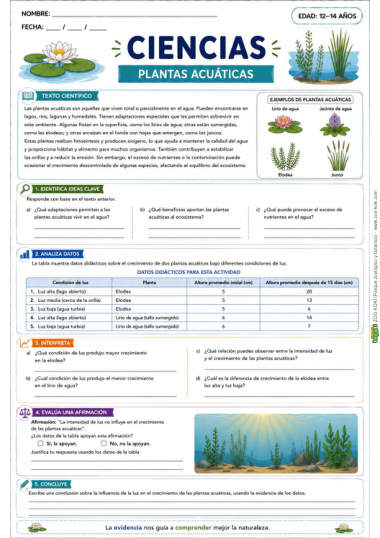 Ages 12-14Water plantsGet to know the plants that live in water and how they have adapted to it. Download PDF
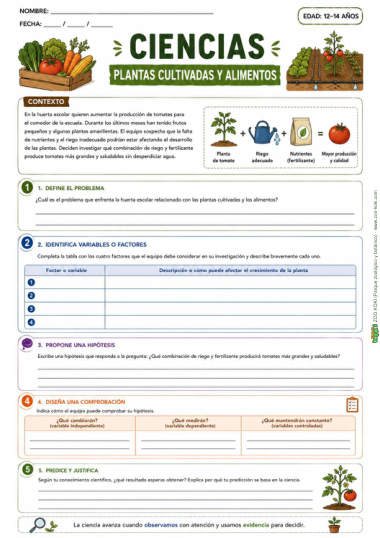 Ages 12-14Cultivated plants and foodMatch cultivated plants with the foods we get from them. Download PDF
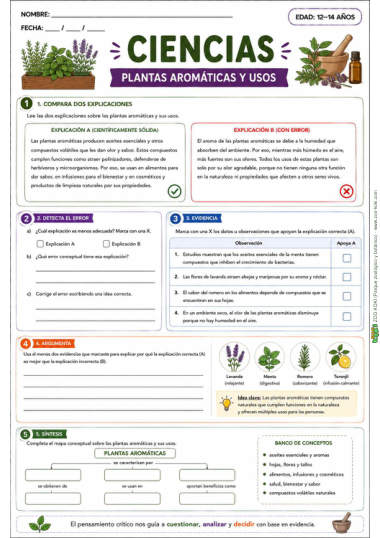 Ages 12-14Aromatic plants and their usesGet to know aromatic plants and what they are used for in cooking and health. Download PDF
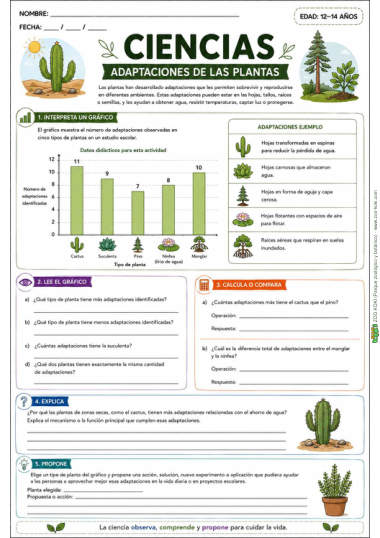 Ages 12-14Plant adaptationsFind out how plants adapt to different climates and places. Download PDF
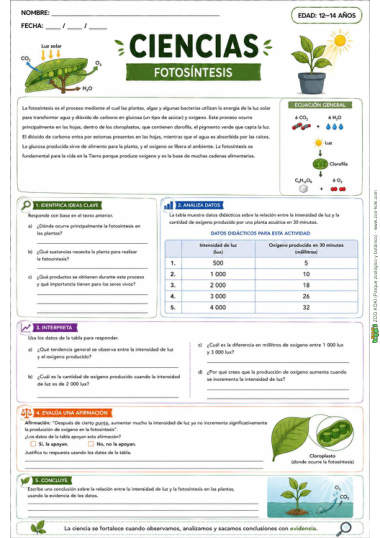 Ages 12-14PhotosynthesisUnderstand how plants make their food from light, water and air. Download PDF
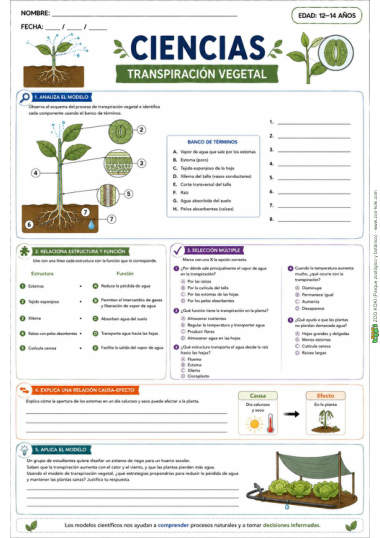 Ages 12-14Plant transpirationFind out how plants lose water through their leaves and why it matters. Download PDF
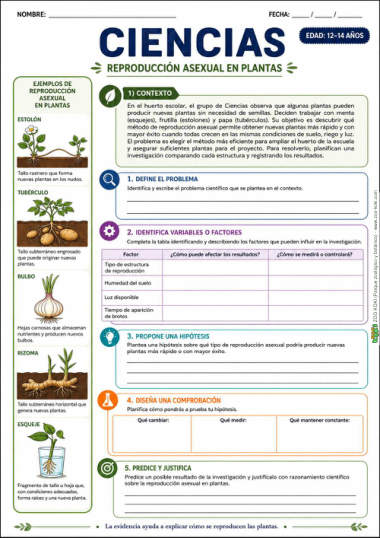 Ages 12-14Asexual reproduction in plantsFind out how new plants grow without seeds, from cuttings, bulbs or stems. Download PDF
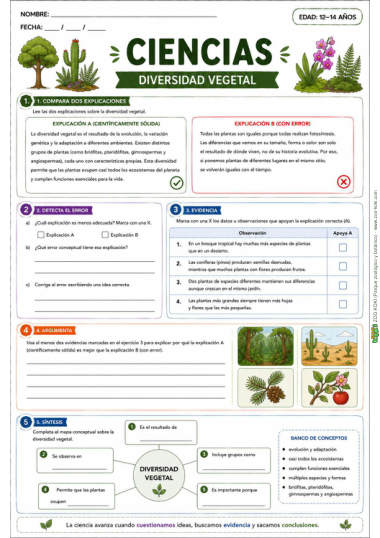 Ages 12-14Plant diversitySort plants by their features and discover their great variety. Download PDF
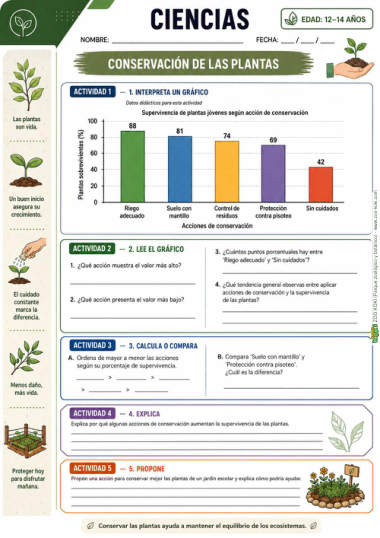 Ages 12-14Plant conservationFind out why plants need protecting and how they are conserved. Download PDF
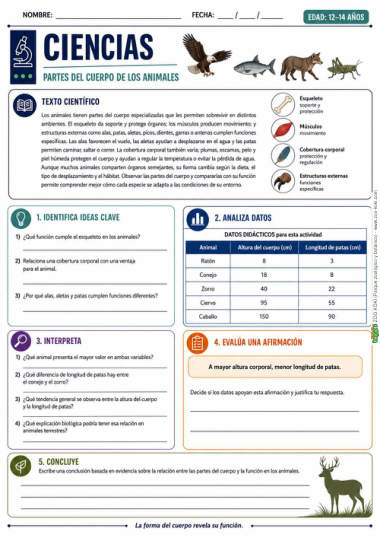 Ages 12-14Animal body partsRecognise the body parts of different animals and what each one is for. Download PDF
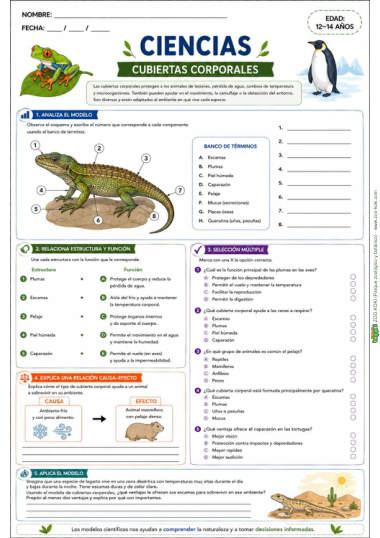 Ages 12-14Body coveringsSort animals by whether they have fur, feathers, scales or smooth skin. Download PDF
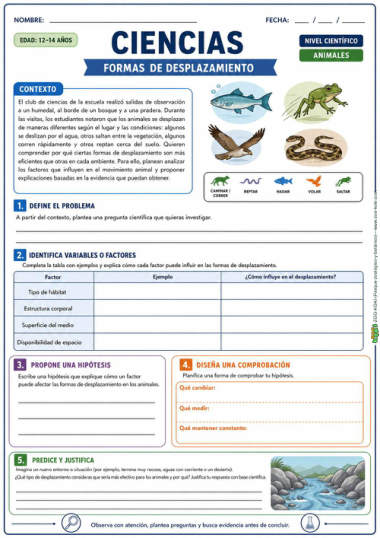 Ages 12-14Ways of movingFind out how animals move: they walk, fly, swim or crawl. Download PDF
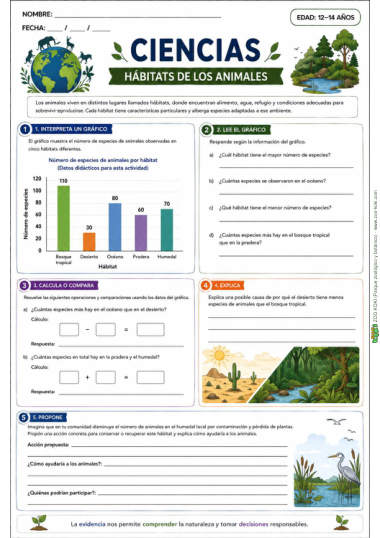 Ages 12-14Animal habitatsFind out where each animal lives and what it needs from its home to survive. Download PDF
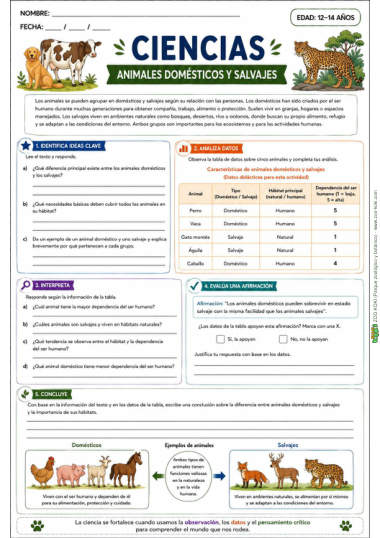 Ages 12-14Domestic and wild animalsLearn to tell domestic animals from wild ones and where each one lives. Download PDF
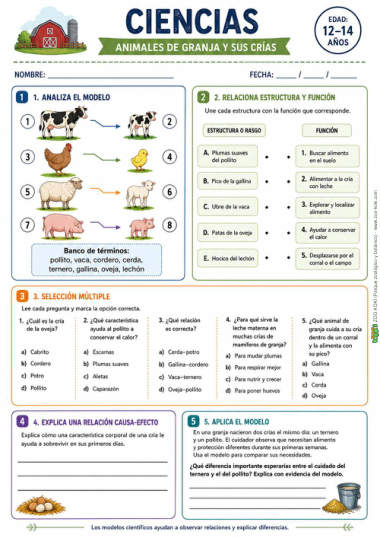 Ages 12-14Farm animals and their youngMatch farm animals with their young and with what they give us. Download PDF
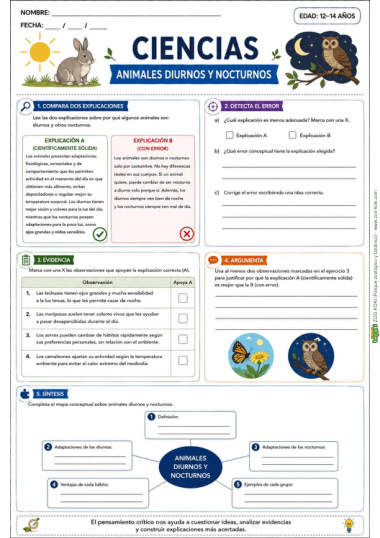 Ages 12-14Day and night animalsFind out which animals are active by day and which at night. Download PDF
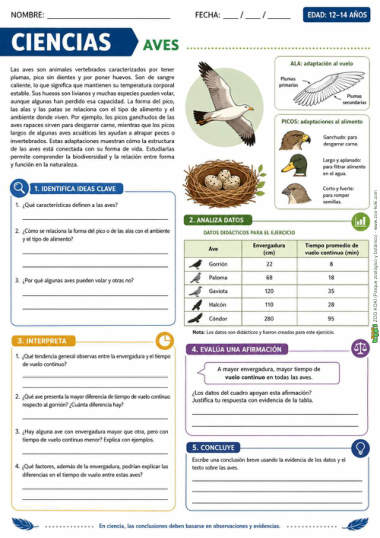 Ages 12-14AvesLearn what makes birds special: feathers, beak, eggs and flight. Download PDF
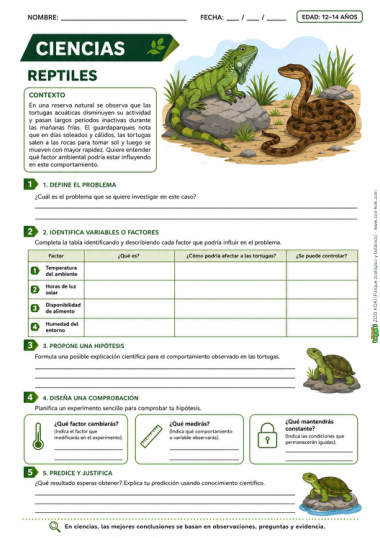 Ages 12-14ReptilesLearn what reptiles are like and how they live. Download PDF
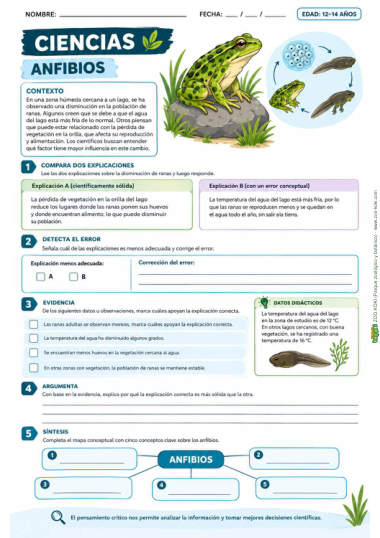 Ages 12-14AmphibiansFind out how amphibians live and how they change during their lives. Download PDF
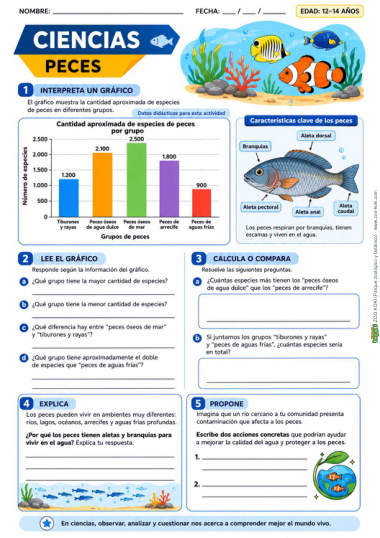 Ages 12-14FishFind out how fish live and what makes them different from other animals. Download PDF
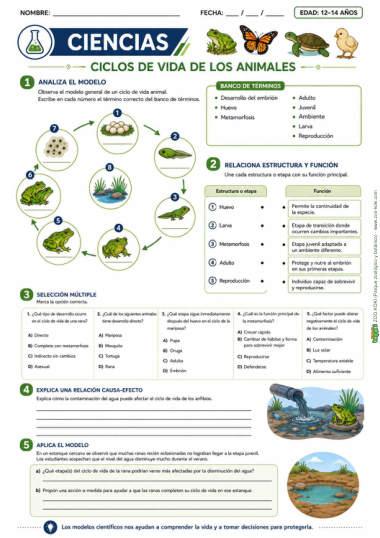 Ages 12-14Animal life cyclesPut the life stages of different animals in order, from birth to adulthood. Download PDF
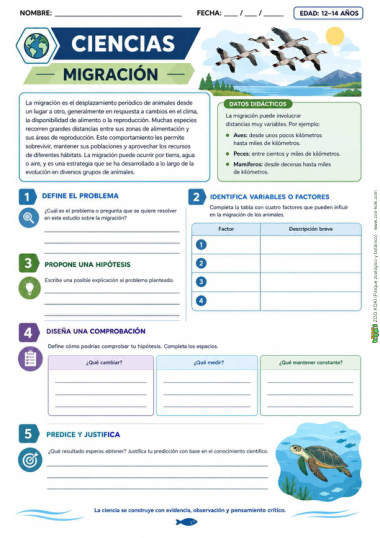 Ages 12-14MigrationUnderstand why some animals travel long distances every year. Download PDF
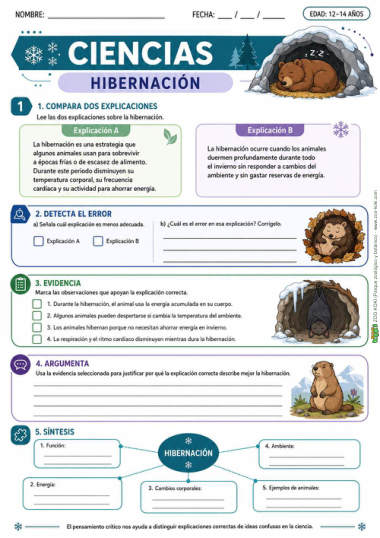 Ages 12-14HibernationUnderstand why some animals sleep through winter and how they survive the cold. Download PDF
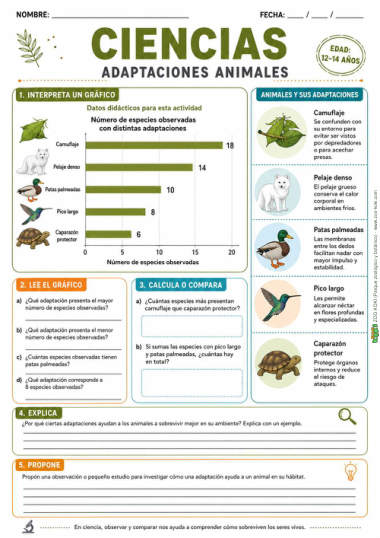 Ages 12-14Animal adaptationsFind out how animals adapt to their surroundings to survive. Download PDF
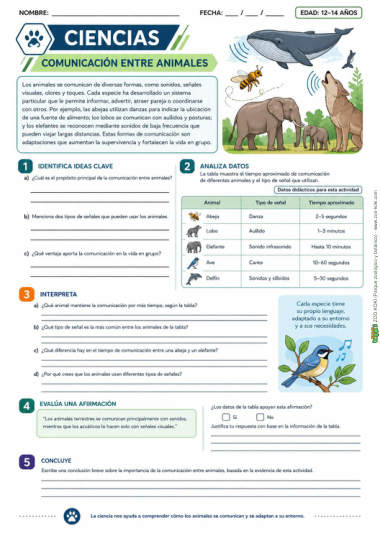 Ages 12-14Communication between animalsFind out how animals communicate with sounds, gestures and smells. Download PDF
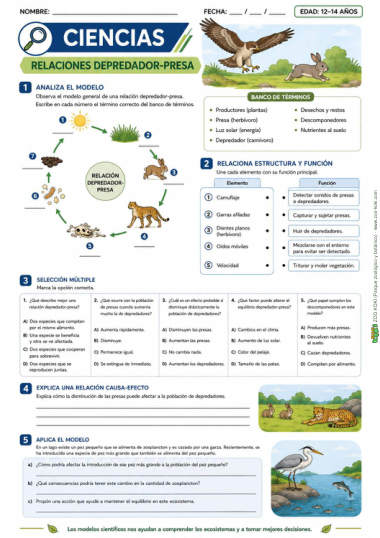 Ages 12-14Predator–prey relationshipsUnderstand the relationship between hunter and hunted in nature. Download PDF
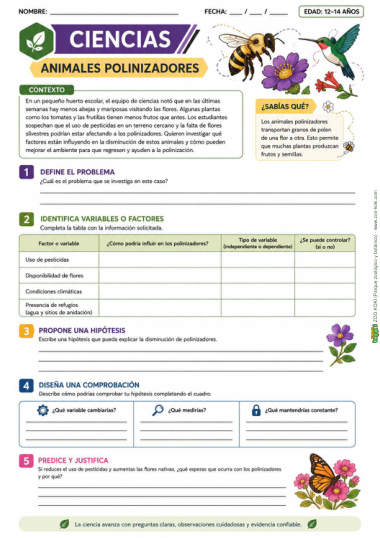 Ages 12-14Pollinating animalsFind out which animals carry pollen from flower to flower and why they are so important. Download PDF
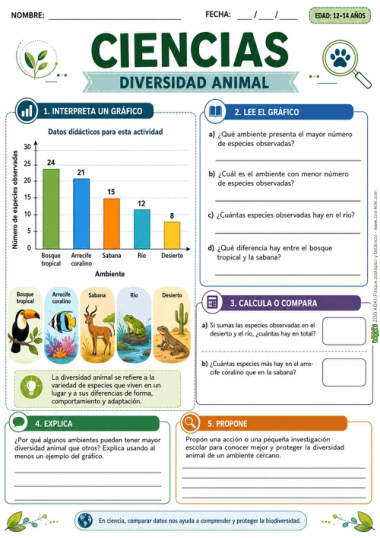 Ages 12-14Animal diversityDiscover the great variety of animals and how they are grouped. Download PDF
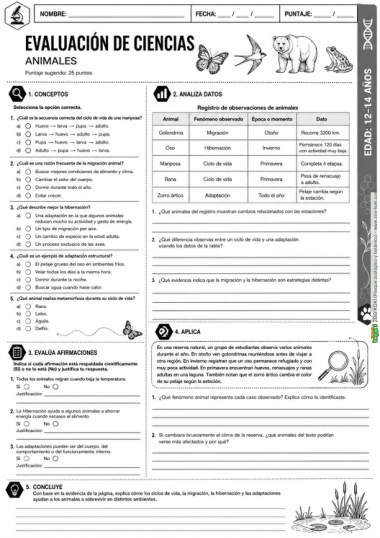 Ages 12-14Assessment: AnimalsA test with questions and data analysis to assess what has been learned about animals. Download PDF
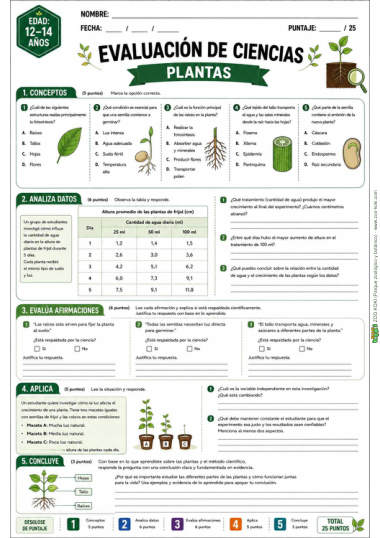 Ages 12-14Assessment: plantsA science assessment on plants, with different question types and a suggested score. Download PDF
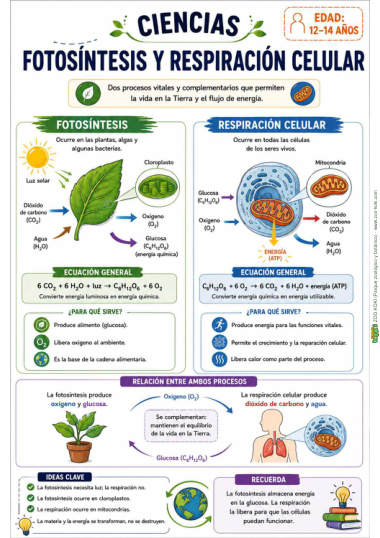 Ages 12-14Poster: Photosynthesis and cellular respirationA classroom poster that explains the concept visually, with a “Remember” box. Download PDF
 TeachersUnit 1 — “Living things are born and grow”Lesson plan: telling living things from inert ones and learning about their needs. Download PDF
 TeachersUnit 2 — “Classifying animals”Lesson plan: classifying animals by diet and other criteria. Download PDF
 TeachersUnit 3 — “Vertebrate animals”Lesson plan: vertebrate animals, mammals and their characteristics. Download PDF
TeachersLetter to send to parentsA sample letter to inform families about the zoo visit. Download DOCX
No materials match that combination. Change or remove a filter, or press “Clear”.
You can also see all the accessibility options we offer at the zoo.
You may freely download these documents and use them in the classroom without limitation, although commercial use of these materials is not permitted without the prior authorisation of the Zoo Koki education department.
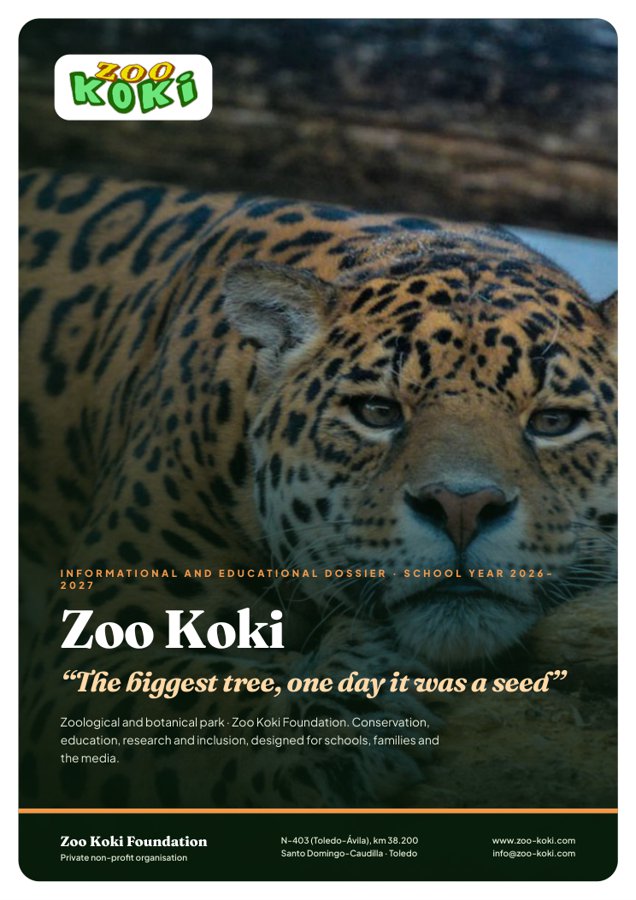
If you wish, you can download our educational dossier, which contains a summary of all our activities and workshops.