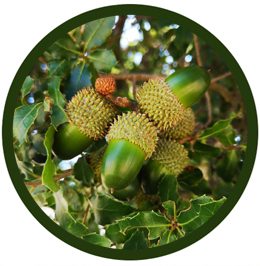
The Pyrenean oak, or “melojo” (also called “rebollo”), is a large deciduous tree, the most characteristic oak of the mountain ranges and peneplains of central Spain.
| Kingdom | Plantae |
| Division | Magnoliophyta |
| Class | Magnoliopsida |
| Order | Fagales |
| Family | Fagaceae |
| Genus | Quercus |
| Species | Quercus pyrenaica |
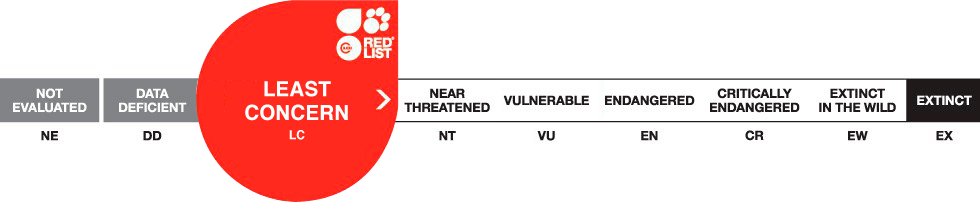
It is a deciduous tree of up to 20–25 metres in height, with large, deeply lobed leaves covered on the underside with a fine greyish down that gives them a soft feel. Like the Portuguese oak, it keeps some of its dry leaves for a good part of the winter.
Its fruit is the typical oak acorn, elongated, with a cupule covered in scales.
It is a species native to the Iberian Peninsula, western France and North Africa. In Spain it forms extensive woodlands (“melojares” or “rebollares”) on the siliceous mountain ranges and peneplains of the interior, including the Montes de Toledo, preferring acidic soils and continental climates with marked temperature contrasts.
The Pyrenean oak has a great capacity to resprout from the root, producing new trunks that are genetically identical to the original. Thanks to this clonal reproduction, some oak woods are formed by groups of trees that may be thousands of years old as organisms, even though the individual trunks are much younger.