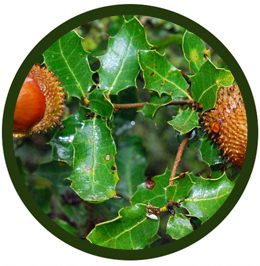
The kermes oak is an evergreen shrub or small tree with spiny leaves, one of the most characteristic components of Mediterranean scrub.
| Kingdom | Plantae |
| Division | Magnoliophyta |
| Class | Magnoliopsida |
| Order | Fagales |
| Family | Fagaceae |
| Genus | Quercus |
| Species | Quercus coccifera |
It is an evergreen shrub, normally low-growing and highly branched (1-3 metres), although it can occasionally develop as a small tree. Its leaves are leathery and glossy green, with toothed, spiny margins, very similar to those of holly.
It produces acorns similar to those of the holm oak, with a cup covered in pointed scales, which take a year to ripen.
It is typical of the whole Mediterranean basin, where it forms part of the scrub (kermes oak thickets and garrigues) on limestone soils. It is very resistant to drought, cold and fire, and usually resprouts vigorously after wildfires.
The kermes scale insect (Kermes vermilio) traditionally lived on its branches; before the arrival of the American cochineal, this small insect was used to obtain a prized red dye called grana. Hence its scientific name, “coccifera”, meaning “bearer of grana”.