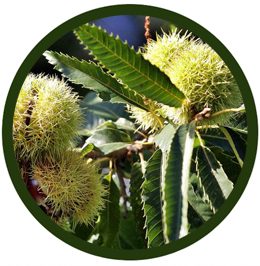
The chestnut is a large, long-lived deciduous tree, cultivated since antiquity both for its fruit, the chestnut, and for its valuable timber.
| Kingdom | Plantae |
| Division | Magnoliophyta |
| Class | Magnoliopsida |
| Order | Fagales |
| Family | Fagaceae |
| Genus | Castanea |
| Species | Castanea sativa |
It is a deciduous tree that can exceed 30 metres in height, with a thick, sturdy trunk that becomes hollow in the oldest specimens. Its leaves are large, elongated and have serrated edges.
Its flowers, gathered in long catkins, give way to a spiny husk that protects one or several chestnuts inside, the edible fruit for which it has been cultivated for millennia.
It is native to Asia Minor and southern Europe, and was spread across the continent by the Greeks and Romans. In Spain it is found in mountain areas with a damp climate and acidic soils, especially in the northern half and in some mountain ranges of the centre and south.
Chestnut trees can live for several centuries, and some centuries-old or even thousand-year-old specimens survive in various parts of Europe. For centuries, the chestnut was a staple food in many rural mountain areas, to the point of replacing bread in times of scarcity.