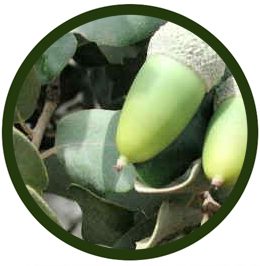
The holm oak (Quercus ilex) is an evergreen tree of the beech family, native to the Mediterranean region and one of the most characteristic trees of the Spanish landscape.
| Kingdom | Plantae |
| Division | Tracheophyta |
| Class | Magnoliopsida |
| Order | Fagales |
| Family | Fagaceae |
| Genus | Quercus |
| Species | Quercus ilex |
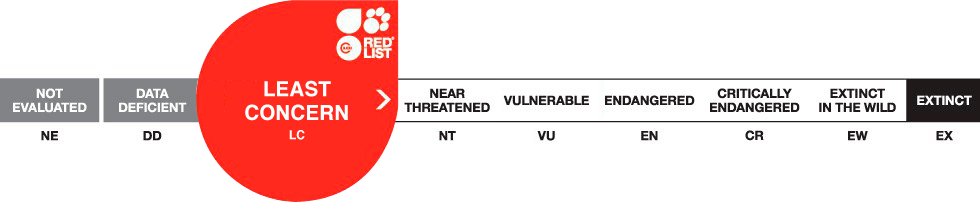
The holm oak (Quercus ilex) is a small to medium-sized tree that can reach 16 to 25 m in height, although it can also grow as a shrub depending on the terrain or climate. Other common names it is known by include encino, carrasca, chaparra and chaparro.
Its leaves are evergreen and stay on the tree for two to four years: leathery, dark green on the upper surface and paler and downy on the underside, with spiny margins when the plant is young. The bark is smooth and greyish when young, and becomes cracked and darker with age until it is almost black.
It is native to the Mediterranean region, where it is an essential part of the dehesa (wooded pasture) and Mediterranean scrub. Its hard, leathery leaves reduce transpiration, which allows it to live in dry places that are very exposed to the sun.
It flowers between March and May, and its fruits, the acorns, ripen between October and December. Pollination is mainly anemophilous (by wind).
Holm oaks are cultivated above all for their acorns, a key food for Iberian wildlife and also for the traditional farming of the Iberian pig.
Like most flowering plants, the holm oak forms symbiotic relationships with soil fungi, creating mycorrhizae. Some of these fungal species, of the genus Tuber, are the well-known black truffle, highly prized in gastronomy.