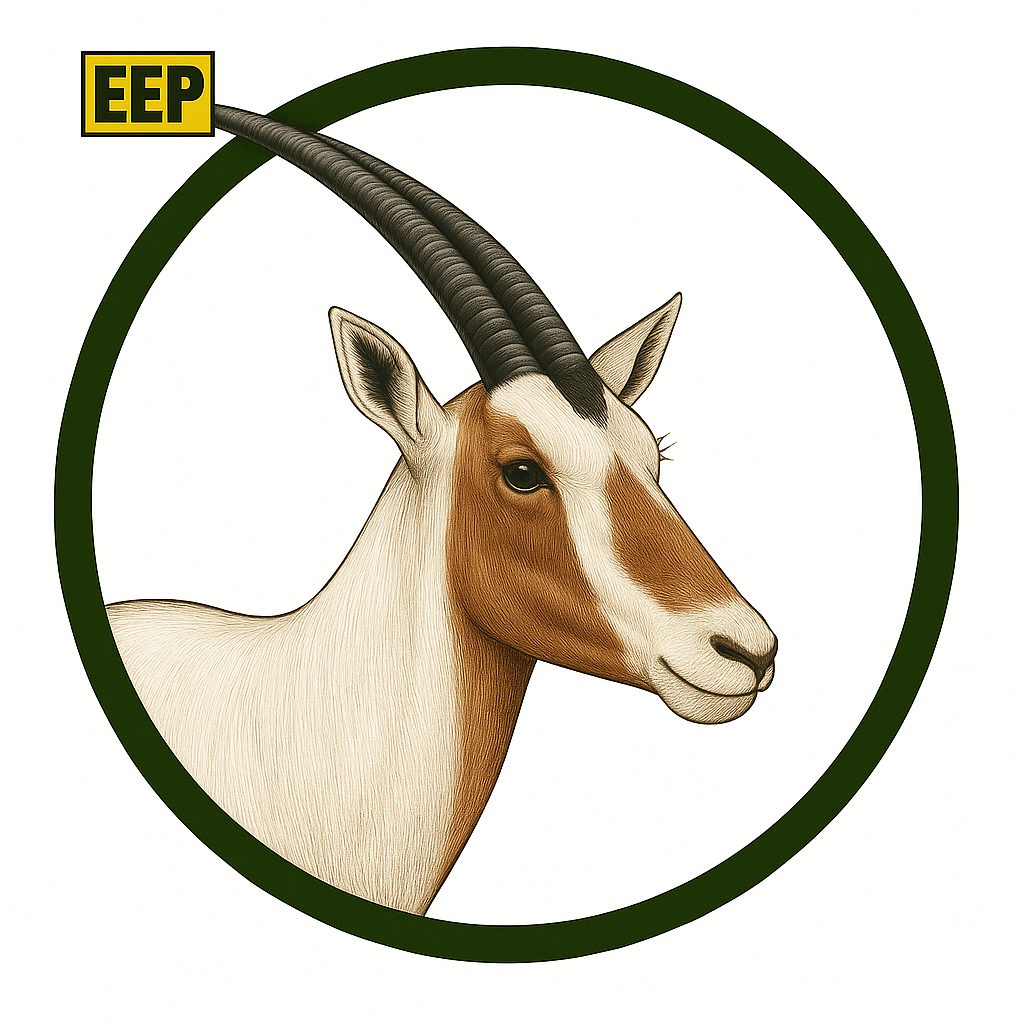
The scimitar-horned oryx or white oryx ( Oryx dammah ) is a species of African antelope of the subfamily Hippotraginae. It is the only Oryx species with horns that curve backwards in the shape of a scimitar, which gives it its common name.
| Kingdom | Animalia |
| Phylum | Chordata |
| Class | Mammalia |
| Order | Artiodactyla |
| Family | Bovidae |
| Genus | Oryx |
| Species | Oryx dammah |
The scimitar-horned oryx or white oryx (Oryx dammah) is a species of African antelope of the subfamily Hippotraginae. It is the only Oryx species with horns that curve backwards in the shape of a scimitar, which gives it its common name. Its coat is white, with reddish tones on the legs and neck, and it has an almost absent facial mask compared with other species of the genus.
This species is unusual in having been domesticated in Ancient Egypt as a meat-producing animal, although its domestication fell into disuse because of the species' aggressiveness.
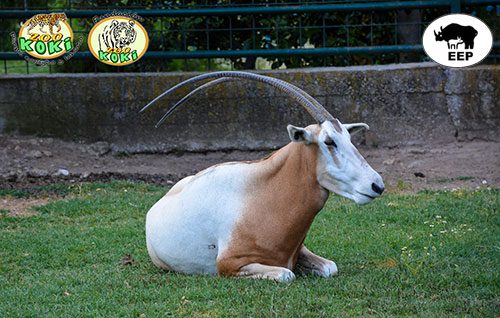
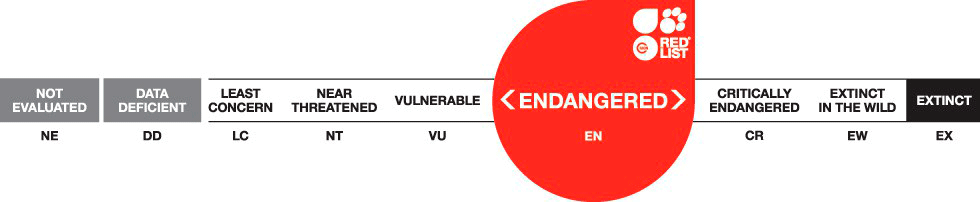
It was originally distributed throughout the Saharan region. However, overhunting, prolonged drought and habitat loss caused its decline until it was declared extinct in the wild in 2000. Thanks to international captive-breeding and reintroduction programmes -such as the European Endangered Species Programme (EEP), in which Zoo Koki takes part- individuals have been successfully reintroduced into the Ouadi Rimé-Ouadi Achim reserve in Chad, where there is now a growing free-living population that has allowed its threat category to be lowered from "extinct in the wild" to "endangered".
It is a herbivore adapted to arid environments that feeds on grasses, herbs, leaves, roots and bulbs, and is able to obtain a good part of the water it needs directly from the plants it eats.
After a gestation of 8 to 9 months, the female generally gives birth to a single calf. As in other oryxes, the newborn stays hidden among the vegetation for the first days of its life while its mother feeds nearby, joining the herd afterwards.
Thanks to breeding programmes in zoos around the world and its subsequent reintroduction in Chad, the scimitar-horned oryx is one of the few examples of a species declared extinct in the wild that has managed to return to living free.