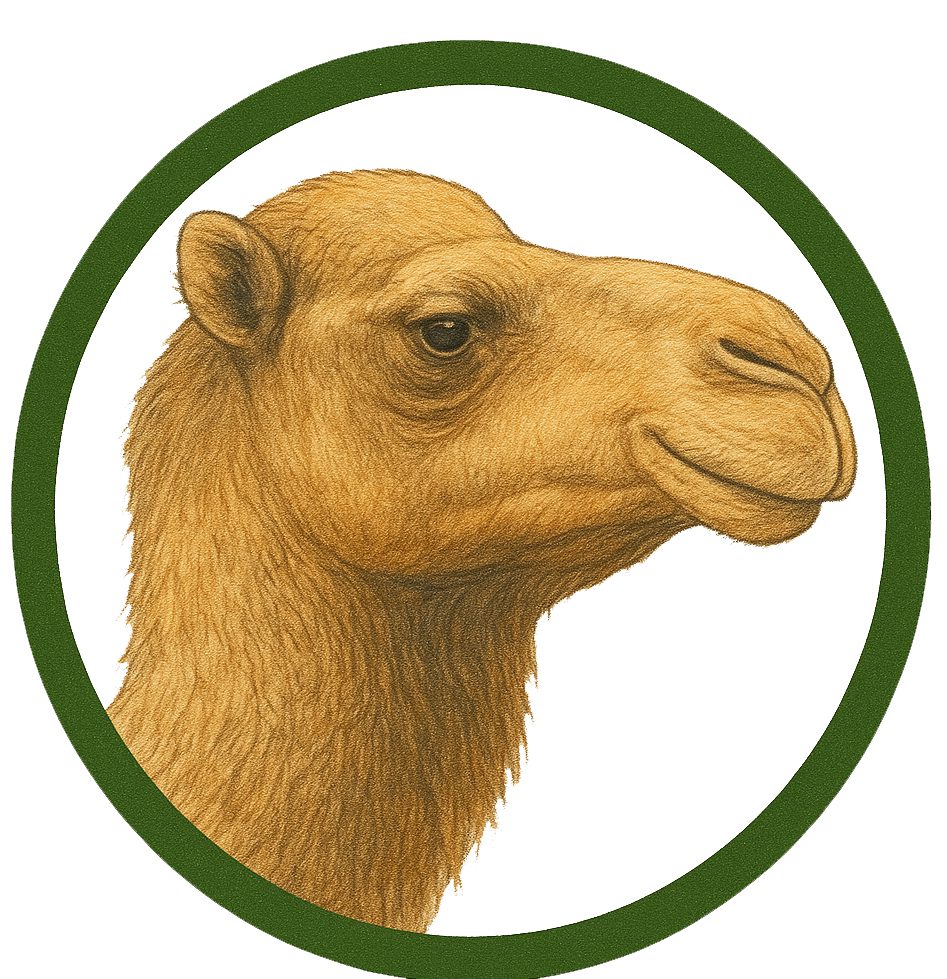
The dromedary or Arabian camel (Camelus dromedarius) is a species of even-toed ungulate mammal of the family Camelidae.
| Kingdom | Animalia |
| Phylum | Chordata |
| Class | Mammalia |
| Order | Artiodactyla |
| Family | Camelidae |
| Genus | Camelus |
| Species | Camelus dromedarius |
The dromedary or Arabian camel (Camelus dromedarius) is a species of even-toed ungulate mammal of the family Camelidae. It is similar to the Bactrian camel (commonly known simply as the camel), from which it differs in its generally shorter coat, a less robust body and the presence of a single hump instead of two.
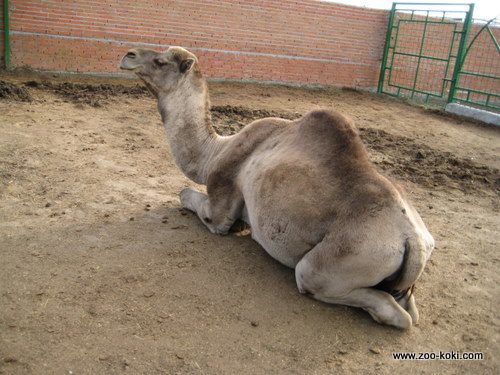
It is an animal adapted to hot, dry climates. In the wild it lived in arid regions such as the Sahara, although today practically all existing dromedaries are domesticated and are found across the semi-arid and arid regions of the Old World, mainly in northern and eastern Africa and on the Arabian Peninsula.
It is a herbivore able to eat practically any kind of plant, although it prefers grass and the thorny plants that other herbivores avoid. When it finds water, it can drink up to 150 litres in a very short time to replenish its reserves.
Gestation lasts between 13 and 14 months (between 360 and 410 days), after which a single calf is born, almost a metre tall at the shoulder and weighing between 25 and 40 kg; twins are extremely rare. During its first week of life, the calf never leaves its mother's side.
Contrary to popular belief, the dromedary does not store water in its hump but fat, which it can metabolise to obtain energy and water when food is scarce, allowing it to survive several weeks without drinking.