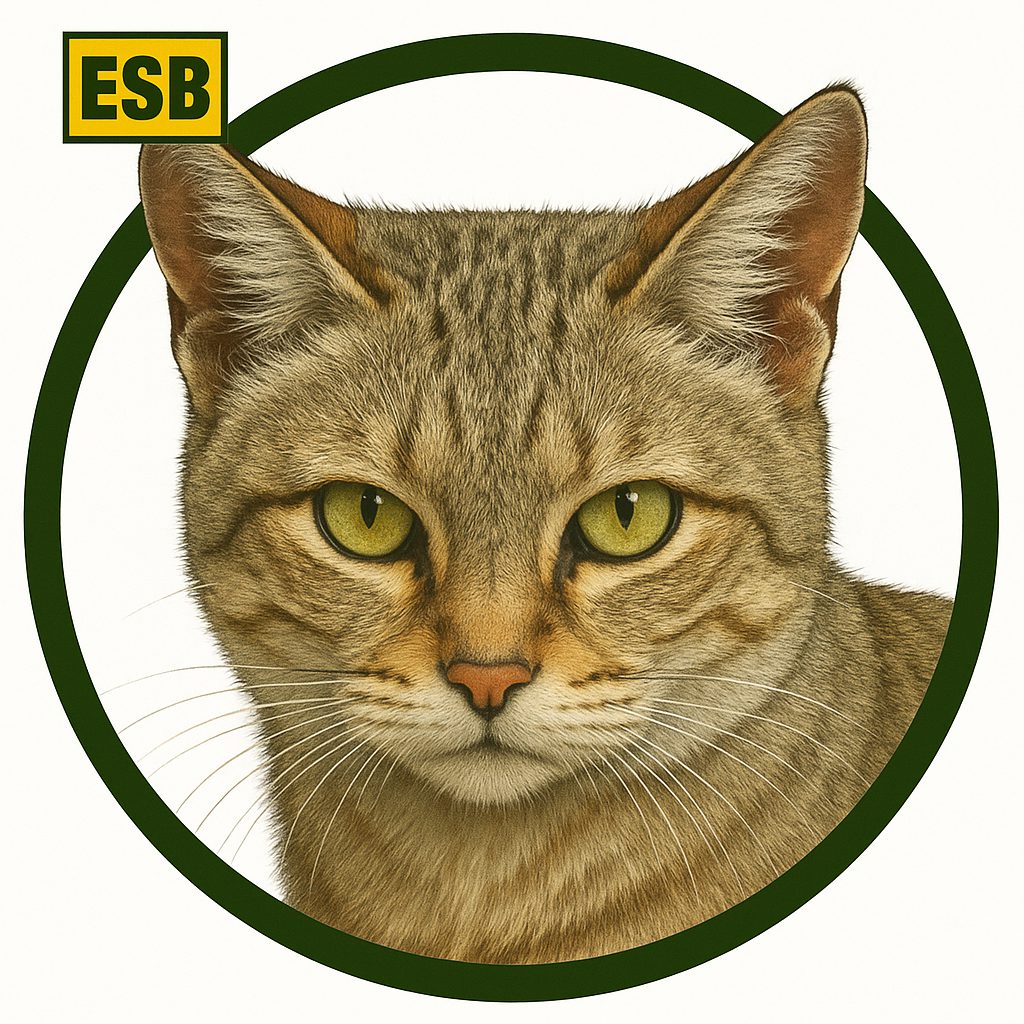
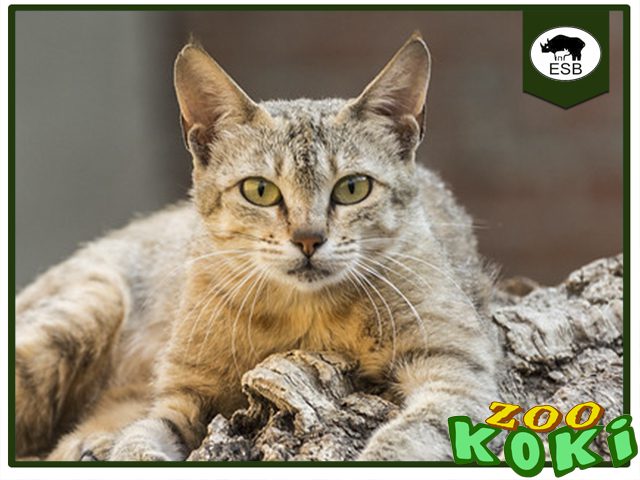
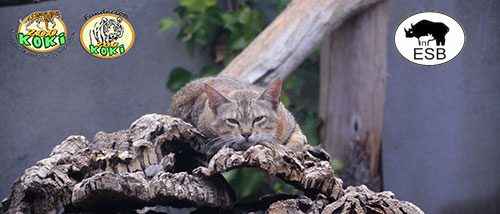
Its coat ranges from sandy to greyish yellow, with black stripes on the upper part of the tail. Its fur is shorter than that of the European wildcat (Felis silvestris silvestris).
| Kingdom | Animalia |
| Phylum | Chordata |
| Class | Mammalia |
| Order | Carnivora |
| Suborder | Feliformia |
| Family | Felidae |
| Subfamily | Felinae |
| Genus | Felis |
| Species | Felis silvestris |
| Subspecies | Felis silvestris gordoni |
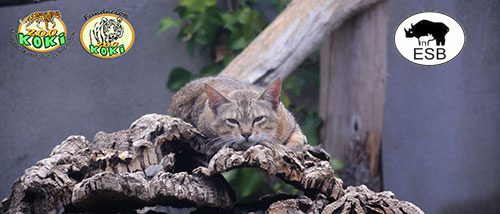
Its coat ranges from sandy to greyish yellow, with black stripes on the upper part of the tail. Its fur is shorter than that of the European wildcat (Felis silvestris silvestris). The African wildcat is also smaller: its body measures 45 to 75 cm in length, and its tail between 20 and 38 cm; and it weighs 3 to 6.5 kg.
There is no consensus on the different races or subspecies that exist: for some biologists they would be only regional variants, while others do speak of races or subspecies.
It is found in Africa and the Middle East in a wide variety of habitats: savannah, steppe, forest, and so on.
It hunts rats, mice and other small mammals, and occasionally birds, reptiles, amphibians and insects. The desert cat stalks its prey stealthily and attacks when it is about a metre away.
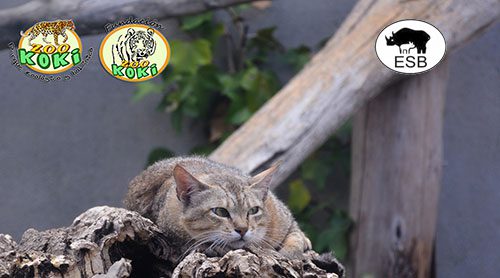
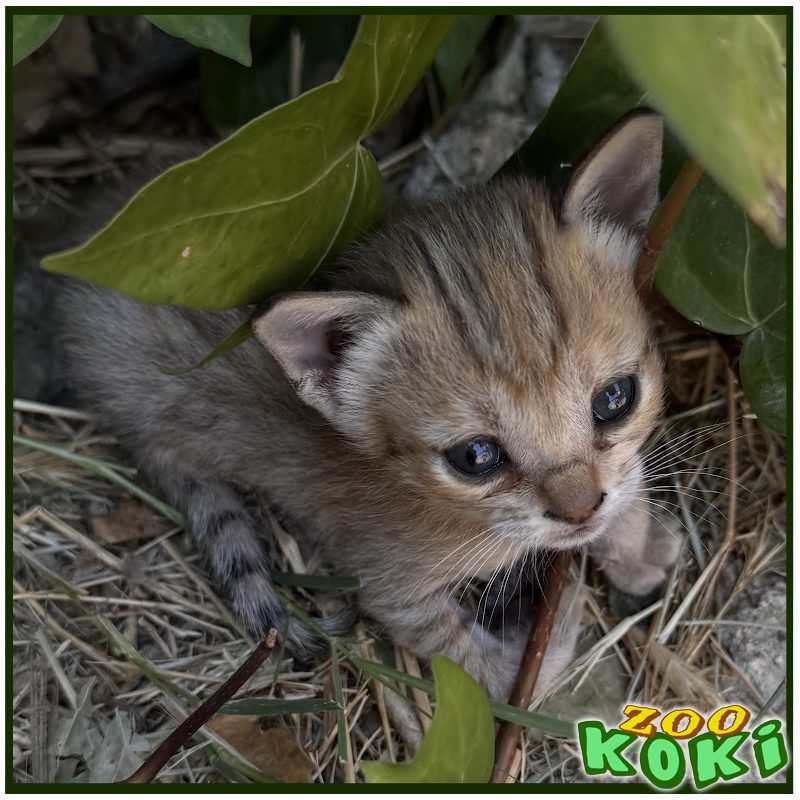
The female gives birth to about three kittens (sometimes from two to six), and gestation lasts between 56 and 69 days. The kittens are born blind and are completely dependent on their mother, with whom they stay until they are six months old; by the time they are one year old they are already fertile. Almost all kittens are born in the rainy season, when there is enough food for the litter.
It is believed to have been the first domesticated cat, and that it was the ancient Egyptians or a related civilisation who domesticated it, at least 4000 years ago.
ESB programme since 2018
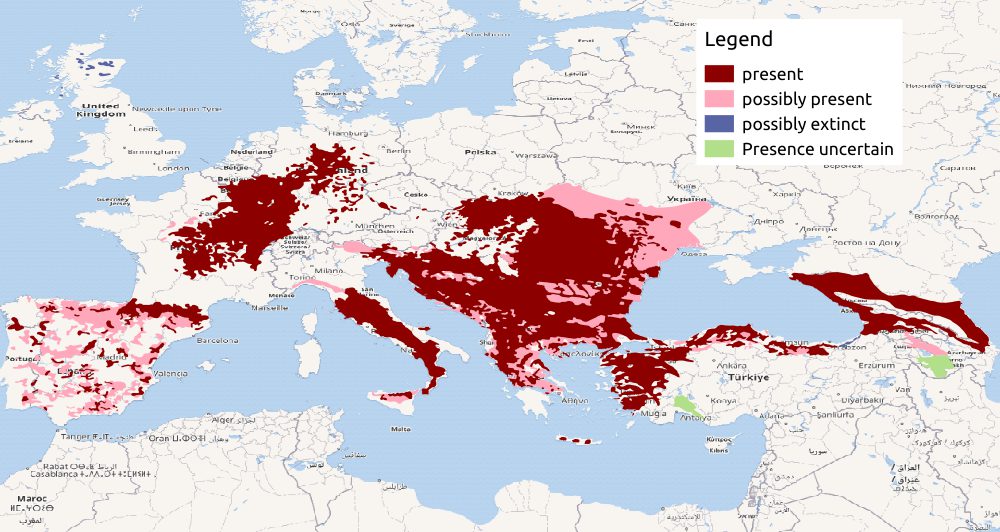 Source: Wikimedia Commons — Distribution of the European wildcat.png