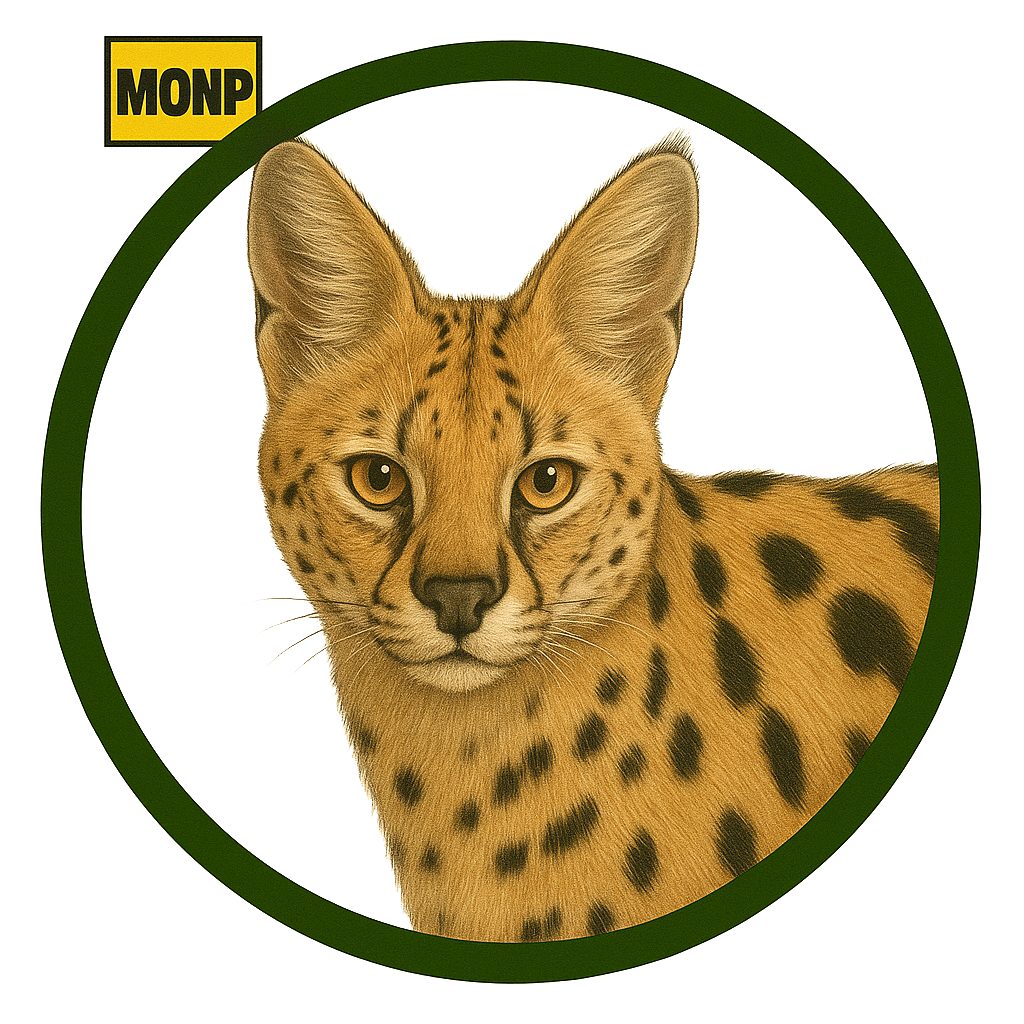
The serval (Leptailurus serval, sometimes called Felis serval, serval cat or, for short, serval) is a species of carnivorous mammal in the family Felidae. It is the only felid species in its genus. Since 1996 its conservation status has been…
| Kingdom | Animalia |
| Phylum | Chordata |
| Class | Mammalia |
| Order | Carnivora |
| Suborder | Feliformia |
| Family | Felidae |
| Subfamily | Felinae |
| Genus | Leptailurus |
| Species | Leptailurus serval |
The serval (Leptailurus serval, sometimes called Felis serval, serval cat or, for short, serval) is a species of carnivorous mammal in the family Felidae. It is the only felid species in its genus. Since 1996 its conservation status has been Least Concern
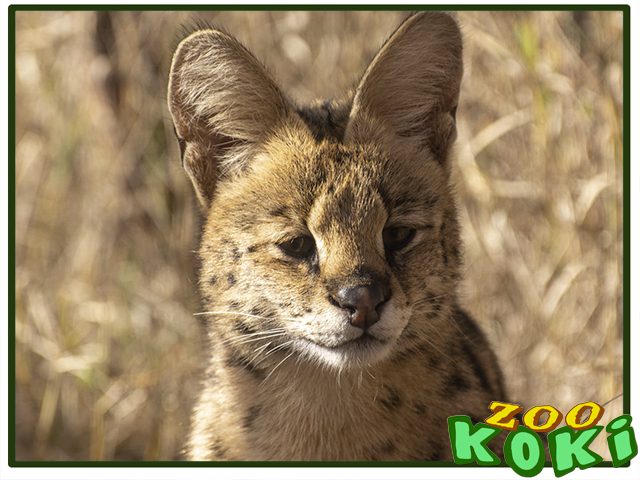
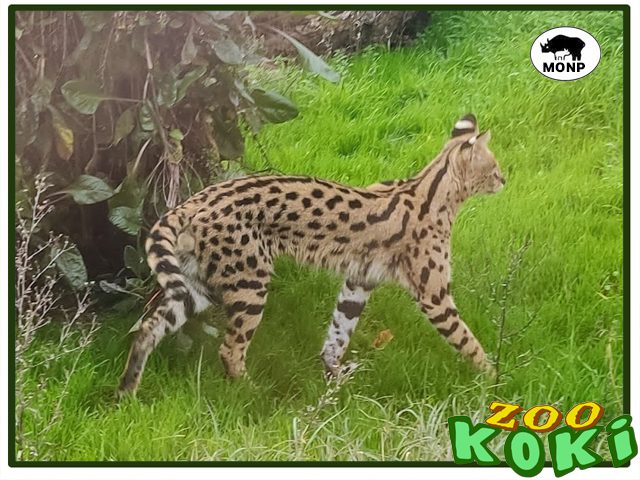
Although it is most abundant in scrubland, it is also found in savannas, forests and semi-deserts, so its distribution extends across the whole African continent with the exception of desert areas and a large part of South Africa, where the local subspecies (L. s. serval) became extinct owing to excessive hunting. The subspecies that lives north of the Sahara (L. s. constantinus) is probably extinct, its last records in Algeria dating from 1880 or perhaps 1930. The servals present in Tunisia come from reintroductions made with sub-Saharan individuals.
The serval is nocturnal, so it hunts mostly at night, unless it is disturbed by human activity or the presence of larger nocturnal predators. Although it specialises in rodents, it is an opportunistic predator whose diet also includes birds, hares, hyraxes, reptiles, insects, fish and frogs. More than 90% of the serval's prey weighs less than 200 g. The serval eats very fast, sometimes too fast, causing it to choke and regurgitate because of a blockage in the throat. It normally hunts and feeds on small prey, of which it devours everything. With larger prey it avoids the organs and intestines, along with skin, feathers, beaks, legs or hooves. The serval uses a very effective plucking technique, which consists of repeatedly throwing captured birds into the air while batting their heads from side to side, thus removing the feathers.
The serval's mating season lasts up to four days. A serval is capable of giving birth to several litters throughout the year, but normally does so only if previous litters die shortly after birth. Gestation lasts 66 to 77 days and generally results in two cubs, with sometimes just one or as many as four being born.
The young weigh around 250 g at birth and are at first blind and helpless, with a coat of woolly greyish fur. They open their eyes between 9 and 13 days of age and begin to eat solid food after a month. In about six months, they acquire their permanent canine teeth and begin to hunt for themselves; they leave their mother at 12 months of age. They may reach sexual maturity between 12 and 25 months of age.8
Life expectancy is about 10 years in the wild and up to 20 years in captivity. The longest life recorded for a wild African serval is 23 years of age. In captivity, the average lifespan is 22.4 years
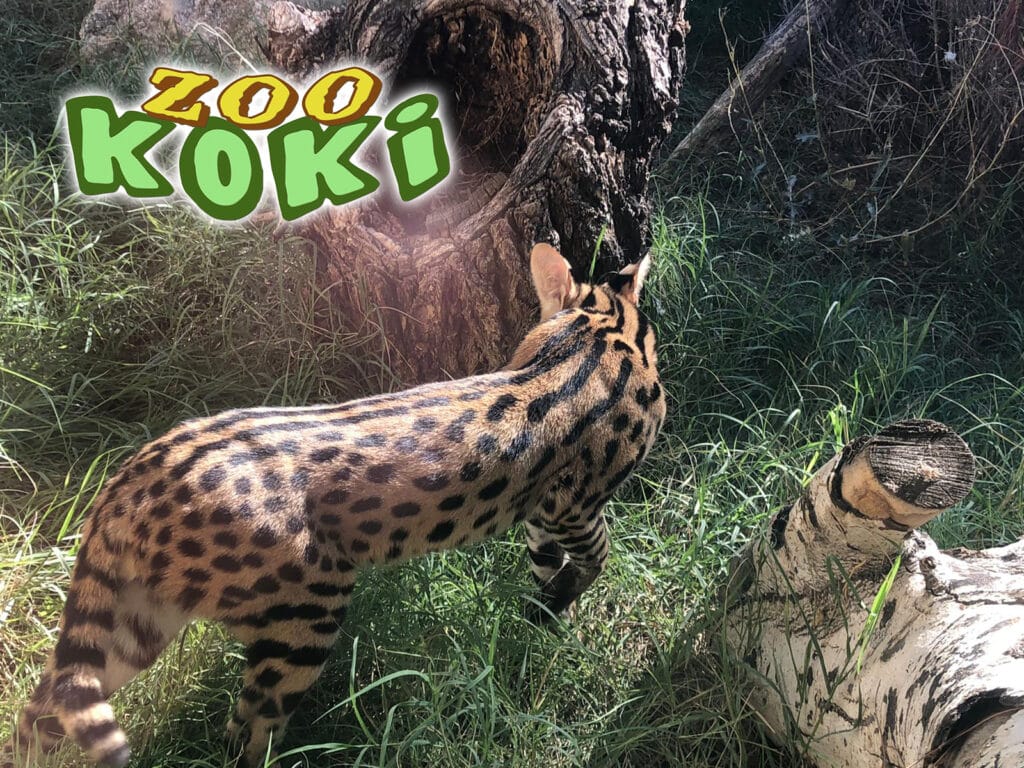
The serval is extremely intelligent and shows a great capacity for problem-solving, so it is capable of mischief, as well as easily teasing its prey and evading other predators. It often plays with its captured prey for several minutes before consuming it. In most situations, it fiercely defends its food against attempted theft. Males are more aggressive than females.

We take part in the breeding programme: EEP (since 2022)
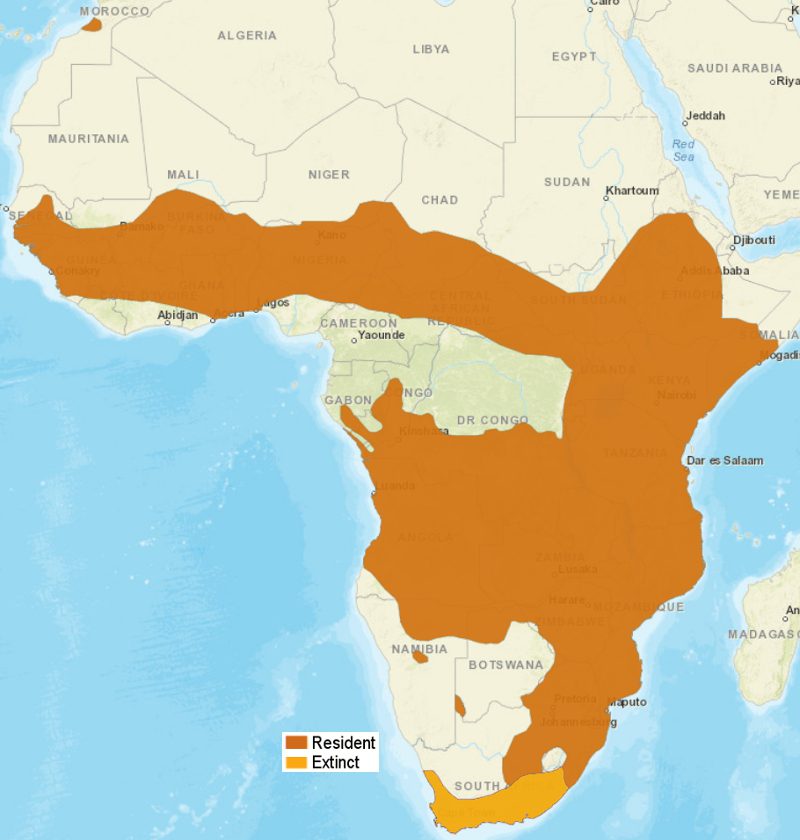 Source: Wikimedia Commons — Serval distribution.jpg