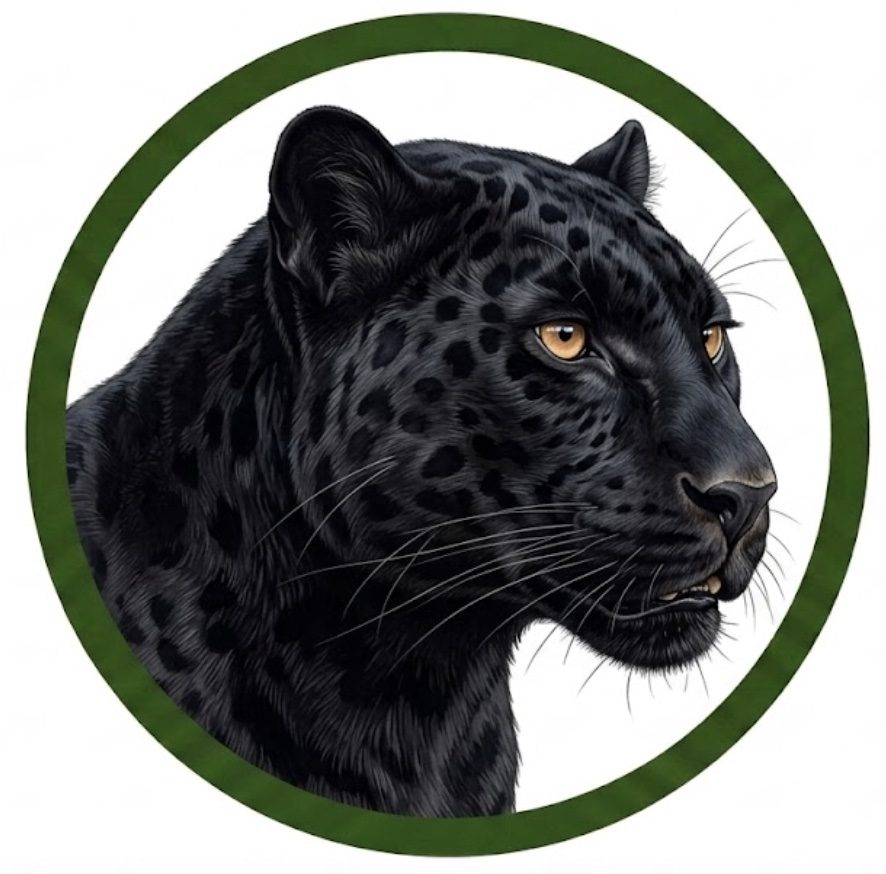
The leopard is one of the most adaptable big cats. It lives in all kinds of habitats, as long as it has somewhere to hide and enough prey to survive; it is found in forests and jungles, in savannas, in farmland and in rocky places, and even in deserts…
| Kingdom | Animalia |
| Phylum | Chordata |
| Class | Mammalia |
| Order | Carnivora |
| Suborder | Feliformia |
| Family | Felidae |
| Subfamily | Pantherinae |
| Genus | Panthera |
| Species | Panthera pardus |

The leopard is one of the most adaptable big cats. It lives in all kinds of habitats, as long as it has somewhere to hide and enough prey to survive; it is found in forests and jungles, in savannas, in farmland and in rocky places, and even in deserts.
The leopard is one of the most adaptable big cats. It lives in all kinds of habitats, as long as it has somewhere to hide and enough prey to survive; it is found in forests and jungles, in savannas, in farmland and in rocky places, and even in deserts. In some habitats, the leopard has developed ways of evading other larger or more numerous predators, such as the lion and hyenas in Africa, and the tiger in Asia. In reality, the only factor that limits the leopard is humans.
Leopards are opportunistic and versatile hunters, and have a very broad diet covering more than a hundred species of vertebrates. They feed on a greater diversity of prey than the other species of the genus Panthera, and leopards have been reported eating practically any kind of animal that they outsize or can bring down, from beetles to common elands, although their most frequent prey is usually in the range of 20-80 kg. The largest prey ever reported to have been killed by a leopard was a male eland of 900 kg, although leopards do not usually hunt animals that large.
They are solitary animals except during the breeding season. The gestation period lasts about three months (ninety to one hundred and five days) and the female can have from one to six cubs per litter, although two to four is most common. The mother usually carries her young by gripping them by the neck with her teeth. The cubs are dependent until about one year of age; however, they stay with their mother for another year. They can live for almost twenty years.
This is the name given to melanistic leopards or jaguars. The black colour is produced by a large quantity of melanophores (cells belonging to one of the layers of the skin) distributed over the whole body surface.
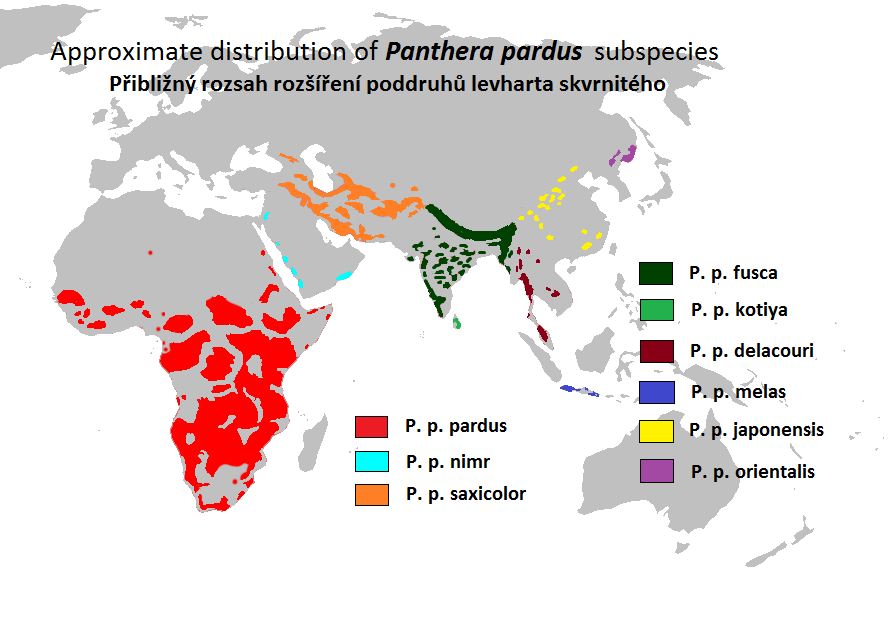 Source: Wikimedia Commons — Panthera pardus subspecies map.png