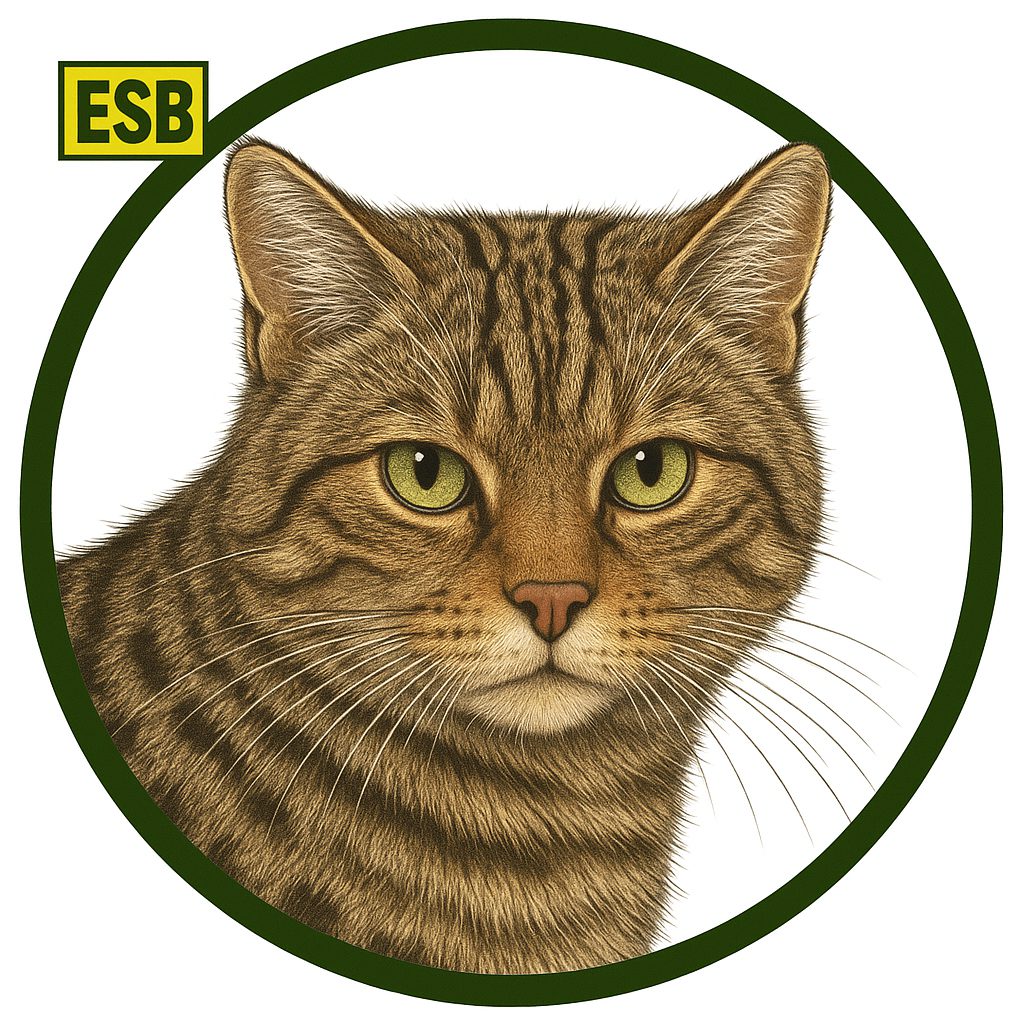
The European wildcat (Felis silvestris silvestris) is a subspecies of the wildcat (Felis silvestris), a carnivorous mammal in the family Felidae.
| Kingdom | Animalia |
| Phylum | Chordata |
| Class | Mammalia |
| Order | Carnivora |
| Family | Felidae |
| Subfamily | Felinae |
| Genus | Felis |
| Species | Felis silvestris |
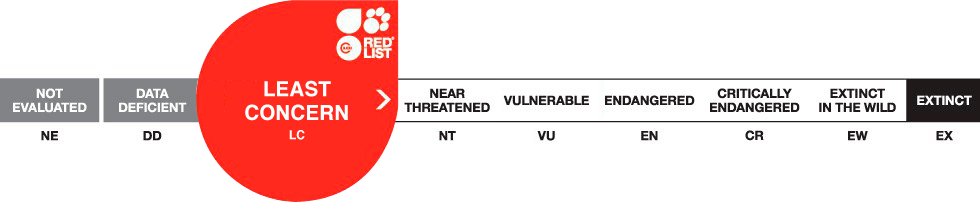
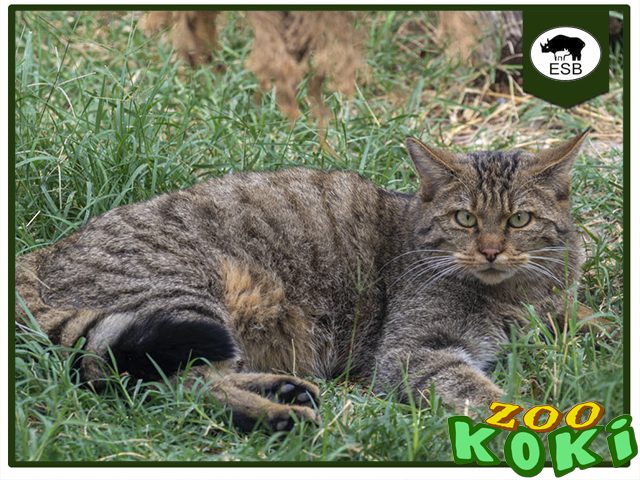
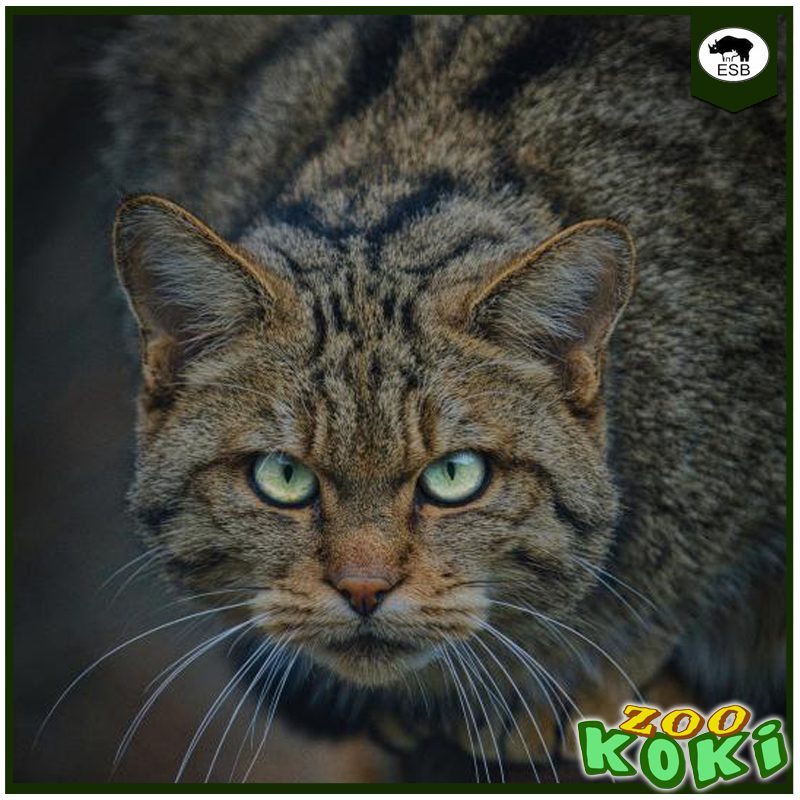
It feeds mainly on rodents, lagomorphs and birds, and rarely on amphibians and invertebrates. Unlike foxes, it does not eat the bones of its prey unless the prey is very small, so the carcasses left by each can easily be told apart. On the other hand, the remains of prey left by domestic cats are identical to those left by the European wildcat. Occasionally it may hunt roe deer fawns, although, as already noted, its diet consists basically of small prey.
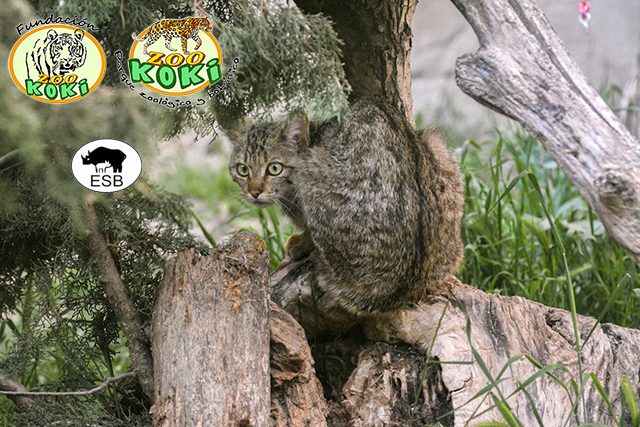
Mating generally takes place between the end of winter and the end of spring, and the young are born from April to September, with the largest number of births in May. Only the mother looks after the litter (of at least 2 and at most 6 kittens; commonly 3 or 4), which she does for about five months.

We take part in the breeding programme: ESB (since 2020)
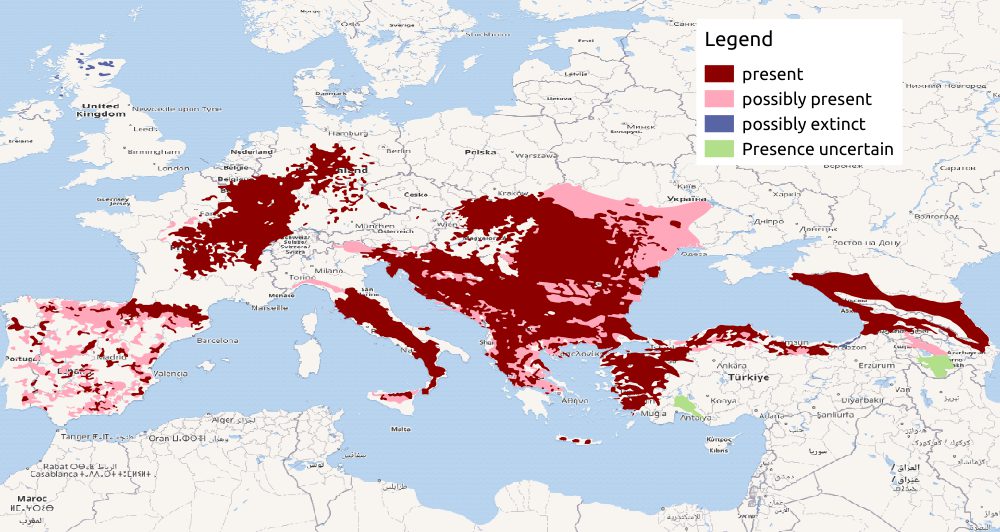 Source: Wikimedia Commons — Distribution of the European wildcat.png