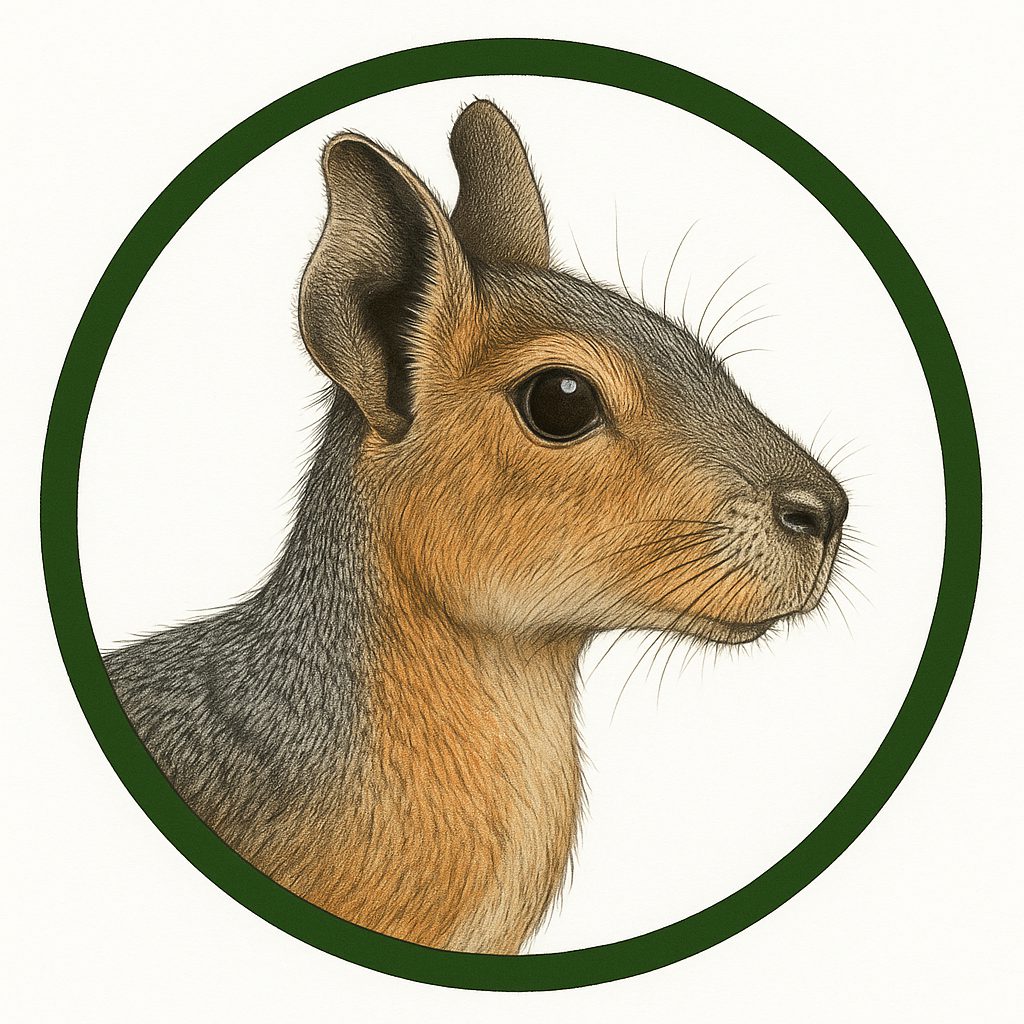
The Patagonian mara (Dolichotis patagonum) is a species of rodent in the family Caviidae, also known as the Patagonian hare or Creole hare, although it does not belong to the order of true hares (Lagomorpha).
| Kingdom | Animalia |
| Phylum | Chordata |
| Class | Mammalia |
| Order | Rodentia |
| Family | Caviidae |
| Genus | Dolichotis |
| Species | Dolichotis patagonum |
The Patagonian mara (Dolichotis patagonum) is a species of rodent in the family Caviidae, also known as the Patagonian hare or Creole hare, although it does not belong to the order of true hares (Lagomorpha). It is one of the largest rodents in the world, with an average weight of 8 kg and individuals that can reach 16 kg, making it the largest mammal endemic to Argentina.
It has long, strong legs that it uses to run at high speed when it feels it is being pursued, a trait that is more reminiscent of a small ungulate than of a typical rodent.
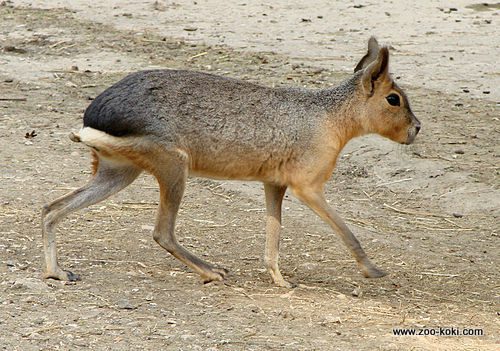
It lives in the semi-arid steppes and thorny scrub deserts of western, central and southern Argentina. Its distribution has been reduced by habitat alteration, especially on the Pampas plain and in coastal regions, owing to increased urbanisation.
It is a herbivore that feeds on the leaves, flowers, fruits, roots and bark of shrubs and grasses, taking advantage of the availability of the different plant species present in each region and at each time of year.
The Patagonian mara has a monogamous social structure, unusual among rodents: the pair bonds for life and the male always accompanies the female, protecting her from rivals and predators. It breeds two or three times a year, mainly in mid-winter and spring; after a gestation of about three months, an average of 2 young are born, able to run just a few hours after birth. Curiously, several pairs share a single communal burrow, where up to 15 different females may raise their young together.
The communal burrows that the Patagonian mara digs can reach up to 50 metres of tunnels with several entrances, and are reused year after year during the breeding season, even serving as shelter for other vertebrate species of the Patagonian steppe.
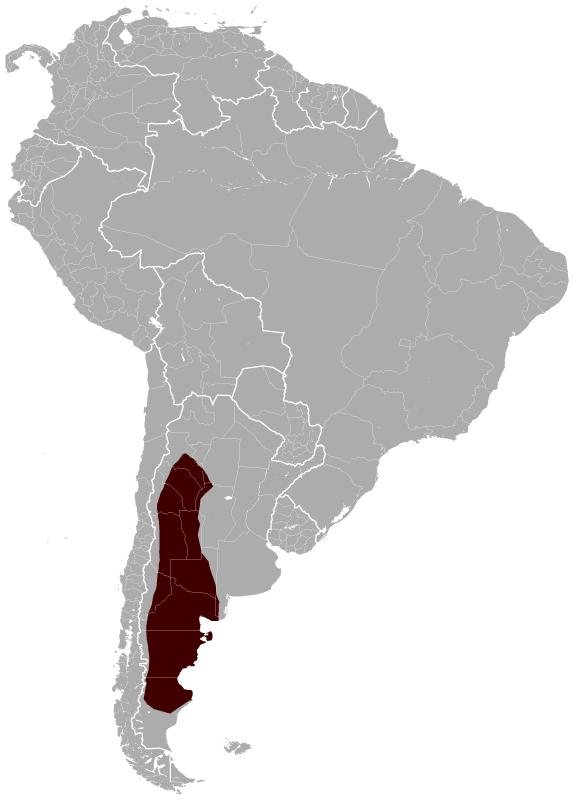 Source: Wikimedia Commons — Patagonian Mara Dolichotis patagonum distribution map.png