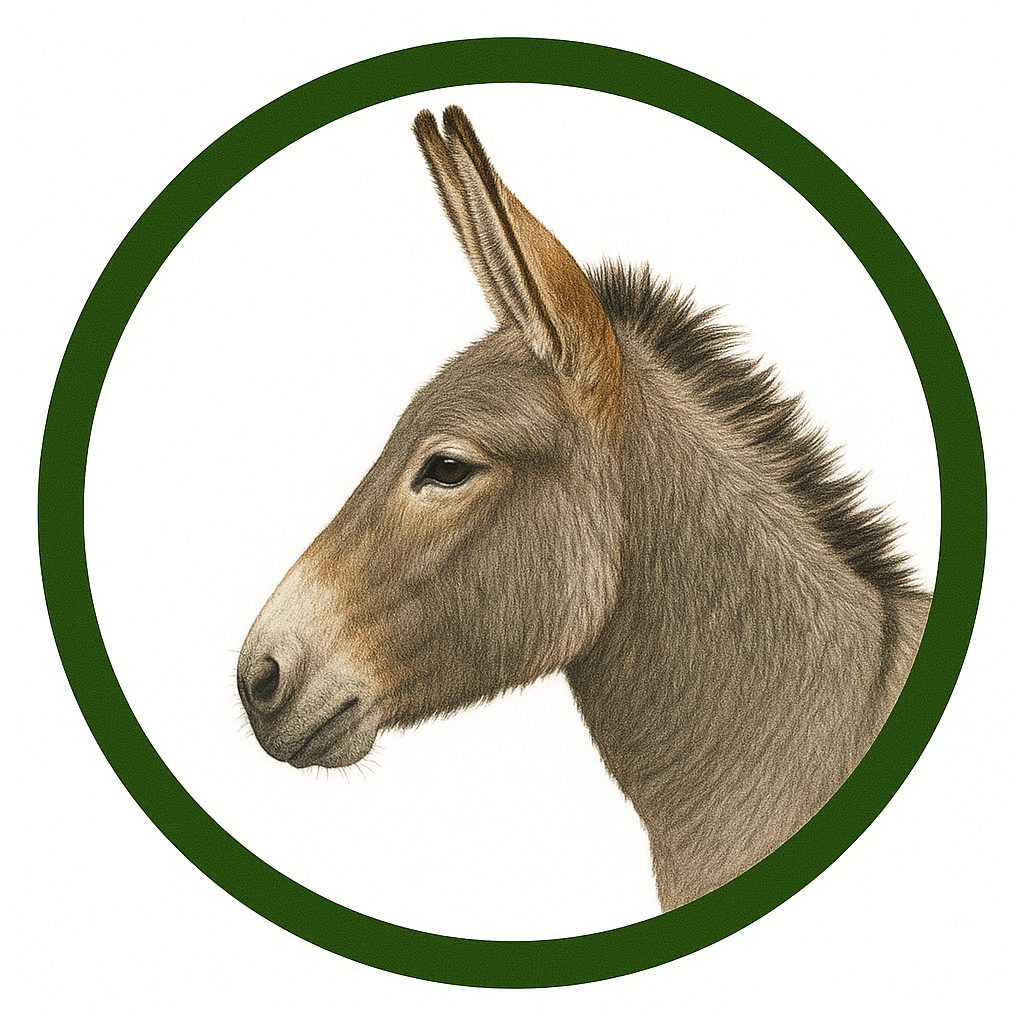
The donkey or African donkey ( Equus africanus asinus ) is the domestic form of the African donkey, belonging to the family Equidae. Domestic individuals measure between 0.90 and 1.40 metres at the withers, although there are larger breeds.
| Kingdom | Animalia |
| Phylum | Chordata |
| Class | Mammalia |
| Order | Perissodactyla |
| Family | Equidae |
| Genus | Equus |
| Species | Equus africanus asinus |
The donkey or African donkey (Equus africanus asinus) is the domestic form of the African donkey, belonging to the family Equidae. Domestic individuals measure between 0.90 and 1.40 metres at the withers, although there are larger breeds. Its coat is predominantly greyish, although there are also black, white or brown individuals, often with paler areas around the muzzle and eyes, and occasionally with a characteristic dark cross-shaped stripe over the back. Its mane is shorter and more upright than that of the horse.
The domestic donkey descends from the subspecies of African donkey — the Nubian wild ass and the Somali wild ass — domesticated some 9,000 years ago in north-east Africa. From ancient Egypt and Nubia it spread as a pack animal throughout the Near East. Today, the African continent is home to some of the largest domestic donkey populations in the world, with millions of animals in countries such as Ethiopia, Egypt and Nigeria.
It feeds on grasses, lucerne, shrubs and various plants typical of arid areas. Its digestive system is very efficient and less prone to colic than that of the horse, which allows it to survive in environments where other equids would not thrive.
It reaches sexual maturity between two and two and a half years of age. Gestation lasts between 12 and 14 months and usually a single foal is born. It is a long-lived animal, capable of living up to 40 years.
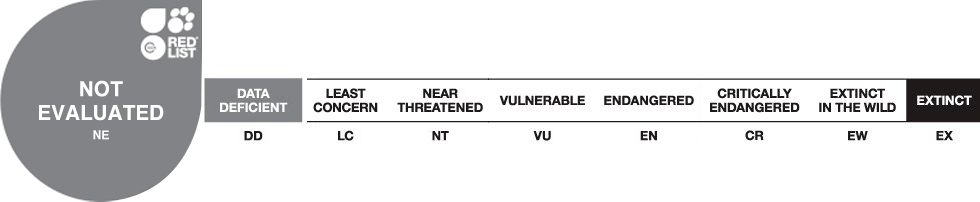
While the domestic donkey remains abundant in much of the world, its wild ancestor, the African donkey (Equus africanus), is critically endangered, with only a few hundred surviving individuals in the Horn of Africa.