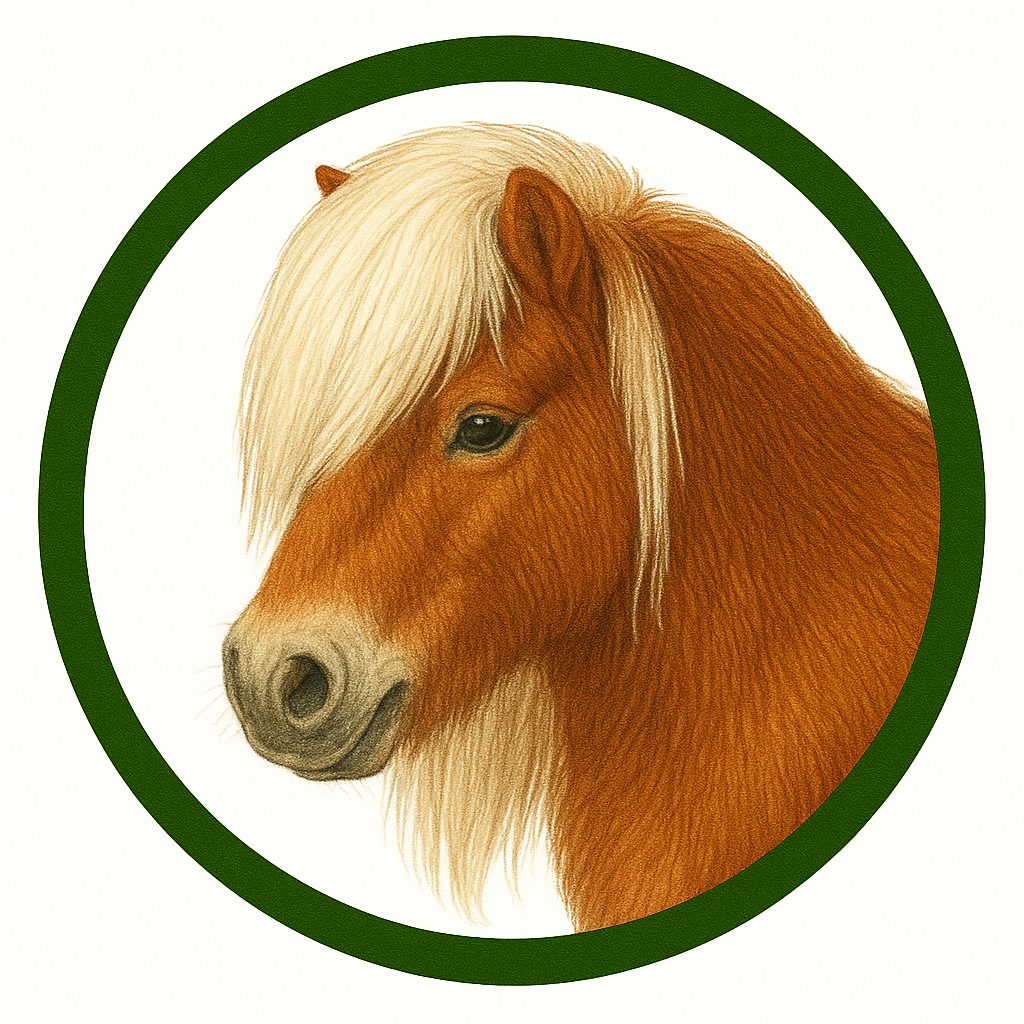
The Shetland horse or pony is a small breed originating from the Shetland Islands , north-east of Scotland, where its ancestors are believed to have arrived with Celtic peoples more than two thousand years ago and were later crossed with horses brought by the…
| Kingdom | Animalia |
| Phylum | Chordata |
| Class | Mammalia |
| Order | Perissodactyla |
| Family | Equidae |
| Genus | Equus |
| Species | Equus ferus caballus |

The Shetland horse or pony is a small breed originating from the Shetland Islands, north-east of Scotland, where its ancestors are believed to have arrived with Celtic peoples more than two thousand years ago and were later crossed with horses brought by the Vikings. It is a sturdy, compact animal: it tends to have a long, narrow back, broad, muscular hindquarters and high withers. The shoulder has a good slope that gives it extravagant, elegant action when moving.
The breed became popular outside Europe in the late 19th century: in 1885 the first export of 75 animals was made to Eli Elliot in the United States. Since then it has spread throughout the world, with the United States, Canada and several European countries keeping their own stud books. In North America it has been crossed with the miniature Hackney horse and the Appaloosa pony, with breeding concentrated mainly in the states of Indiana, Illinois and Iowa; in Argentina, the miniature Shetland horse was the basis for developing the Falabella dwarf pony.
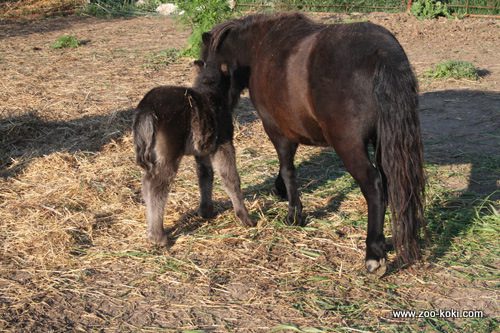
It is native to the Shetland Islands, a Scottish archipelago with a cold, windy climate and sparse vegetation, conditions that shaped its hardiness and small size. Today it is bred on farms and equestrian centres around the world.
Its diet is based on hay and grass, supplemented with mineral feeds depending on its level of activity. Access to pastures very rich in clover or young grass must be controlled, as its tendency to put on weight can lead to problems such as laminitis.
The gestation of the Shetland mare lasts approximately 11 months, after which a single foal is born, usually in early spring of the following year.
Despite its small stature (between 90 and 110 cm), the Shetland is one of the strongest ponies in proportion to its size, able to pull loads far greater than its own weight: an adaptation inherited from centuries of work in the harsh conditions of the Scottish islands.