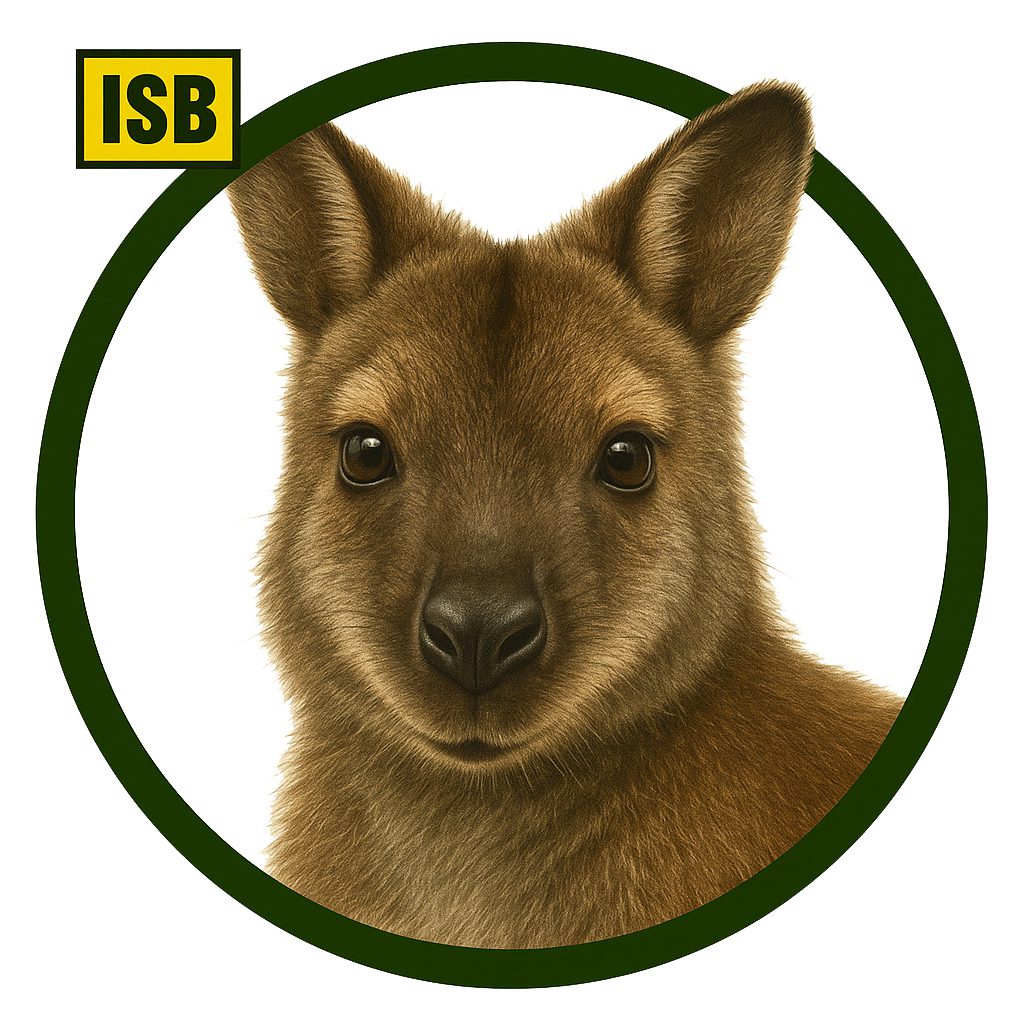
The red-necked wallaby, or Bennett's wallaby (Notamacropus rufogriseus), is a medium-sized diprotodont marsupial of the family Macropodidae that lives in the temperate, fertile areas of eastern Australia.
| Kingdom | Animalia |
| Phylum | Chordata |
| Class | Mammalia |
| Order | Diprotodontia |
| Family | Macropodidae |
| Genus | Notamacropus |
| Species | Notamacropus rufogriseus |
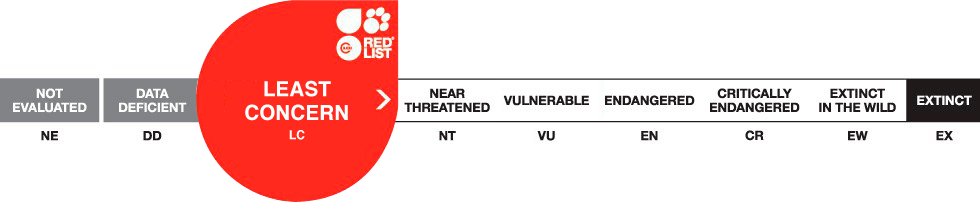
The red-necked wallaby, or Bennett's wallaby (Notamacropus rufogriseus), is a medium-sized diprotodont marsupial of the family Macropodidae that lives in the temperate, fertile areas of eastern Australia.
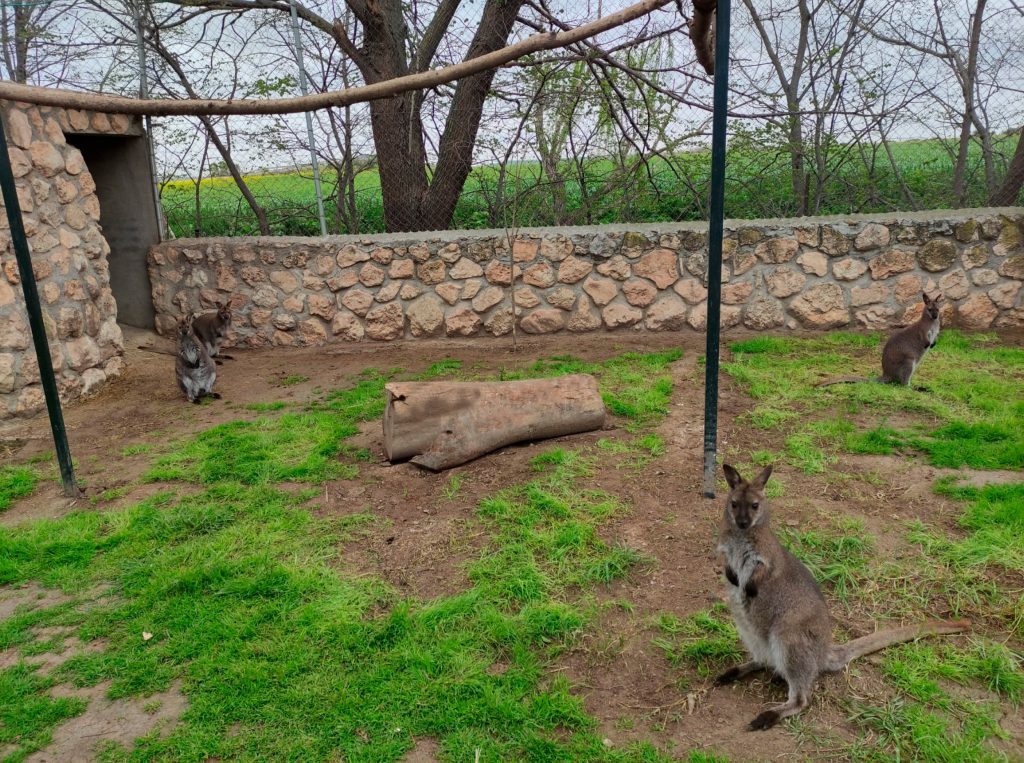
These animals live in coastal scrub and forests along the east coast of Australia, from Rockhampton, Queensland, to the southern edge of the country; they also live in Tasmania and on several of the islands in the Bass Strait (although it is unclear which islands hold populations that were not introduced).
In Tasmania, north-western New South Wales and on the Queensland coast, their numbers have grown over the last thirty years because of a decline in hunting and because of forest clearance, which created grasslands where wallabies can feed at night, alongside areas of scrub where they can shelter during the day. For reasons that are not entirely clear, they do not occur in Victoria.
They feed at night and, particularly on cloudy days, at dusk, generally grazing on grass and herbs close to the forests where they live. Their diet consists of grasses and leaves, as well as tree bark, fruit and scrub.
Bennett's wallaby is solitary, although some groups share feeding areas when resources are plentiful. They have a long tail, which they lean on to rest.
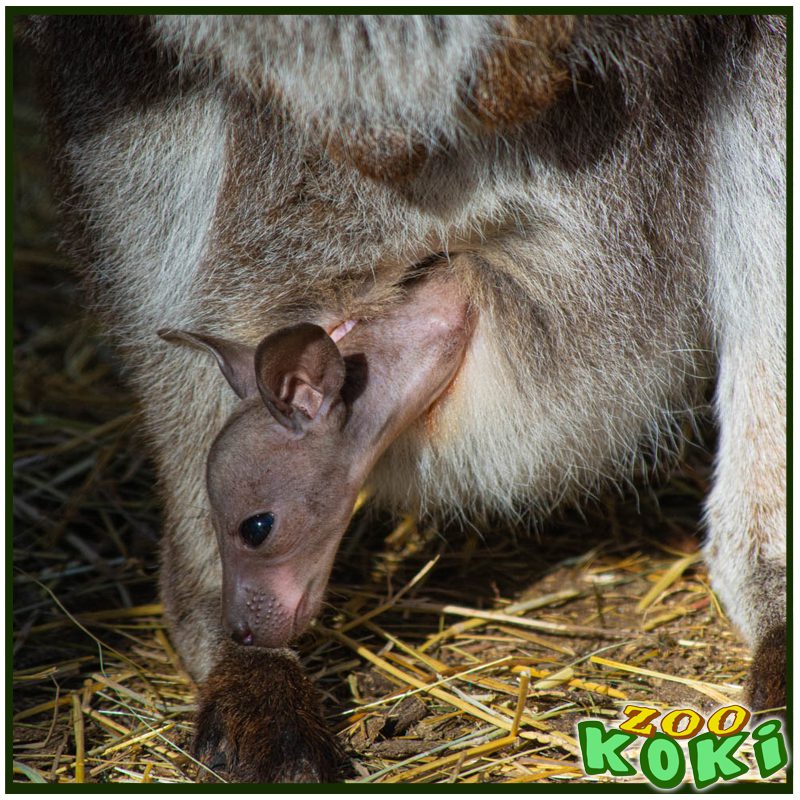
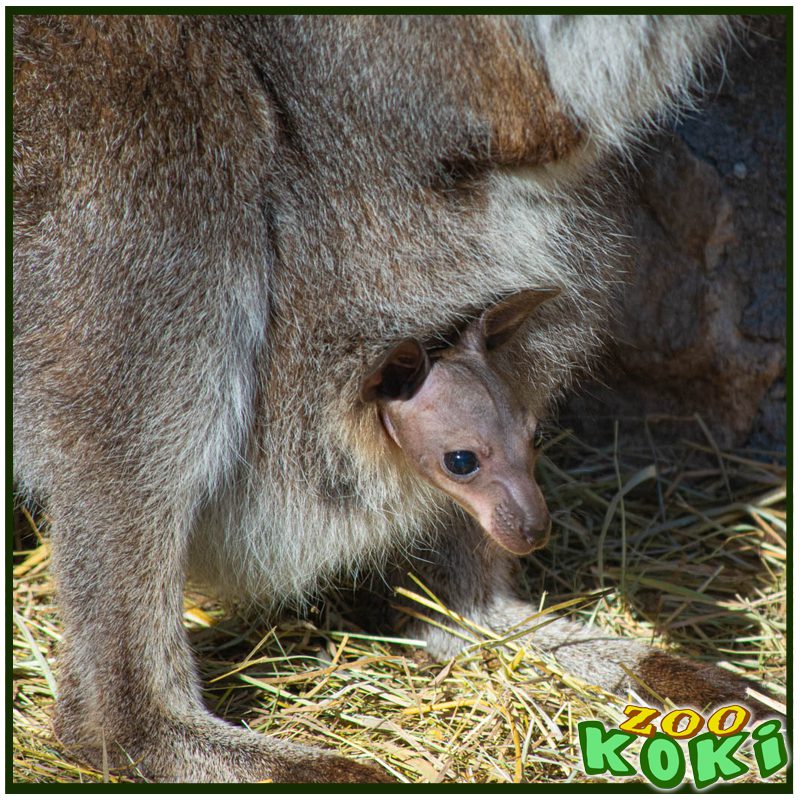
Females give birth to a single young per litter after a gestation of 30 days; the young stays in the pouch for about 280 days and leaves its mother around a month later. They become adults at 8-9 months of age.
They are recognisable by their black nose and feet, their white-and-black striped upper lip and their greyish coat with a red band around the shoulders. The head-body length is between 60 and 70 cm, plus another 60-70 cm of tail, and they weigh from 6.8 to 22 kg, with males larger and heavier than females.

We take part in the breeding programme: ISB (since 2022)