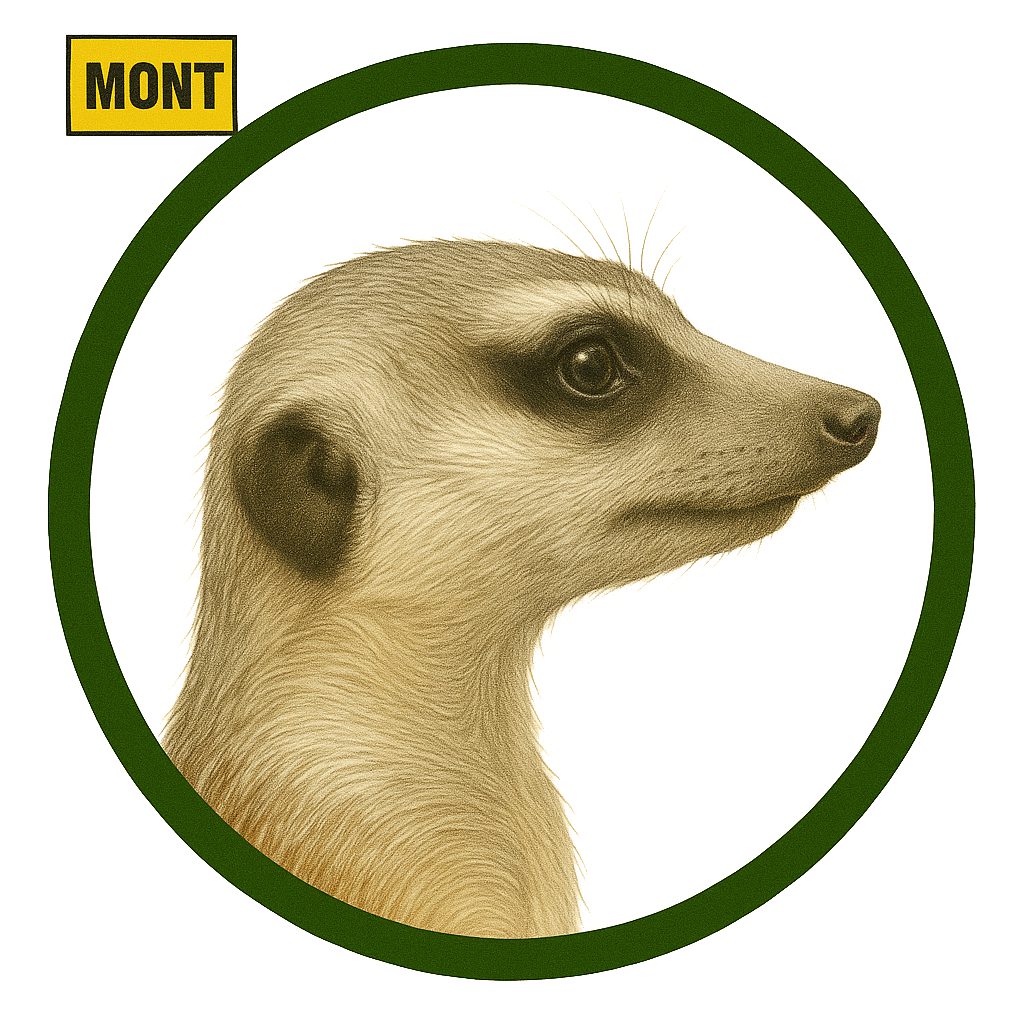
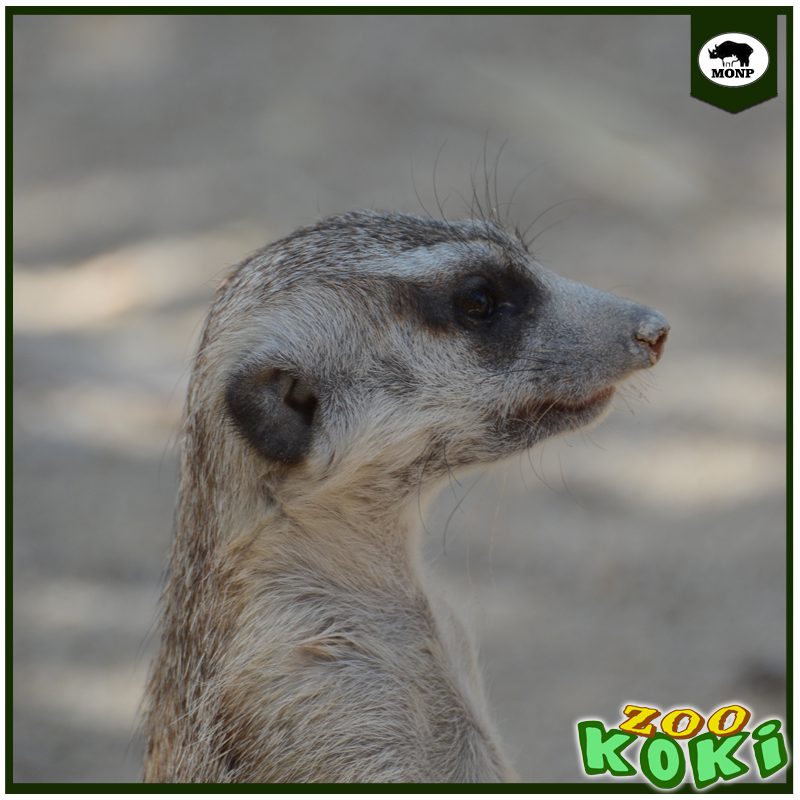
The meerkat is one of the smallest mongooses; males have an average weight of 731 g and females 720 g. The body and limbs of these animals are long and slender, with a head-and-body length of between 25 and 35 cm.
| Kingdom | Animalia |
| Phylum | Chordata |
| Class | Mammalia |
| Order | Carnivora |
| Family | Herpestidae |
| Genus | Meerkat |
| Species | Suricata suricatta |
The meerkat is one of the smallest mongooses; males have an average weight of 731 g and females 720 g. The body and limbs of these animals are long and slender, with a head-and-body length of between 25 and 35 cm. The tail is thin and somewhat elongated, measuring 175-250 mm. Unlike most mongooses, it lacks a thick coat of fur.
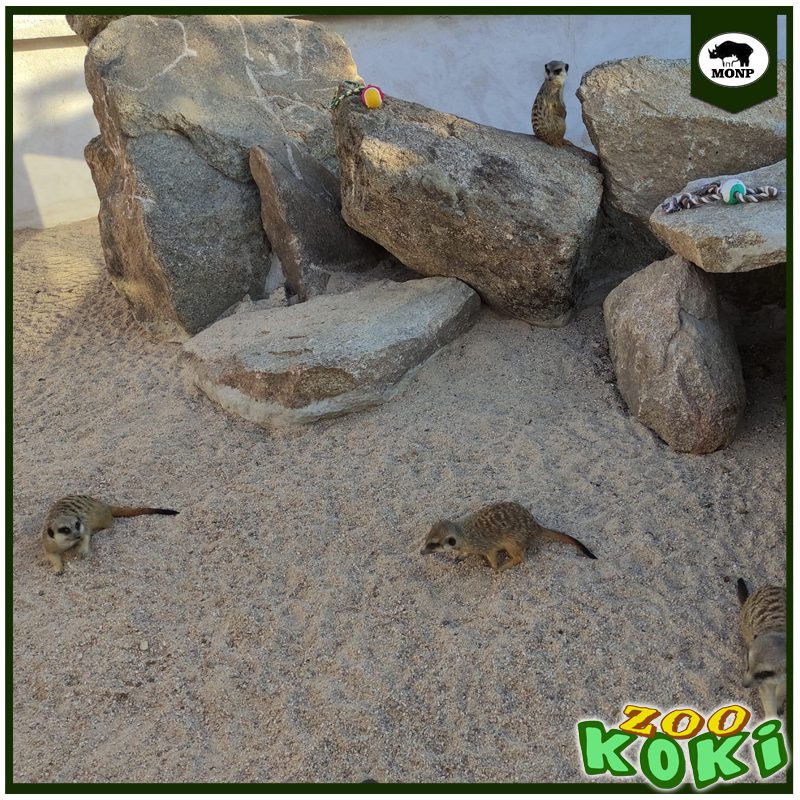
Meerkats live in the far south of Africa, specifically western and southern Namibia, south-western Botswana and northern and western South Africa; there is a small intrusion into the far south-west of Angola. They are also found in low-lying areas of Lesotho. They inhabit drier and more open areas than any other species of mongoose. They are found in savannah and open plains, and their distribution depends on the type of soil, with a preference for firm, hard ground to settle on.
The meerkat is mainly insectivorous, but it also feeds on small invertebrates, eggs and plant matter. They forage regularly for these items, digging in the ground, in the grass and under rocks. Its diet is made up of 82% insects, 7% arachnids, 3% centipedes, 3% millipedes, 2% reptiles and 2% birds
Once a female meerkat reaches two years of age, she is sexually mature. Breeding is not seasonal: they can breed all year round if conditions are favourable. Females give birth to an average of three pups after an 11-week gestation, and can have up to three litters in a year.
The GNU/Linux-based operating system Ubuntu, in its version 10.10, adopted the codename Maverick Meerkat12 (roughly translated as «Nonconformist Meerkat», «Dissident Meerkat»), following its tradition of using animal names followed by a descriptive adjective.
We take part in the breeding programme : MONP (since 2022)