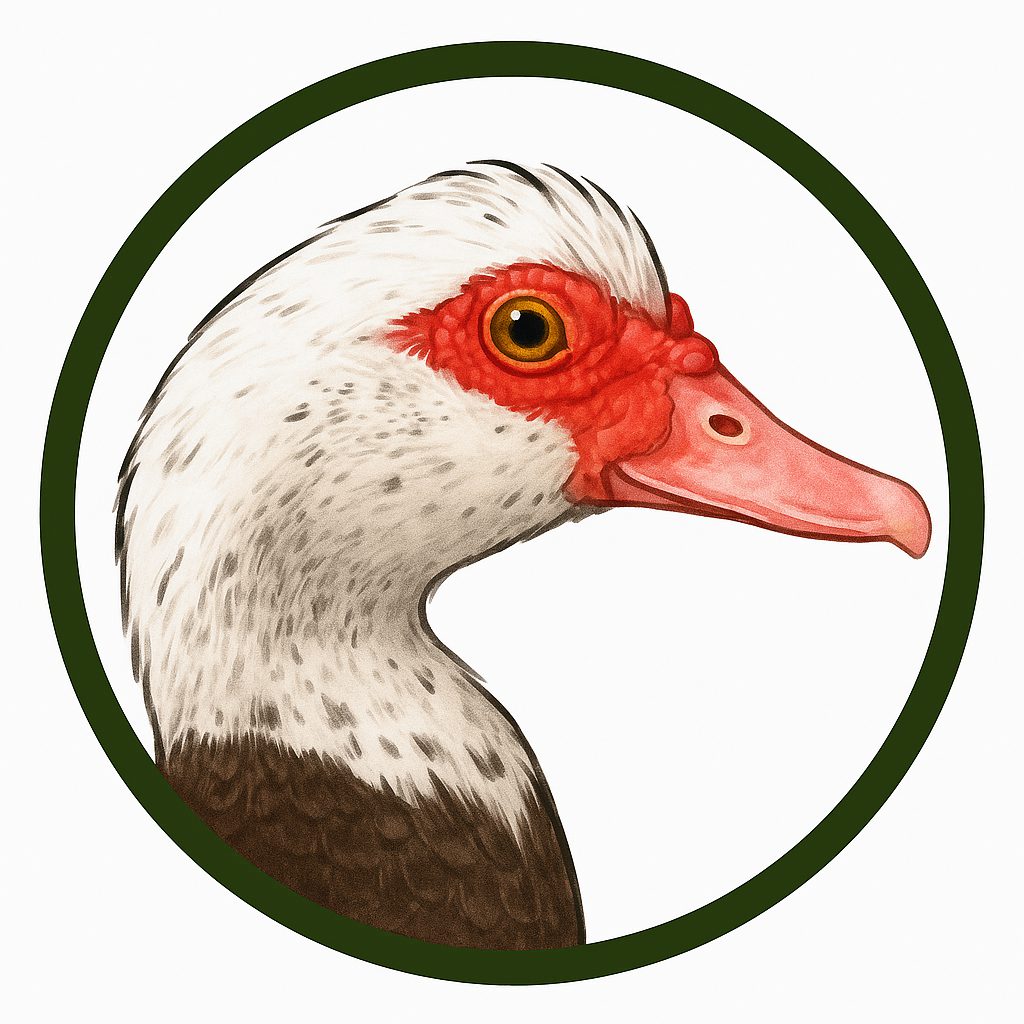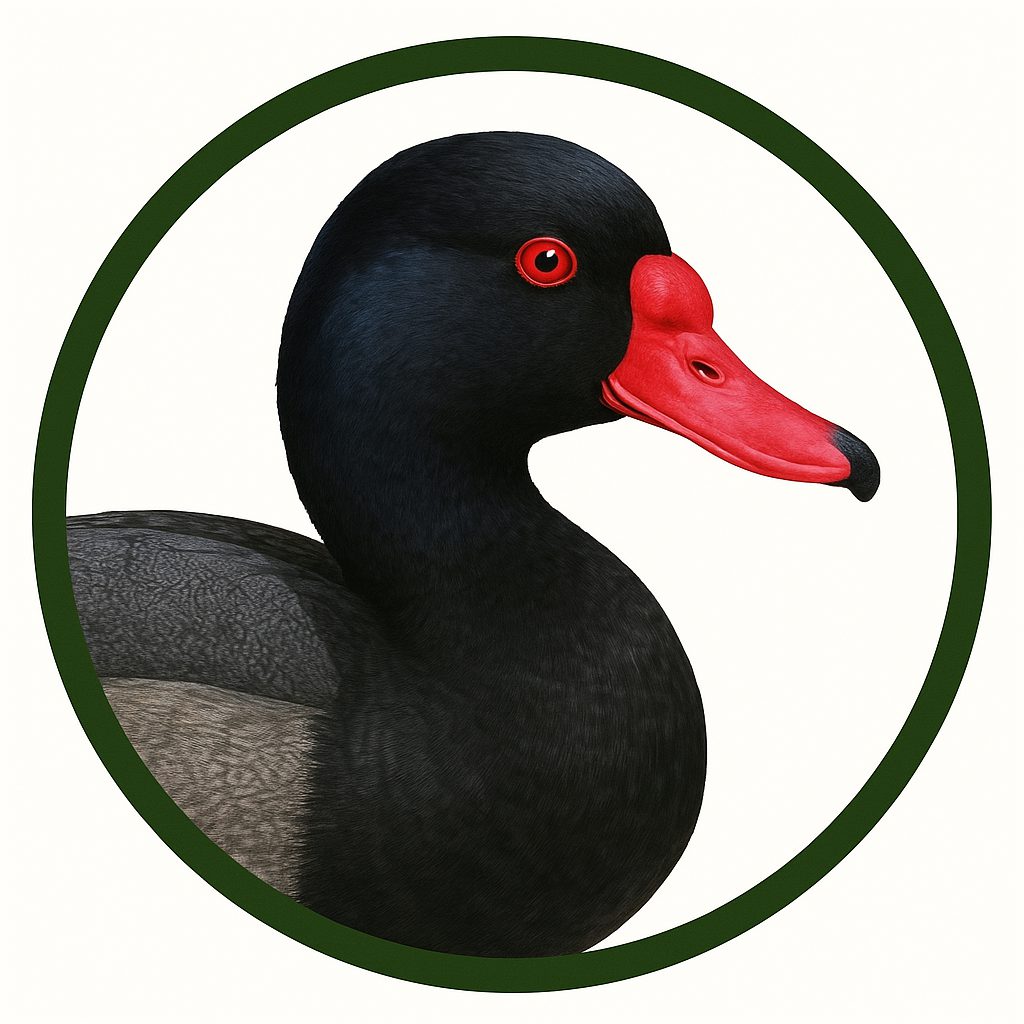
The rosy-billed pochard, known in Spanish as "pato picazo" or "pato peposaca" ( Netta peposaca ), is a medium-sized diving duck in which the male stands out for its striking red bill with a rounded knob that becomes more pronounced in the breeding season, while the female has a slate-coloured bill…
| Kingdom | Animalia |
| Phylum | Chordata |
| Class | Aves |
| Order | Anseriformes |
| Family | Anatidae |
| Genus | Netta |
| Species | Netta peposaca |
The rosy-billed pochard, known in Spanish as "pato picazo" or "pato peposaca" (Netta peposaca), is a medium-sized diving duck in which the male stands out for its striking red bill with a rounded knob that becomes more pronounced in the breeding season, while the female has a slate-coloured bill. The name "peposaca" comes from Guaraní and refers to the white of its flight feathers.
Although it belongs to the subfamily of diving ducks (Aythyinae), it is an exception within the group because it feeds mainly at the surface and rarely dives.
It is endemic to South America, where it is found in Argentina, central Chile, Paraguay, Uruguay and southern Brazil. Populations in southern Argentina migrate north in the austral winter, reaching as far as Brazil and southern Bolivia; it also occasionally appears in the Falkland Islands and, as an accidental visitor, in Peru.
It feeds mainly on the seeds of grasses such as crabgrass and other weeds of rice paddies, as well as roots, sedges and aquatic plants; in the breeding season it takes more animal matter, such as insects and small fish.
Breeding takes place between October and November, during the austral spring. The female builds the nest from vegetation and lines it with down, placing it over water, on the banks or in rice paddies, where she lays up to 10 cream to greenish eggs. Incubation lasts between 27 and 29 days and it is the female who raises the ducklings alone; they take to the air between 50 and 75 days after hatching.
The rosy-billed pochard is highly gregarious and can form flocks of several thousand birds. As it is a bird greatly prized by hunters, it is especially vulnerable to lead poisoning, since it often swallows lead shot from the bottom of wetlands to use as grinding stones in its gizzard.