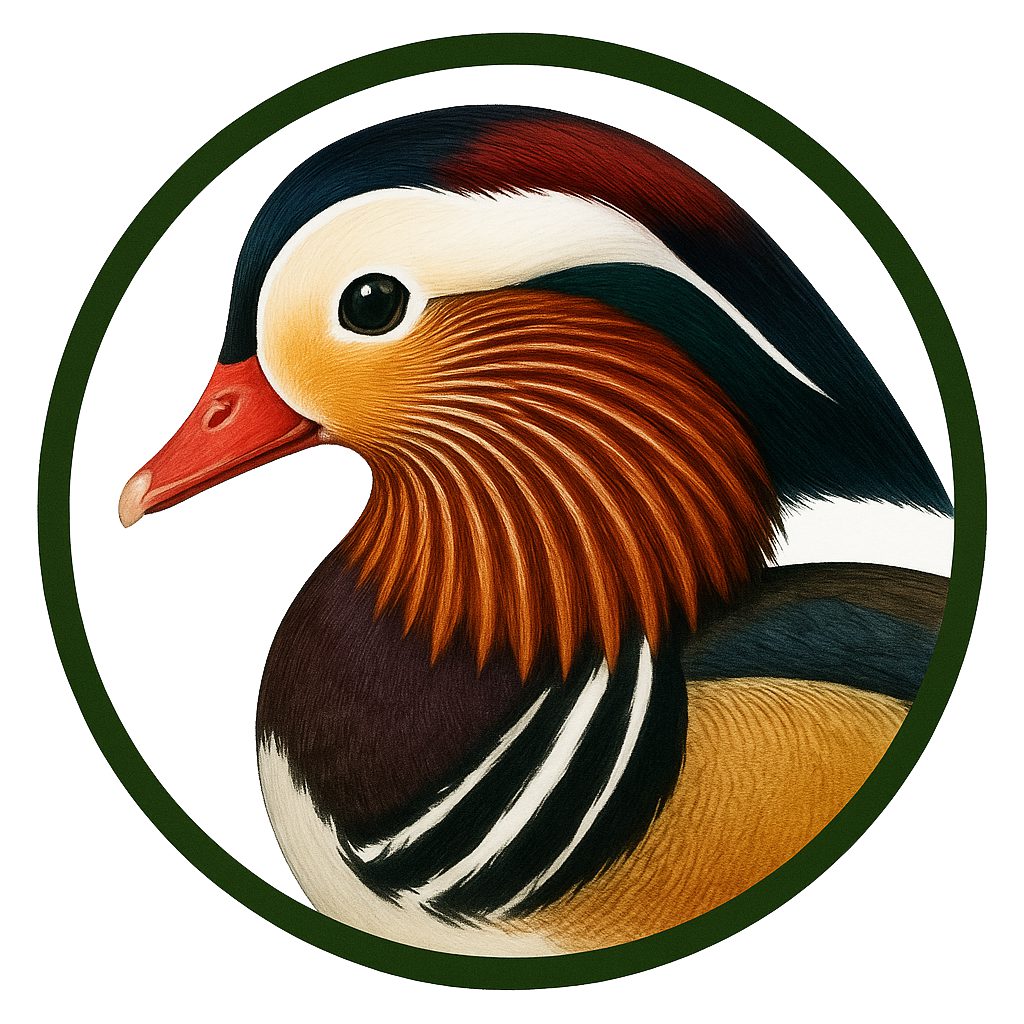
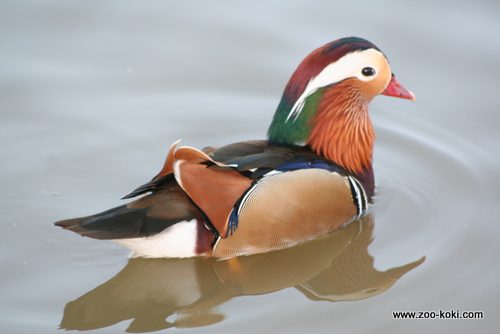
The Mandarin duck ( Aix galericulata ) is a brightly coloured anseriform bird of the family Anatidae, native to China, Japan and Siberia, which has been introduced to various parts of Europe and is greatly admired for its beauty, which is why it is kept…
| Kingdom | Animalia |
| Phylum | Chordata |
| Class | Aves |
| Order | Anseriformes |
| Family | Anatidae |
| Genus | Aix |
| Species | Aix galericulata |
The Mandarin duck (Aix galericulata) is a brightly coloured anseriform bird of the family Anatidae, native to China, Japan and Siberia, which has been introduced to various parts of Europe and is greatly admired for its beauty, which is why it is kept in numerous parks and zoos around the world.
It lives in dense woodland close to shallow lakes, ponds or still lagoons, as well as along the middle and lower stretches of rivers surrounded by deciduous forest. It is a species closely tied to trees away from the water, as it needs trunks with cavities in which to nest.
Its diet varies with the season: in autumn and winter it is mainly vegetarian, based on seeds and plants, while in spring and summer it also takes snails, insects, small fish, frogs and molluscs.
Mandarin ducks are monogamous and usually keep a single mate for life. They nest in tree hollows up to 9 metres above the ground, close to the water, where the female lays between 9 and 12 whitish eggs, which she incubates alone for 28 to 30 days.
In East Asia, Mandarin ducks were considered bearers of good fortune and symbols of love and marital affection; in China, a pair of these ducks is traditionally given as the main gift at the most important weddings.