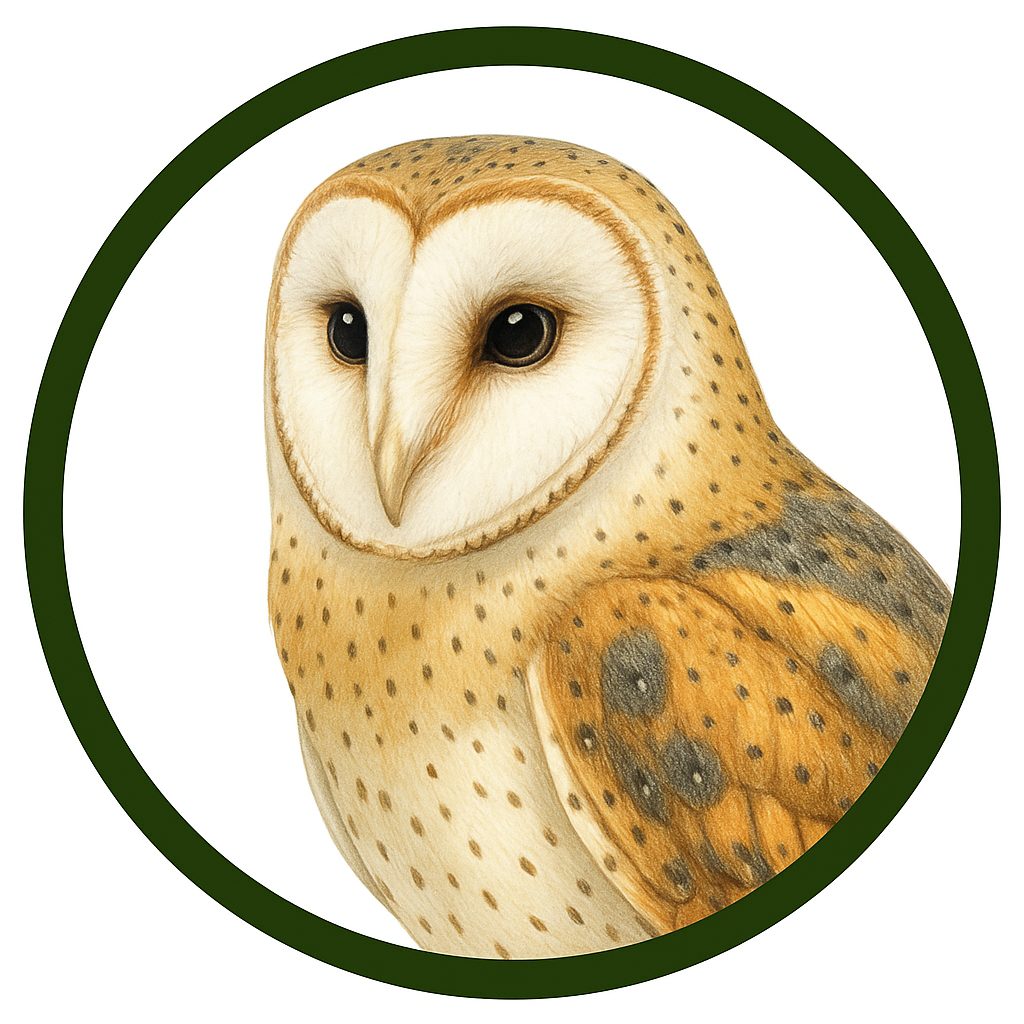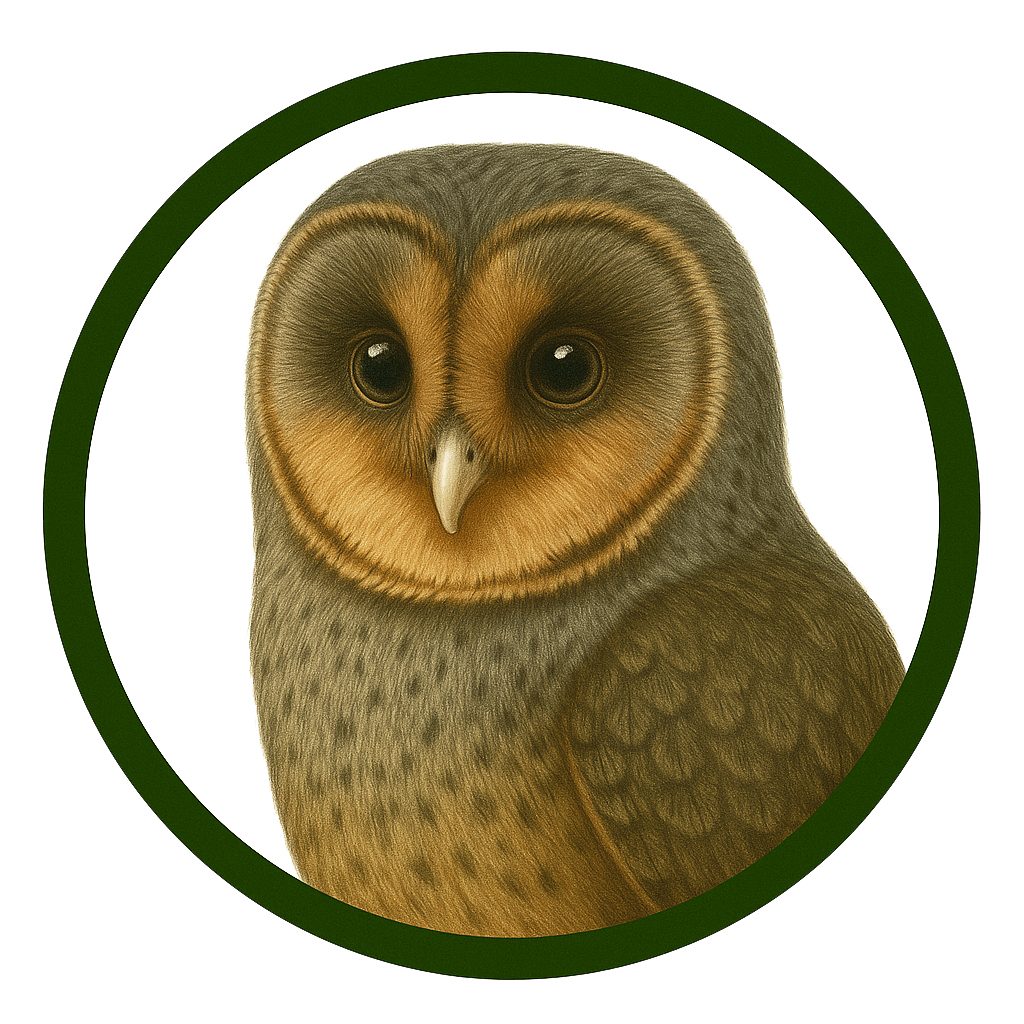
The Dark-breasted barn owl (lechuza negra) is the name by which the zoo knows Tyto alba guttata , a subspecies of the barn owl or church owl (family Tytonidae) native to central and western Europe.
| Kingdom | Animalia |
| Phylum | Chordata |
| Class | Aves |
| Order | Strigiformes |
| Family | Tytonidae |
| Genus | Tyto |
| Species | Tyto alba guttata |
The Dark-breasted barn owl (lechuza negra) is the name by which the zoo knows Tyto alba guttata, a subspecies of the barn owl or church owl (family Tytonidae) native to central and western Europe. It is slightly larger than the nominal form (Tyto alba alba) and is distinguished above all by its underparts, brown or buff in tone and covered in abundant dark spots, as opposed to the white, almost unspotted belly of the typical barn owl; the facial disc, by contrast, is a lighter brown than the rest of the plumage. Females are usually darker than males and show more spots on the back.
It is native to central and western European countries such as France, Belgium and western Germany, from where its range extends east to Latvia, Lithuania and Ukraine, and south to Romania and the Balkans. In the north of the Iberian Peninsula and in wide contact zones in central Europe it interbreeds and hybridises with the white nominal form, with which it shares its habitat: open rural areas — farmland, meadows — combined with attics, bell towers, ruined buildings or old trees that serve as shelter.
Like other barn owls, it hunts mainly small mammals — chiefly rodents — thanks to extraordinarily fine hearing and silent flight, which makes it a very effective ally for the natural control of pests in agricultural areas. In the hybrid populations of central Europe it has also been observed that darker-plumaged individuals, such as those of the guttata type, tend to catch more common voles (Microtus arvalis), while paler-plumaged ones hunt proportionally more field mice (Apodemus).
It follows the general breeding pattern of the barn owl: clutches of between four and seven eggs, laid at intervals of about a day and a half — resulting in chicks of staggered ages and sizes within the same brood —, incubated by the female while the male takes care of bringing food.
Tyto alba guttata is at the centre of one of the most studied hybrid zones in evolutionary biology: wherever its range overlaps with that of the nominal barn owl — including the north of the Iberian Peninsula —, the two forms interbreed freely. Research on these hybrid populations has linked plumage colour to specific genes and to differences in diet, immunity and behaviour, making it a worldwide reference case for colour polymorphism in nocturnal birds of prey.