
The Eurasian eagle-owl (Bubo bubo) is a species of owl in the order Strigiformes, family Strigidae.2 It is also known as the European eagle-owl. It is a large bird of prey, distributed across much of Eurasia.
| Kingdom | Animalia |
| Phylum | Chordata |
| Class | Aves |
| Order | Strigiformes |
| Family | Strigidae |
| Genus | Bubo |
| Species | Bubo bubo |
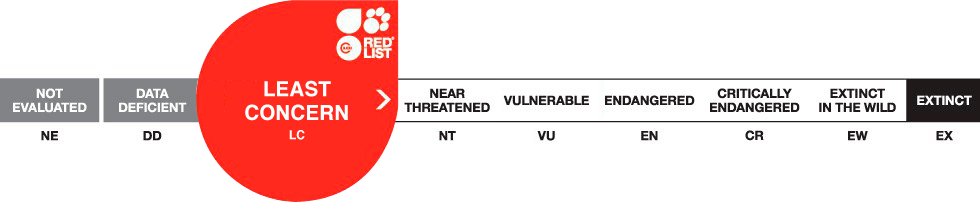
The Eurasian eagle-owl (Bubo bubo) is a species of owl in the order Strigiformes, family Strigidae.2 It is also known as the European eagle-owl. It is a large bird of prey, distributed across much of Eurasia. It is one of the largest owls and one of the most widely distributed geographically, so it occupies a great variety of habitats. The vast majority of its population is found in continental Europe, Russia and Central Asia. Its scientific name derives from the onomatopoeia of the sounds it makes, and as early as the Middle Ages it was known as bubo in the bestiaries.
Owing to its majesty and the ease with which it can be bred in captivity, it is used relatively often in the art of falconry. Tame eagle-owls are also used for pest control and to deter birds such as gulls from nesting.
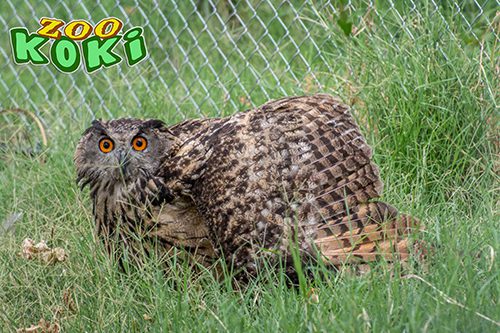
It is distributed across most of Eurasia, avoiding the tropical areas of India and South-East Asia (where it is replaced by the Malay eagle-owl , the spot-bellied eagle-owl, the dusky eagle-owl and the rock eagle-owl) and the polar areas of the Arctic (where it is replaced by the snowy owl). It also avoids the most arid regions such as the Arabian Peninsula (where it is replaced by the Pharaoh eagle-owl). It is not found in the British Isles or on the Mediterranean islands.
The Eurasian eagle-owl can be found in many habitats, from semi-desert areas, Mediterranean forest and scrub, taiga, temperate forests and coniferous forests to steppes, and even tundra. It shows a clear preference for areas with plenty of ravines and cliffs surrounded by many trees and shrubs. This need for rocky areas, where this owl nests to keep its nest out of the reach of predators, becomes more pressing in grasslands and deserts with little tree cover, where cliffs and ravines are therefore the only refuge. It is also found near rivers, streams and wetlands, because these damp areas have soft ground in which the small rodents that make up the eagle-owl's preferred prey dig their burrows.
16 subspecies are recognised as valid.
The Eurasian eagle-owl may be the most powerful species of owl, capable of attacking and killing very large prey, far beyond the abilities of most other living owls. Moreover, the diet of this species is much more varied than that of any other bird of prey of its size. It can adapt to very small prey when that is the only type available, and to large prey when this is abundant. Generally, 55-80% of the owls' food consists of mammals, most of them weighing more than 100 grams.
Hunting basically consists of watching from a perch to detect the activity of prey and then swooping rapidly down on it. The prey is often killed quickly with the powerful talons, although sometimes the owls also bite the head to kill it. The prey is then swallowed whole or torn into pieces with the bill. Most hunting takes place in clearings and open areas, although it can also hunt inside forests, where it will find it harder to locate its prey in the understorey. However, because of its flight limitations, this owl requires hunting grounds, even if open, to have some tree cover so that it can perch and scan its surroundings.
They are highly territorial animals. They use several signalling systems to delimit their territories and indicate occupation, such as territorial calls from their perches and marking rocks with droppings. The territory size of each pair varies widely, depending mainly on prey availability, the density of neighbouring pairs and the turnover rate of territorial individuals.
Both sexes normally live alone and do not come together until the courtship season arrives. When they find a good breeding site, they signal it by digging a small hole in the ground and uttering a series of characteristic calls.
Its nest is an unlined cavity in tree trunks or cliffs. It lays two to six eggs once a year, normally in winter or early spring. They are very sensitive to their surroundings, and if they do not have enough space or food, laying may be delayed and considerably reduced. The female incubates the eggs while the male obtains food. After thirty-six days the eggs hatch. The chicks are semi-nidicolous; they have white down, which they replace with brownish down between ten and twelve days old. Although the task of feeding and looking after the chicks is carried out mostly by the female, the male actively helps during this period.
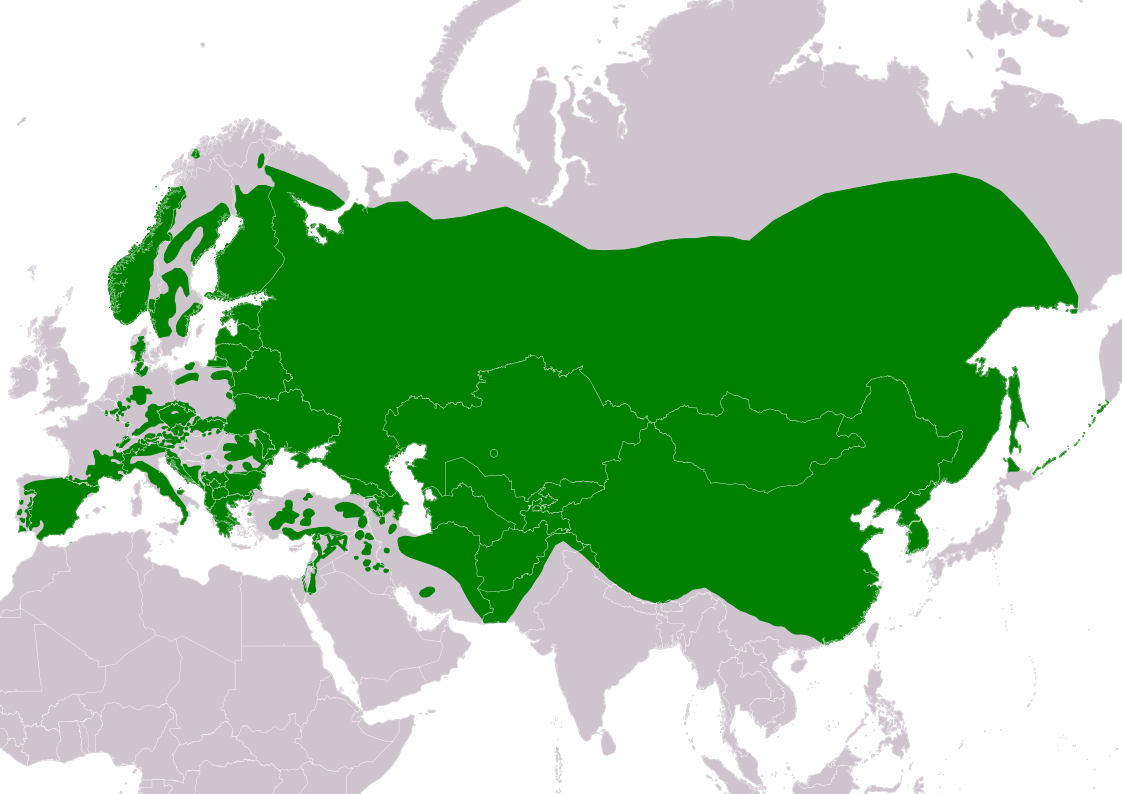
The Eurasian eagle-owl spreads across much of Europe and Asia over an area of about 32 million km². In Europe it is estimated that between 19,000 and 38,000 breeding pairs live, and the total world population is between 250,000 and 2,500,000 individuals. The population of the Eurasian eagle-owl is declining because of human activities, but because it has such a wide range and a fairly large total population, the IUCN classifies it as Least Concern. The main causes of non-natural mortality are electrocution, collisions with vehicles and hunting.
 Source: Wikimedia Commons — BuboBuboIUCN.svg