
The short-eared owl (Asio flammeus), known in Spanish as búho campestre, lechuza campestre, lechuzón de pajonal or nuco, is one of the nocturnal birds of prey with the most daytime activity.
| Kingdom | Animalia |
| Phylum | Chordata |
| Class | Aves |
| Order | Strigiformes |
| Family | Strigidae |
| Genus | Asio |
| Species | Asio flammeus |
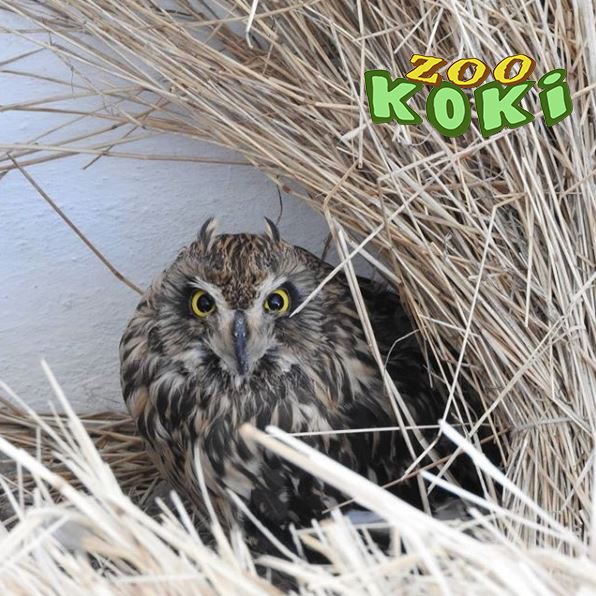
The short-eared owl (Asio flammeus), known in Spanish as búho campestre, lechuza campestre, lechuzón de pajonal or nuco, is one of the nocturnal birds of prey with the most daytime activity. It lives in open areas, uncultivated grassland, marshes, farmland, heathland and, above all, coastal marshes. Its population in a given area depends mainly on the availability of prey. It is often seen hanging in the air, though without truly hovering, searching for rodents among the tall grass.
Although, as noted, it is more diurnal than the other owls, it hunts mostly at night. The most frequent technique is slow, very low flight, often dropping onto its prey. At other times it waits from a perch. Its hunting hours seem to coincide with the activity of voles (Arvicolinae), its preferred prey. In general it flies very low, with a distinctive wingbeat. It is common for several individuals to gather at the same hunting ground.
The following subspecies are recognised as valid:
Its diet consists mainly of rodents (more than 90%), but also other small mammals, reptiles and some large insects. It sometimes catches small birds
It nests directly on the ground, in grassland and marshes, among the grass. The nest is a flattened, unlined patch, although it occasionally adds seeds, grasses or feathers. It lays 4 to 8 eggs in a single clutch, although in some regions up to two. In years when rodents are abundant it may lay 12 or even 14 eggs in a season. The egg measures 35 ~ 45 X 29 ~33 mm and is pure white, matt.
Incubation is carried out by the female and lasts between 21 and 37 days. She lays every 48 hours and starts incubating as soon as the first egg is laid, so there can be quite a large age difference between the chicks hatched in the same clutch. The fledglings may leave the nest at only four weeks and fly at five weeks. The male stands guard near the nest and brings food. Like other ground-nesting birds, the adults tend to trick predators approaching the nest by feigning wing injuries that prevent them from flying.
A very characteristic feature of this species is its nomadic, erratic behaviour; it settles in a specific area only during the breeding season.
In winter they sleep in communal roosts. Although daytime activity is not unusual, it normally becomes active 30-60 minutes before sunset..
 Source: Wikimedia Commons — AsioFlammeusIUCN.svg