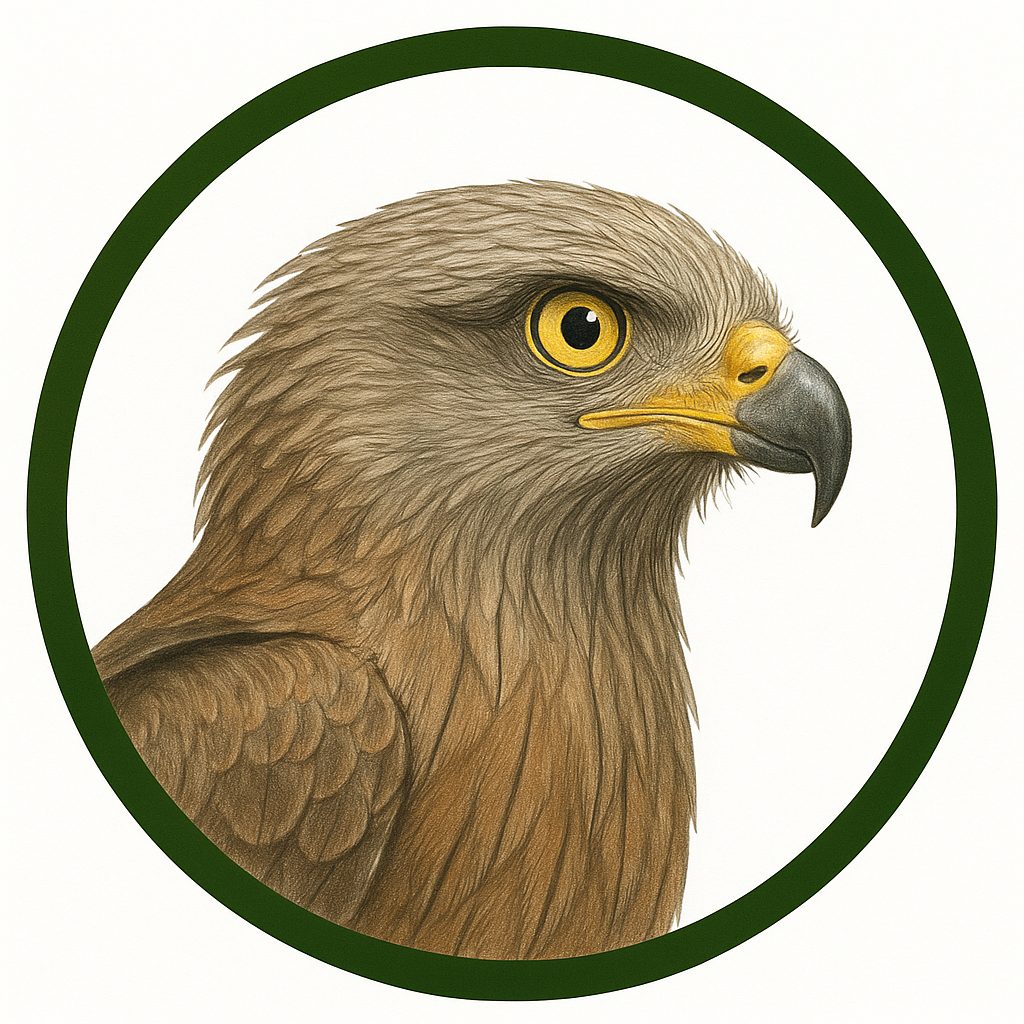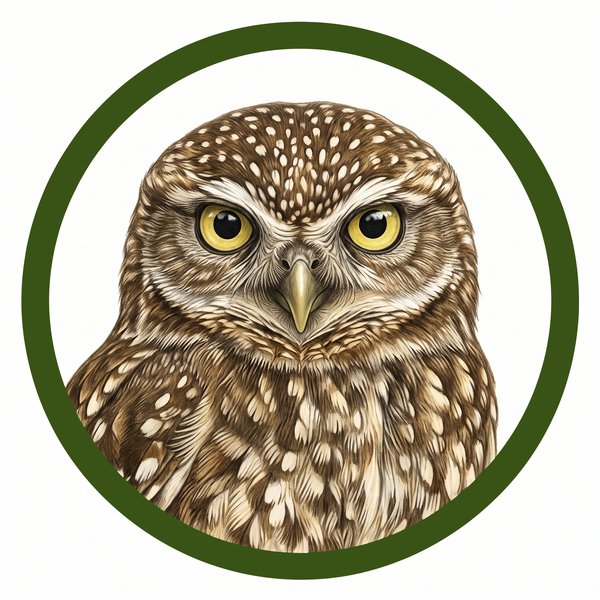
The little owl (Athene noctua) is a strigiform bird of the family Strigidae. Like most birds of the family Strigidae, the little owl has large, pale-yellow-irised eyes facing towards the front of the skull.
| Kingdom | Animalia |
| Phylum | Chordata |
| Class | Aves |
| Order | Strigiformes |
| Family | Strigidae |
| Genus | Athene |
| Species | Athene noctua |
The little owl (Athene noctua) is a strigiform bird of the family Strigidae.
Like most birds of the family Strigidae, the little owl has large, pale-yellow-irised eyes facing towards the front of the skull. It has a stocky build and brown plumage with white spots, and in flight it can be recognised by its short, rounded wings with dotted white lines. It looks a little like the Eurasian scops owl, but the latter is ash-grey, has a pair of pointed tufts above the head, and is also less sturdily built than the little owl.
The flight of the little owl is undulating, with continual dips and rises and rapid wingbeats.
Its call is easy to hear at dusk: a series of loud, sharp notes. It is most often seen in Mediterranean landscapes with olive trees, scrub and the odd stony patch. It is also frequently seen by day, perched on a post.
It is widespread throughout the southern half of Europe and North Africa, since it is typical of Mediterranean ecosystems with plenty of olive trees. It measures about 25 cm in length from beak to tail tip.
The following subspecies are recognised:
It hunts mainly small rodents, large insects, small birds and worms.
The little owl lives as a pair all year round, spending its whole life in its breeding territory, in the same nest. The nest is usually in a cavity: a hollow tree, a crack in the rocks, a ruined building… Sometimes it takes over the nests of hoopoes and rollers.
During the breeding season, which runs through March and April, it gives a wide variety of calls, particularly slow, melodious trills.
Laying takes place in late April or early May, and the similar size of the chicks suggests that incubation does not begin until the last egg has been laid. Incubation is carried out exclusively by the female, who is fed by the male during this time.
Once the eggs have hatched, the chicks remain in the nest hole for a month. They start to fly at the beginning of July, and by August they are independent and leave their parents' territory.
In Ancient Greece it was the sacred animal of the goddess Athena, from whom it takes its scientific name, and a symbol of the city of Athens. For this reason, many coins were minted with the image of this animal on the reverse. The German philosopher Georg Wilhelm Friedrich Hegel adopted it in the 19th century as a symbol of Philosophy.5 In 1923, the philosopher José Ortega y Gasset used the little owl as the logo of the Revista de Occidente. In Roman culture it was originally a bird that foretold death and, under Greek influence, it also became the bird of Minerva.
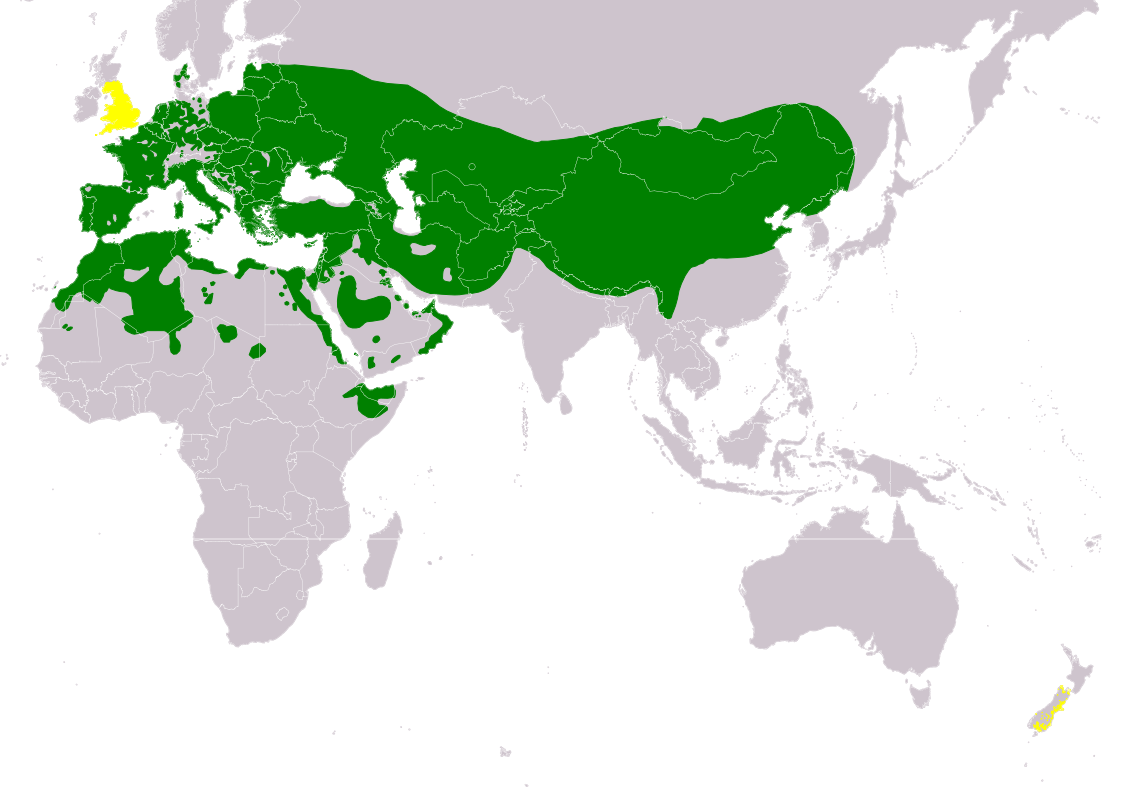 Source: Wikimedia Commons — AtheneNoctuaIUCN.svg