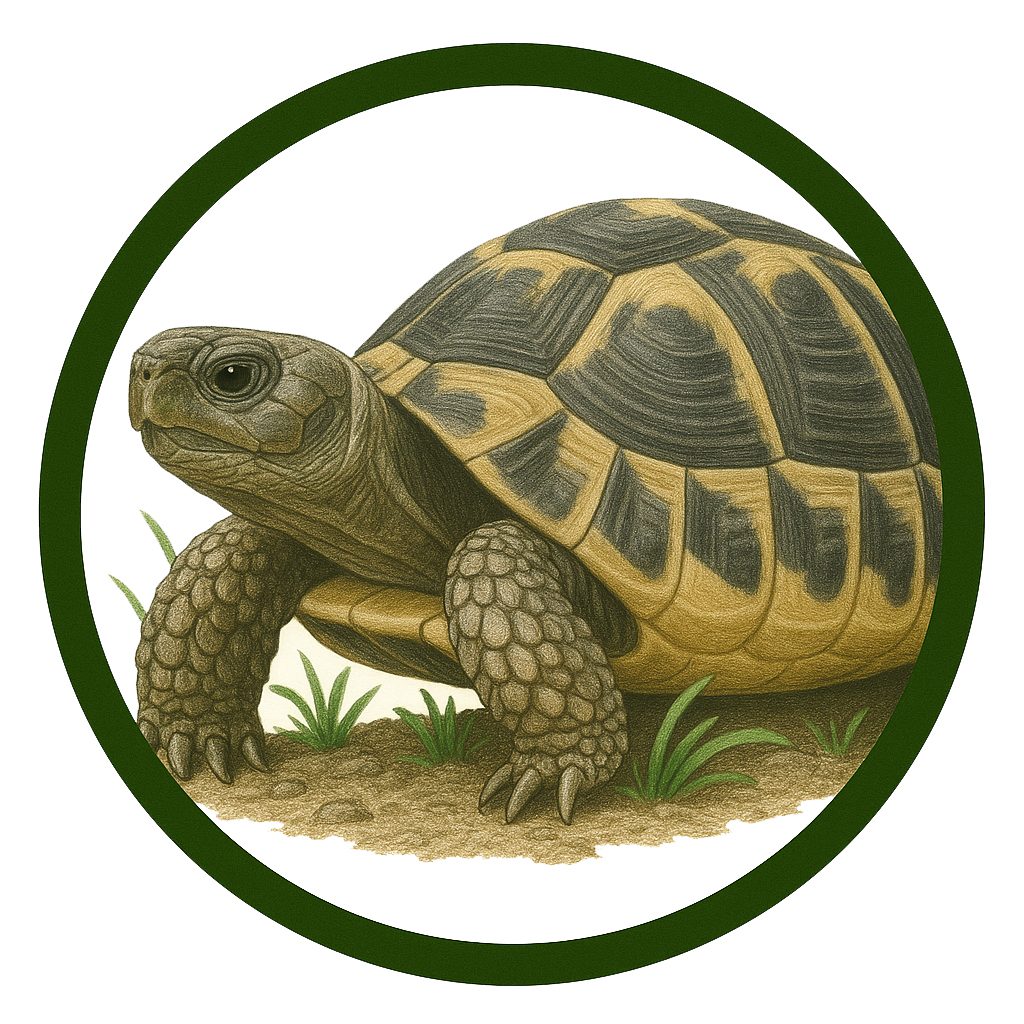
The spur-thighed tortoise (Testudo graeca graeca) is one of the eight tortoise species traditionally classified within the genus Testudo; it is the species with the widest distribution in the genus and is present on three continents (Europe, Africa and Asia).
| Kingdom | Animalia |
| Phylum | Chordata |
| Class | Reptilia |
| Order | Testudines |
| Family | Testudinidae |
| Genus | Testudo |
| Species | Testudo graeca |
The spur-thighed tortoise (Testudo graeca graeca) is one of the eight tortoise species traditionally classified within the genus Testudo; it is the species with the widest distribution in the genus and is present on three continents (Europe, Africa and Asia). Seventeen different subspecies are known.
T. graeca graeca (Linnaeus, 1758)
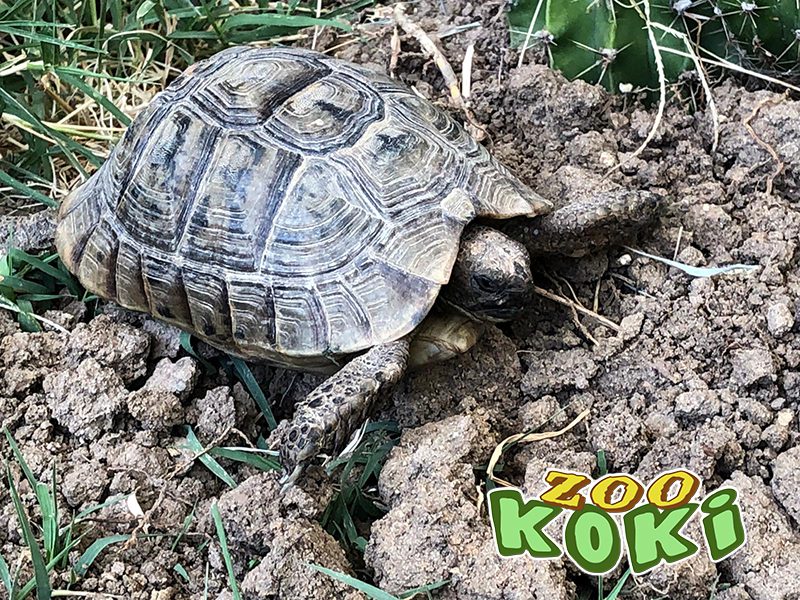
A western Palaearctic species, in Europe it is present in Italy, eastern Greece, Spain, European Turkey, on some islands of the Mediterranean Sea, and along the Bulgarian and Romanian coasts of the Black Sea.
In Asia it is very common in Turkey, Asia Minor, Syria, Lebanon, Israel, Jordan, the Caucasus and Iran, as far as the borders of Pakistan. In North Africa it is found in Morocco, Algeria, Tunisia and Libya.
Its diet should be based on vegetables and greens.
The basis of their diet is wild plants. They should be given alfalfa, thistles, dandelion, plantain, ribwort, clover, yarrow, honeysuckle, rosemary, sage and lemon balm. Many keepers also give them prickly pears and prickly pear pads (Opuntia sp.), from which the spines and skin must first be removed. They can also be offered cabbage, spinach, broccoli and lettuce, always free of pesticides. It is very important that most of the food is wild plants, as vegetables contain too much protein.
Immediately after waking from hibernation, the male begins courtship with a ritual that includes following the female and biting or butting her carapace. The male climbs onto the female's back to mate. The male extends his penis, which is housed inside his thick tail, and emits one of the few sounds these reptiles make; hatchlings, from birth, can also make a dull, click-like sound when they feel threatened. The female can take up to four years to conceive, as she can store sperm in an organ of the oviduct.
They are very long-lived animals, and many centenarian individuals are known. They reach sexual maturity at around ten years of age. Testudo species are oviparous: they lay their eggs in holes dug in the ground by the female with her hind feet. Testudo Graeca females lay eggs three or four times a year, between May and June. The number of eggs depends on the size of the individual.
The incubation time, between two and three months, and the sex of the hatchlings vary according to the ambient temperature. If the incubation temperature is below 31.5 °C, males will predominate, and if the temperature is higher, there will be more females. Temperatures below 26 °C or above 33 °C cause malformations or the death of the embryo. When hatching day arrives, often hastened by a rainy day, the baby tortoise breaks the egg open using a horny tubercle located between the external nostrils and the upper jaw, which disappears after a few days. Hatching lasts forty-eight hours, a period during which the yolk sac is completely absorbed.
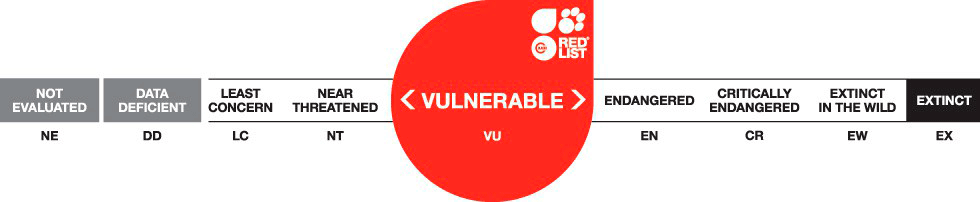
At present there are only 3 populations in Spain, 2 in the south of the peninsula and 1 relict population on Mallorca. It appears in the Catalogue of Threatened Species of the Region of Murcia as a vulnerable species. The Atlas and Red Book of the Amphibians and Reptiles of Spain considers the spur-thighed tortoise an endangered species. Of the two mainland populations, the one with the wider distribution is found in the south of the province of Murcia and the north of Almería. In Murcia it is found mainly in two separate nuclei, the Sierra de Torrecilla and the Sierras de Almenara, Cantar and Carrasquilla. Another area where it can be found is the Cabo Cope and Puntas de Calnegre Natural Park, although it is currently threatened by reclassification of land for development. The other mainland population is in Doñana. And the only Balearic population is found in a small enclave of about 100 km² in Calvià.
Genetic analyses showed a great similarity between the populations of the western coast of Algeria and those of the centre and south of the south-eastern Iberian population. It was estimated that the spur-thighed tortoise arrived in the Iberian Peninsula approximately 20,000 years ago, and that it arrived naturally, since this predates the maritime expansion of the Greeks and Phoenicians in the western Mediterranean.
The spur-thighed tortoise is therefore in serious danger in the Iberian Peninsula. The causes of its decline are varied: human pressure on its habitat through farming practices, forest fires and, above all, uncontrolled urban development. It has been listed as a species of special interest under both national and regional legislation.