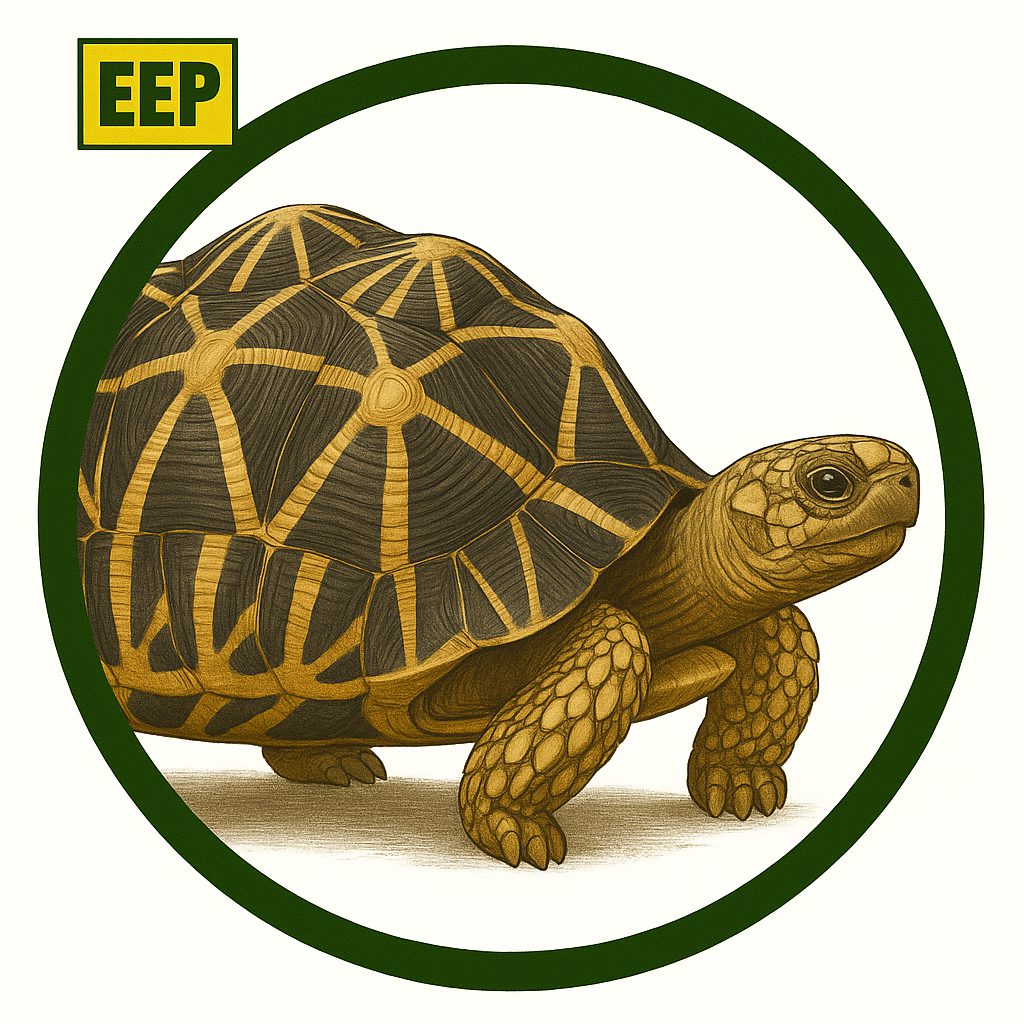
The Indian star tortoise (Geochelone elegans) is a land tortoise of the family Testudinidae, recognisable by its highly domed shell, black with striking yellow star-shaped radiating markings on each scute.
| Kingdom | Animalia |
| Phylum | Chordata |
| Class | Reptilia |
| Order | Testudines |
| Family | Testudinidae |
| Genus | Geochelone |
| Species | Geochelone elegans |
The Indian star tortoise (Geochelone elegans) is a land tortoise of the family Testudinidae, recognisable by its highly domed shell, black with striking yellow star-shaped radiating markings on each scute. It is a moderately sized species, with adults usually reaching about 25 cm in length, although some individuals reach 35 cm; females are larger than males.
It is native to arid and semi-arid areas of western and south-eastern India, south-eastern Pakistan and Sri Lanka, where it occupies dry forests, grasslands and semi-desert environments.
It is herbivorous: it feeds on grasses, fallen fruit, flowers and the leaves of succulent plants, and in the wild may occasionally eat carrion.
Females reach sexual maturity between 8 and 12 years, and males between 6 and 8 years. They can lay between one and nine clutches a year, with 1 to 10 eggs per clutch, and incubation periods ranging from 50 to 180 days; the sex of the hatchlings depends on the incubation temperature.
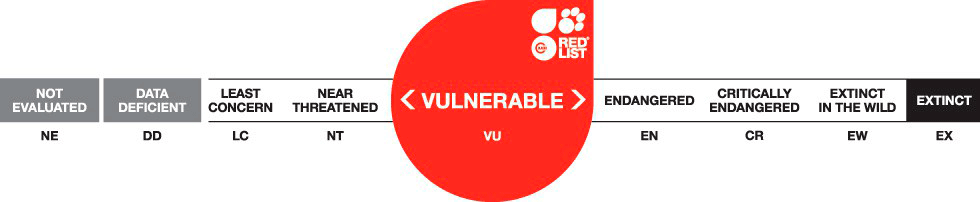
It is classed as Vulnerable by the IUCN and since 2019 has been listed in CITES Appendix I, the highest level of protection against international trade, owing to intense illegal capture for the pet trade. It is therefore part of an EAZA European Endangered Species Programme (EEP), which coordinates its breeding and ex situ conservation in European zoos, including Zoo Koki.