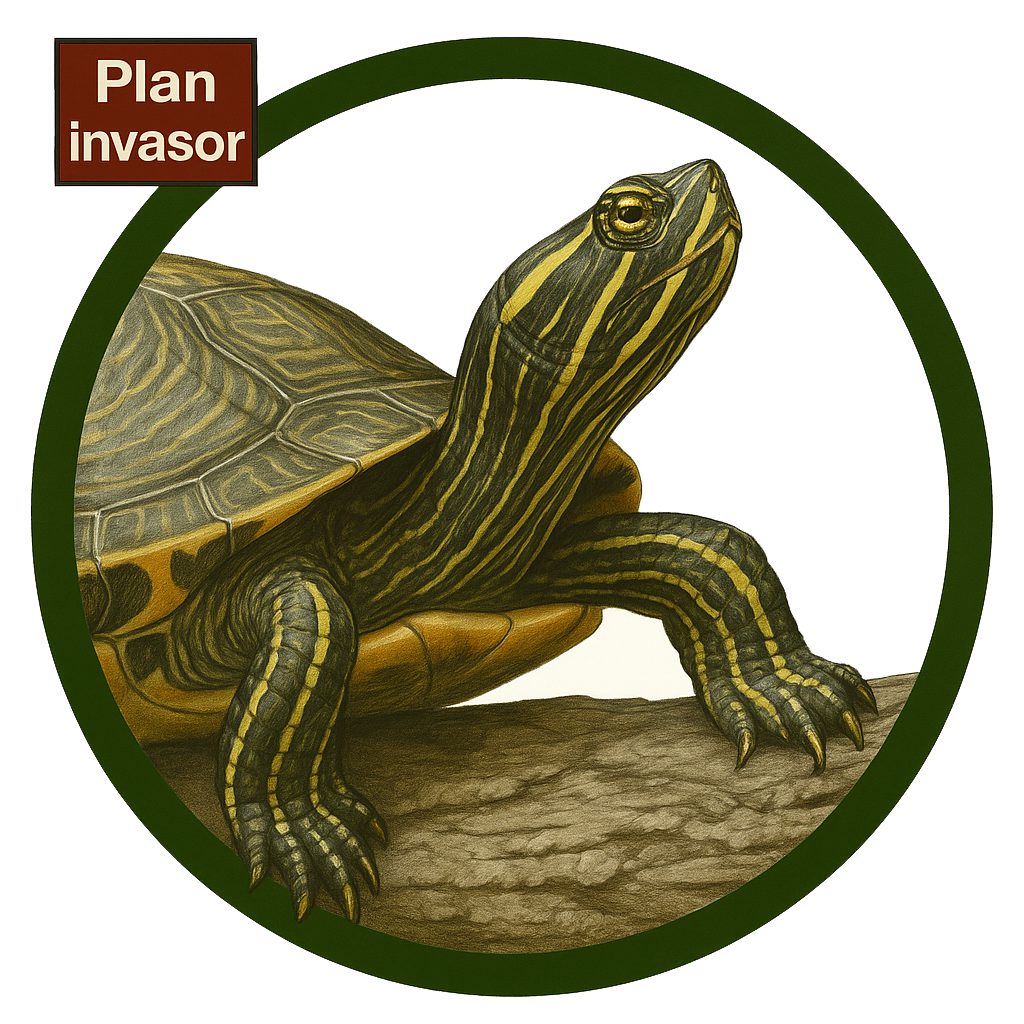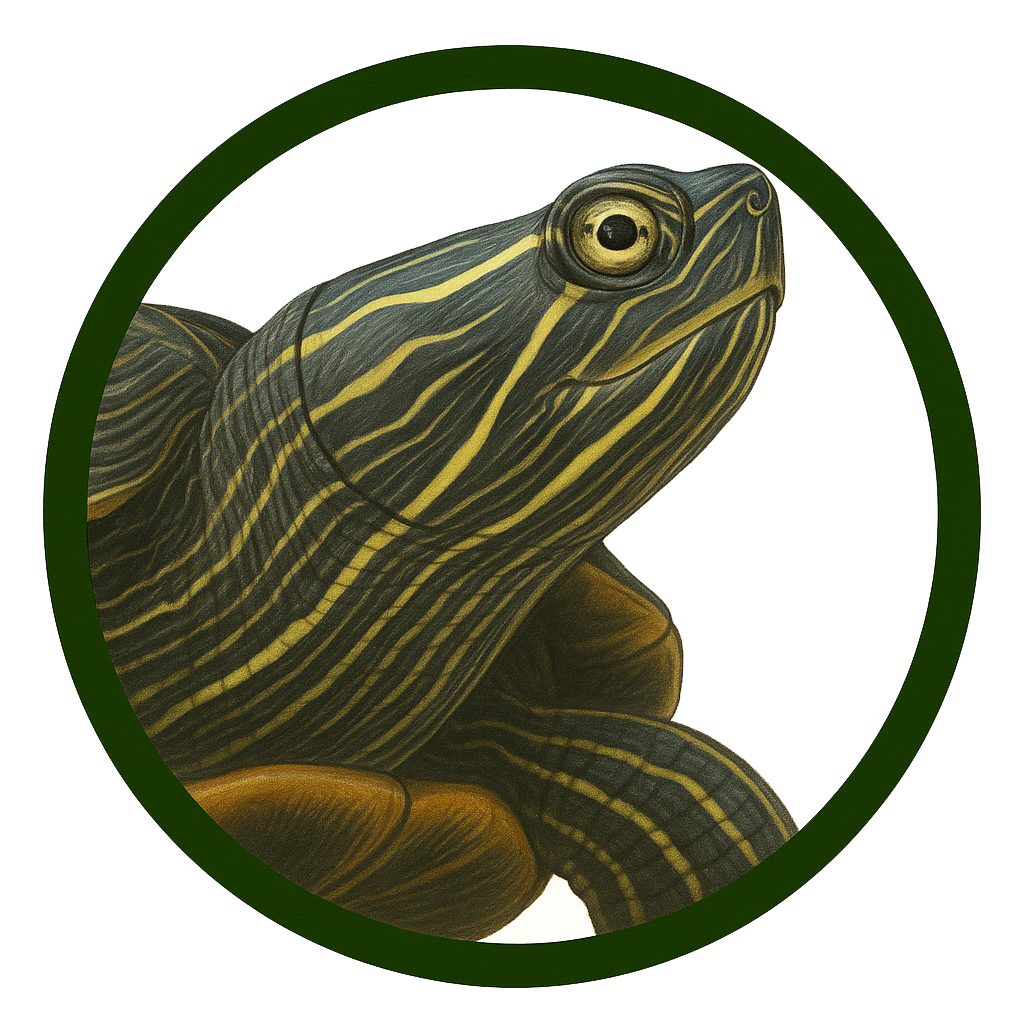
The false map turtle ( Graptemys pseudogeographica ) belongs to the group known as "sawback turtles", named for the row of low spines along the midline of the shell, whose rear edge is also serrated.
| Kingdom | Animalia |
| Phylum | Chordata |
| Class | Reptilia |
| Order | Testudines |
| Family | Emydidae |
| Genus | Graptemys |
| Species | Graptemys pseudogeographica |
The false map turtle (Graptemys pseudogeographica) belongs to the group known as "sawback turtles", named for the row of low spines along the midline of the shell, whose rear edge is also serrated. The shell is olive to brown with yellowish markings, and a "L"-shaped mark stands out behind each eye.
There is marked sexual dimorphism: females grow considerably larger than males.
It is native to the large rivers and streams of the Missouri and Mississippi basins in the central United States, preferring waters with a moderate current, plenty of aquatic vegetation and submerged logs, which it uses for basking.
It is omnivorous: juveniles are more carnivorous, eating insects, crayfish and snails, while adults include a greater proportion of aquatic plants and algae, as well as carrion.
Females can lay up to three or four clutches a year, with an average of between 6.6 and 14 eggs per clutch (up to 22 in exceptional cases); the nesting season runs from mid-May to late July and the hatchlings emerge after 69-75 days of incubation. The sex of the hatchlings depends on the incubation temperature.
It is a highly gregarious species: individuals often share the same logs for basking, which allows them to keep a collective watch for predators.