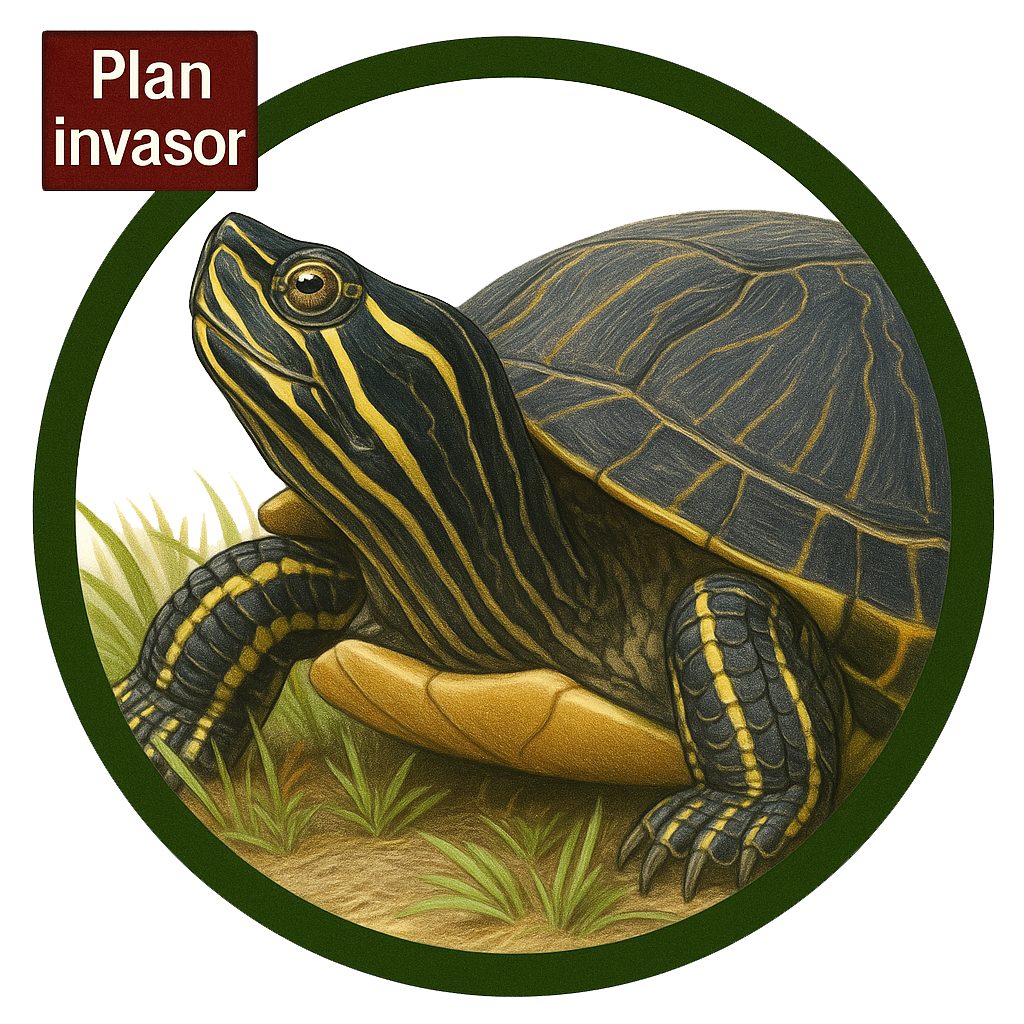
The peninsula cooter (Pseudemys peninsularis) is a freshwater turtle of the family Emydidae, characterised by the numerous yellow stripes that run along its shell, limbs, head and tail.
| Kingdom | Animalia |
| Phylum | Chordata |
| Class | Reptilia |
| Order | Testudines |
| Family | Emydidae |
| Genus | Pseudemys |
| Species | Pseudemys peninsularis |
The peninsula cooter (Pseudemys peninsularis) is a freshwater turtle of the family Emydidae, characterised by the numerous yellow stripes that run along its shell, limbs, head and tail. Males have very elongated claws on the front feet, used in courtship.
The shell is typically between 23 and 33 cm long, although it can exceed 40 cm; females are noticeably larger and heavier than males.
It is endemic to the Florida peninsula (United States), where it is abundant in rivers, lakes and freshwater ponds with plentiful submerged aquatic vegetation.
Adults are mainly herbivorous and feed on a wide variety of aquatic plants and algae; juveniles supplement their diet with small invertebrates before becoming largely vegetarian.
Females reach sexual maturity at between 5 and 7 years and can lay up to three clutches a year, with an average of about 20 eggs per clutch (between 10 and 29). The flask-shaped nest is dug in loose, sunny soil, and natural incubation lasts between 80 and 150 days depending on temperature.
It can live up to about 30 years in the wild and is one of the most common freshwater turtles in Florida, where it is often seen in large groups on logs and sunny banks.