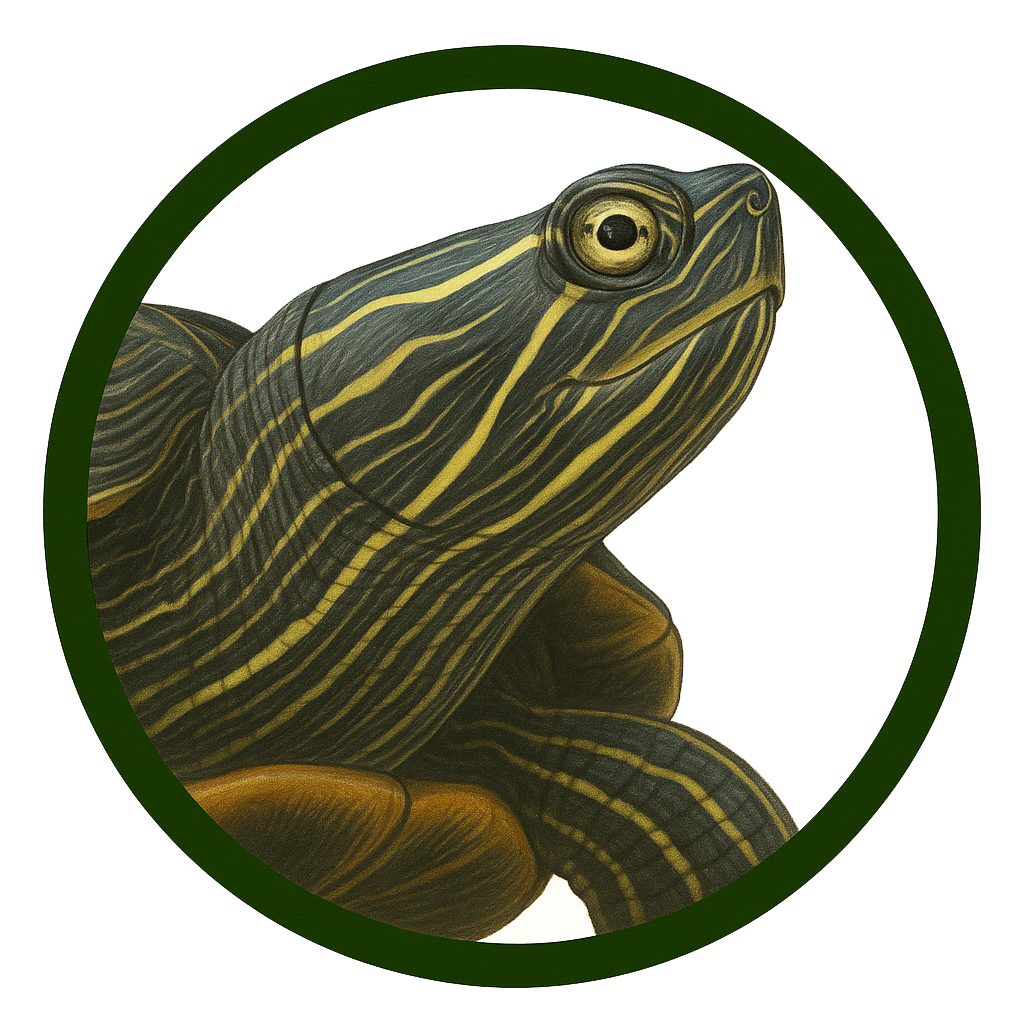
The hieroglyphic river cooter ( Pseudemys concinna hieroglyphica ) is a form of the river cooter ( Pseudemys concinna ), of the family Emydidae, very similar to the eastern river cooter but with a slightly flatter shell and without the characteristic yellow "C"-shaped mark that the latter has on the second costal scute…
| Kingdom | Animalia |
| Phylum | Chordata |
| Class | Reptilia |
| Order | Testudines |
| Family | Emydidae |
| Genus | Pseudemys |
| Species | Pseudemys concinna hieroglyphica |
The hieroglyphic river cooter (Pseudemys concinna hieroglyphica) is a form of the river cooter (Pseudemys concinna), of the family Emydidae, very similar to the eastern river cooter but with a slightly flatter shell and without the characteristic yellow "C"-shaped mark that the latter has on the second costal scute. The shell, brown or olive with an intricate pattern of yellowish lines, measures between 20 and 30 cm, and the stripes on the chin form a characteristic inverted "Y".
It is found in western Kentucky, Tennessee, Mississippi, Alabama and western Georgia (United States), in large rivers with a moderate current and plenty of aquatic vegetation; it is highly aquatic and is rarely found in small streams or ponds.
Like the other river cooters of the genus Pseudemys, adults are mainly herbivorous and eat aquatic plants, grasses and algae, while juveniles include more aquatic invertebrates and small fish in their diet.
It shares the general reproductive pattern of Pseudemys concinna: nesting on land close to the water, with several clutches over the warm season; it has not been possible to verify specific figures for clutch size or incubation period for this particular form in the sources consulted.
The name "hieroglyphica" (hieroglyphic) alludes to the intricate pattern of yellow lines on its shell, which resembles hieroglyphic writing. Its taxonomic status has been the subject of debate: originally described as a subspecies in its own right, it is now treated by various sources as a colour variant within Pseudemys concinna concinna rather than as a fully valid taxon.