The Ouachita map turtle ( Graptemys ouachitensis ) is a freshwater turtle of the family Emydidae, with a row of low spines along the midline of the shell and a serrated rear edge.
| Kingdom | Animalia |
| Phylum | Chordata |
| Class | Reptilia |
| Order | Testudines |
| Family | Emydidae |
| Genus | Graptemys |
| Species | Graptemys ouachitensis |
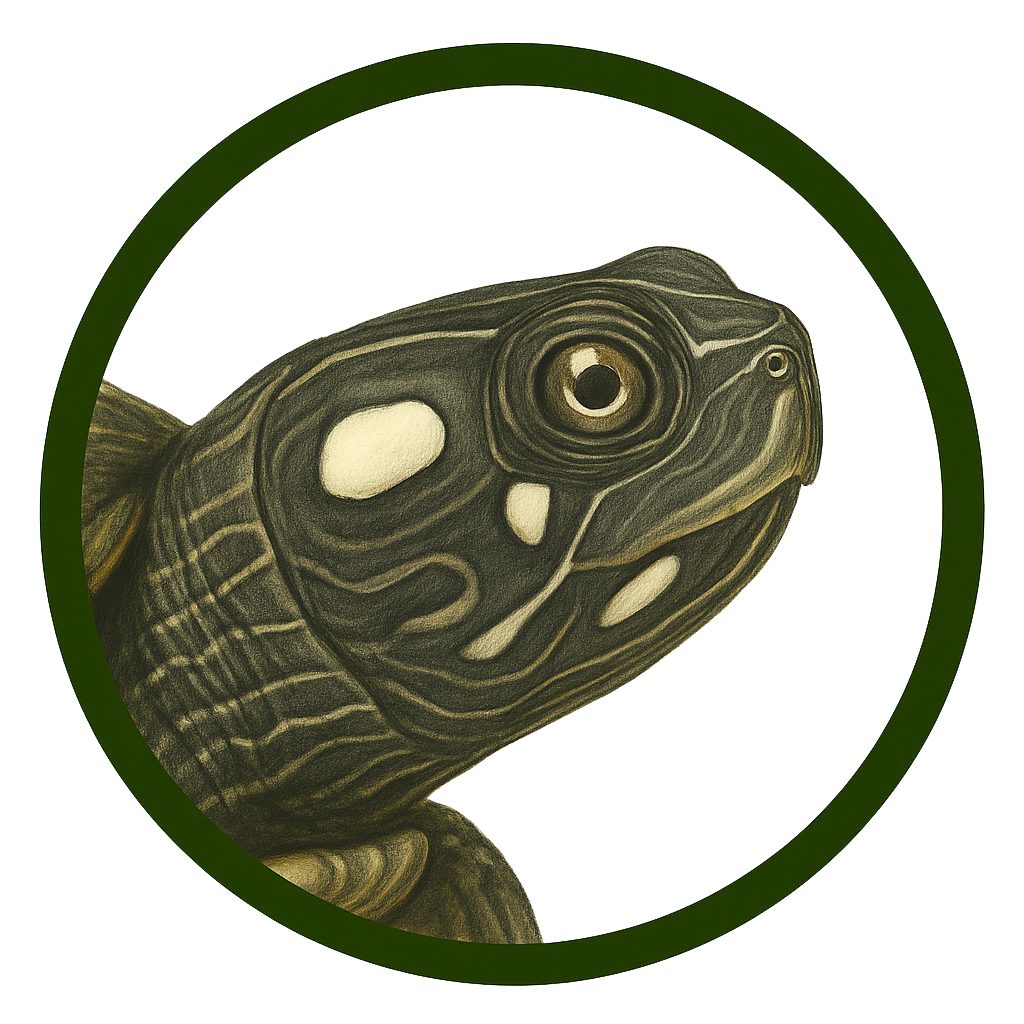
The Ouachita map turtle (Graptemys ouachitensis) is a freshwater turtle of the family Emydidae, with a row of low spines along the midline of the shell and a serrated rear edge. It is identified by very characteristic yellow markings on the head: a rectangular one behind each eye, an oval one below each eye and a round one on each side of the jaw.
It shows marked sexual dimorphism: males reach a shell length of about 13 cm, while females can grow to 25 cm.
It is endemic to the United States, where it lives in freshwater rivers across a wide area of the central and south-eastern parts of the country. It is highly aquatic and rarely comes onto land, except to bask or nest.
It is an opportunistic omnivore: it feeds on small aquatic animals such as shrimps and insects (mayflies, caddisflies, beetles, grasshoppers), as well as fish, carrion, algae and aquatic plants.
Females usually lay between two and three clutches a year, of 6 to 16 eggs each, in late spring or early summer. Incubation lasts between 60 and 80 days, and the hatchlings may emerge in late summer or remain in the nest until the following spring.
It is the first North American turtle species in which vocalisations by the hatchlings have been documented inside the nest itself, in the form of clicks and mewing-like sounds, just before they emerge.