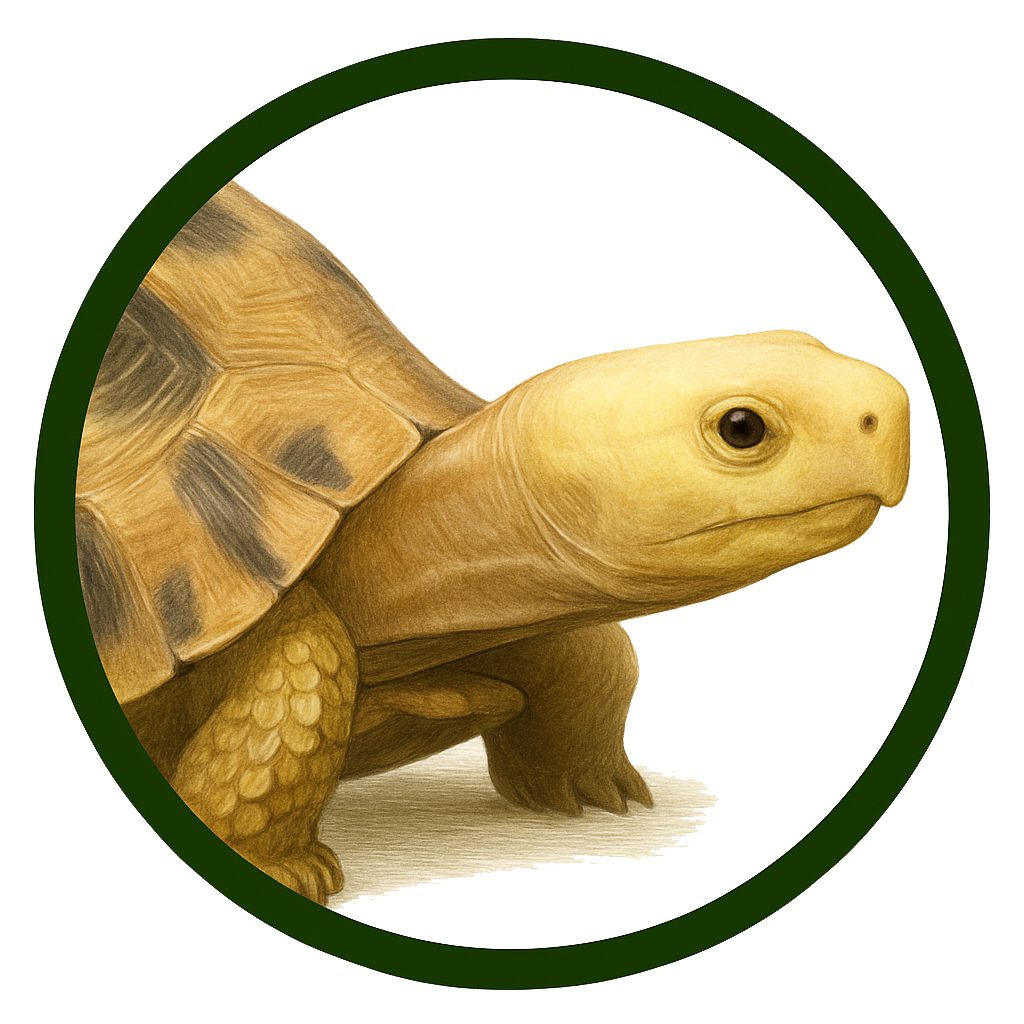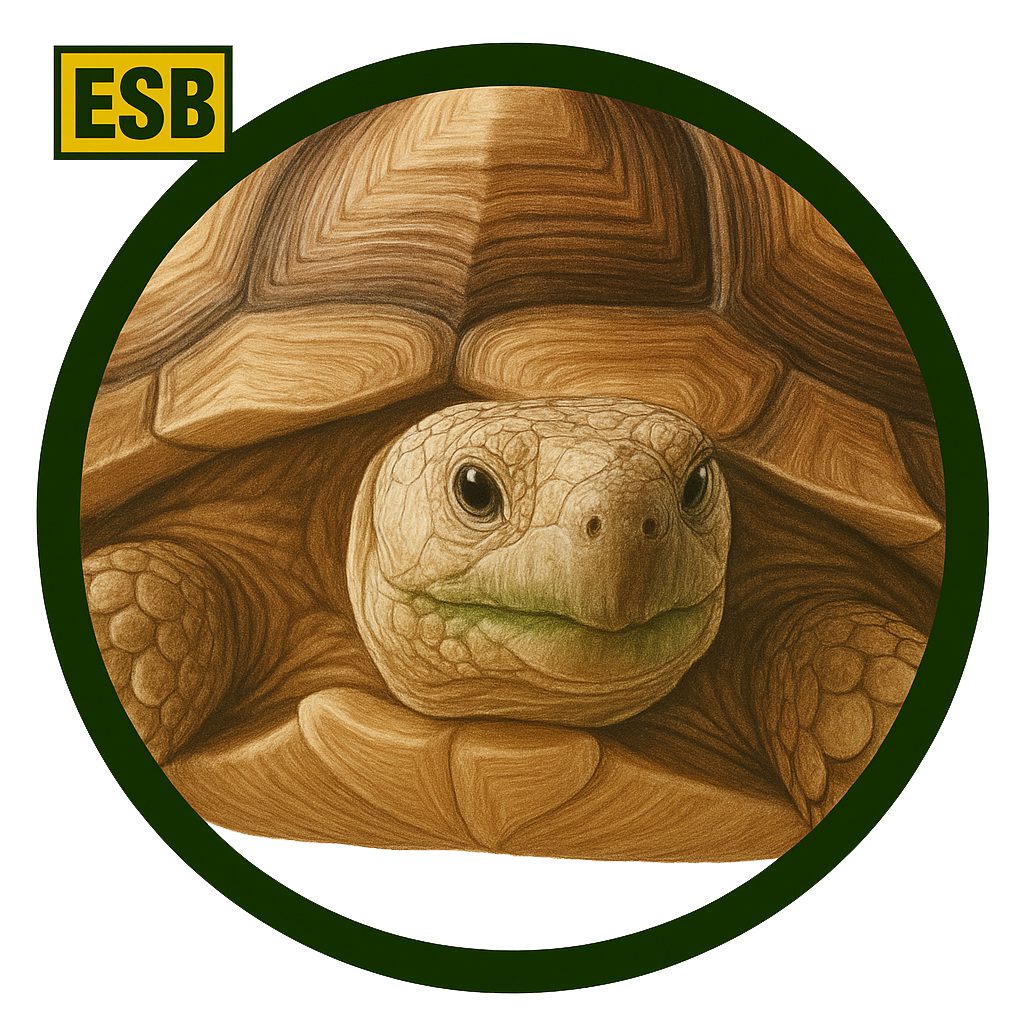
The African spurred tortoise (Centrochelys sulcata) is a cryptodiran tortoise of the family Testudinidae and the only member of the genus Centrochelys.
| Kingdom | Animalia |
| Phylum | Chordata |
| Class | Sauropsida |
| Order | Testudines |
| Family | Testudinidae |
| Genus | Centrochelys |
| Species | Centrochelys sulcata |
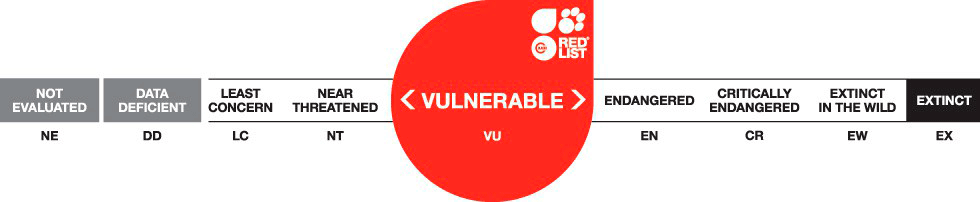
The African spurred tortoise (Centrochelys sulcata) is a cryptodiran tortoise of the family Testudinidae and the only member of the genus Centrochelys.
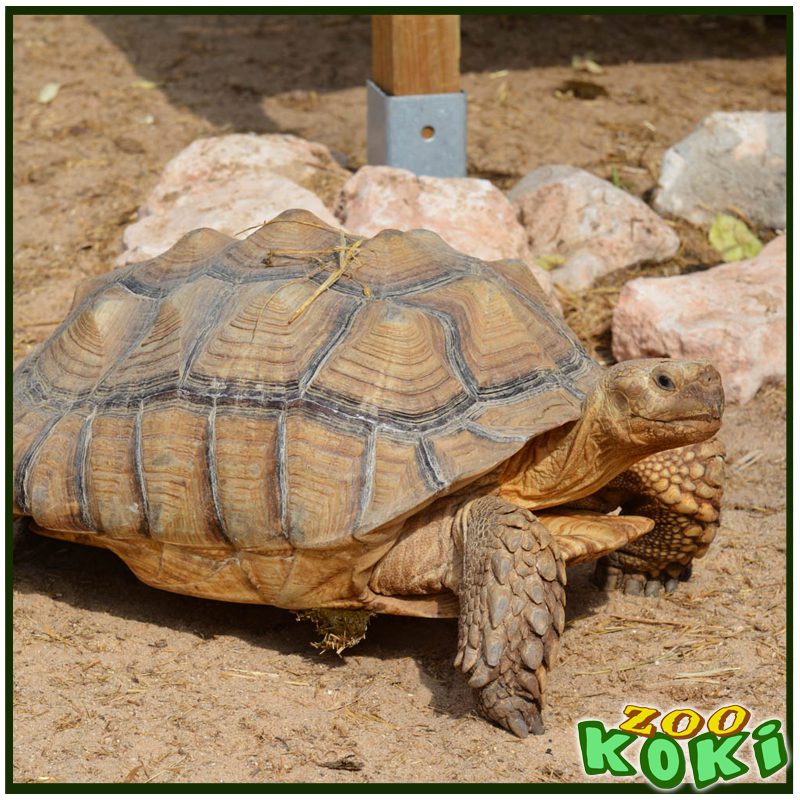
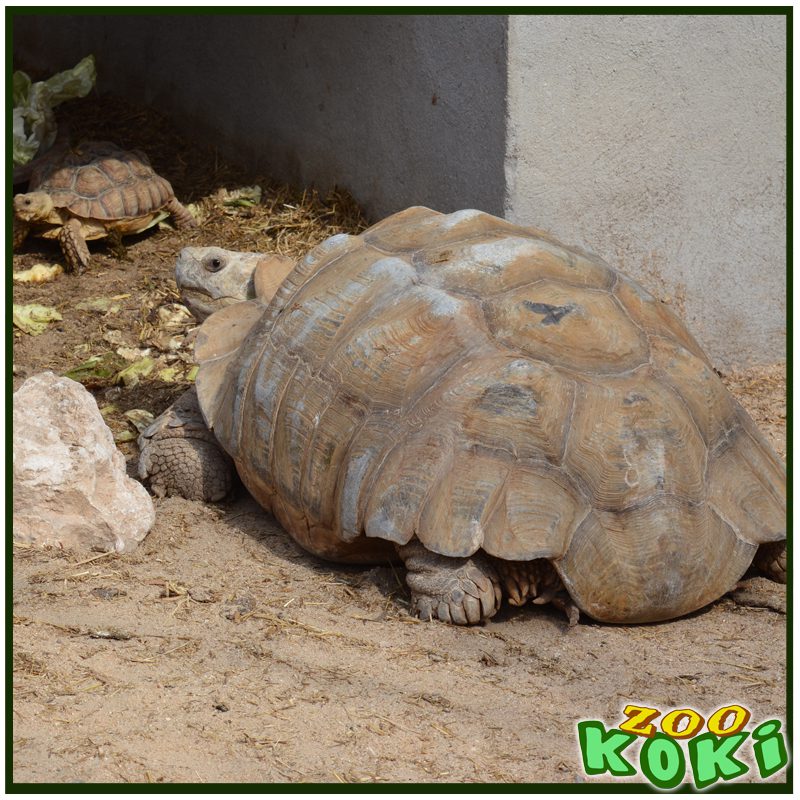
It once inhabited a large part of northern Africa, along the southern edge of the Sahara Desert, in the Sahel, and today it survives almost only within national parks and wildlife reserves. It is threatened in its habitat by urban development, desertification, agriculture and grazing, as well as by the use of its meat as local food and in traditional medicine.
They feed mainly on vegetables and grasses.
It reaches sexual maturity when its shell measures approximately 35-40 cm in diameter. These tortoises are especially aggressive during the breeding season. Mating preferably takes place after the rainy season. Males ram each other, and the fights often end with bleeding wounds. The male chases the female, striking her shell, until he manages to copulate, and he emits a loud sound that can be heard from a long way off. Some time after mating, the female becomes increasingly restless until autumn, when she begins to dig a hole in soft ground, about 60 cm in diameter and 10-15 cm deep, in which to lay her eggs, which take around 80 to 180 days to hatch. This activity can last up to 5 hours. To ensure the right humidity for the eggs (50%), before she starts laying she urinates in the nest.
By size it is the third-largest land tortoise in the world, and the largest of the continental ones (those not native to archipelagos).
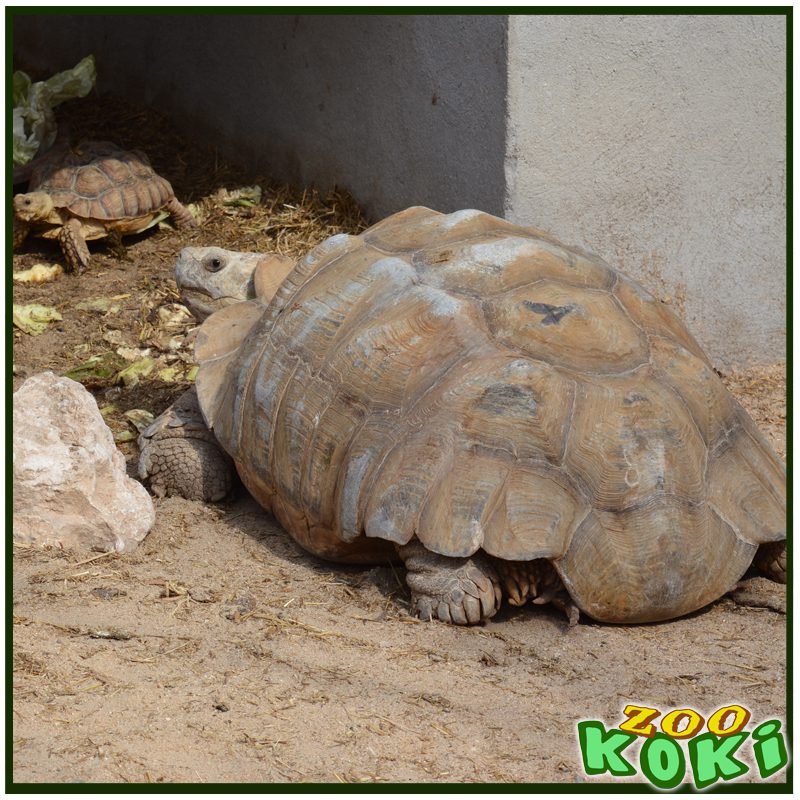
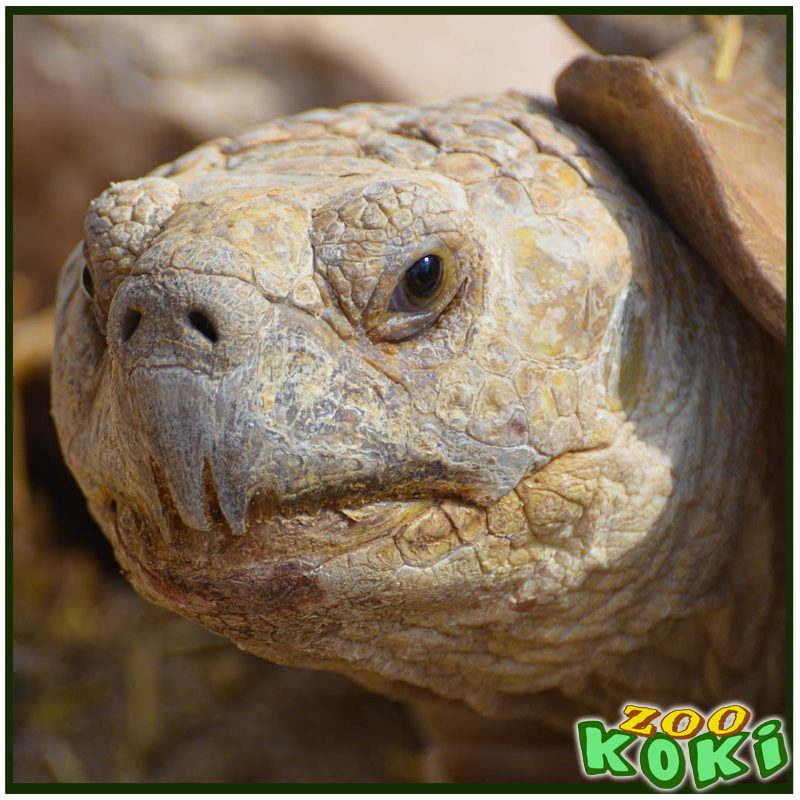

We take part in the Breeding Programme: ISB (since 2023)
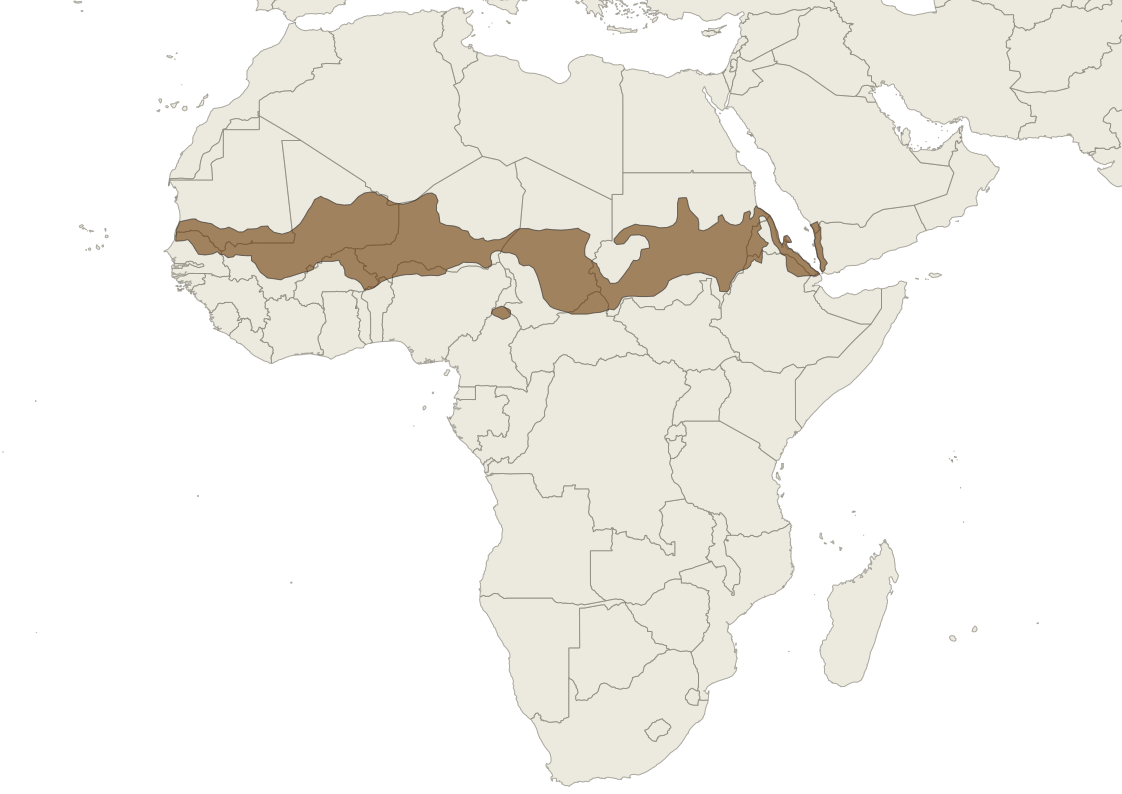 Source: Wikimedia Commons — African spurred tortoise (Centrochelys sulcata) IUCN range 2020.svg