
The yellow-headed temple turtle (Heosemys annandalii), also known as the temple turtle, is a large freshwater turtle of the family Geoemydidae, with a dark shell and a bright yellow head that gives it its name, more intense in the males…
| Kingdom | Animalia |
| Phylum | Chordata |
| Class | Reptilia |
| Order | Testudines |
| Family | Geoemydidae |
| Genus | Heosemys |
| Species | Heosemys annandalii |
The yellow-headed temple turtle (Heosemys annandalii), also known as the temple turtle, is a large freshwater turtle of the family Geoemydidae, with a dark shell and a bright yellow head that gives it its name, more intense in the males. It is one of the largest freshwater turtles in South-East Asia, and can exceed 50 cm in shell length.
It inhabits humid forests and freshwater wetlands of mainland South-East Asia —Cambodia, Laos, Malaysia, Thailand, Vietnam and possibly Myanmar—, preferring slow-flowing rivers, swamps, marshes and ponds with abundant aquatic vegetation, including the ponds of some Buddhist temples, which is the origin of its other common name.
It is a species with herbivorous leanings, although it behaves as an omnivore, feeding on aquatic plants, fruit, invertebrates and, occasionally, small fish.
Females dig nests in sandy or muddy banks, where they lay between 2 and 6 eggs per clutch; incubation lasts between 70 and 90 days, varying with temperature and humidity. Breeding is usually concentrated in the wet season.
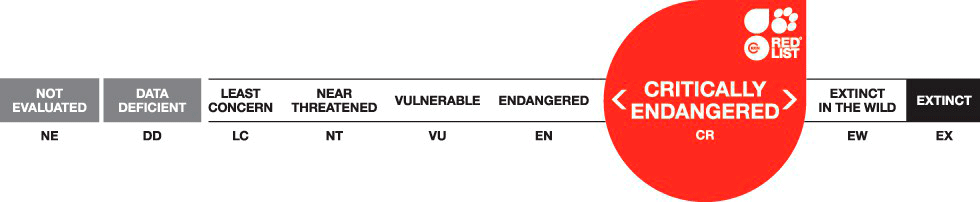
Its wild populations have fallen by more than 80% in some parts of its range owing to overexploitation for the food and pet trades, which places it as Critically Endangered according to the IUCN. It is listed in CITES Appendix II and is the subject of captive breeding programmes for its conservation.