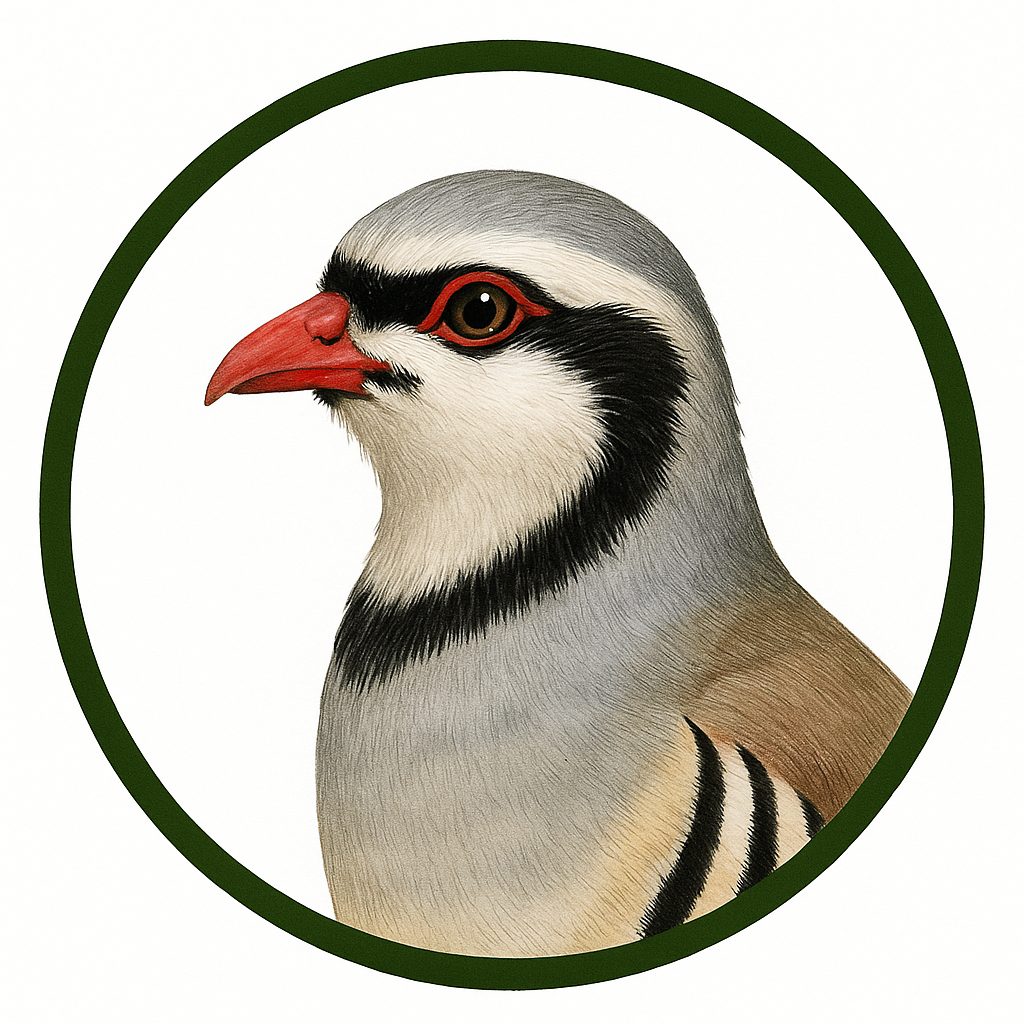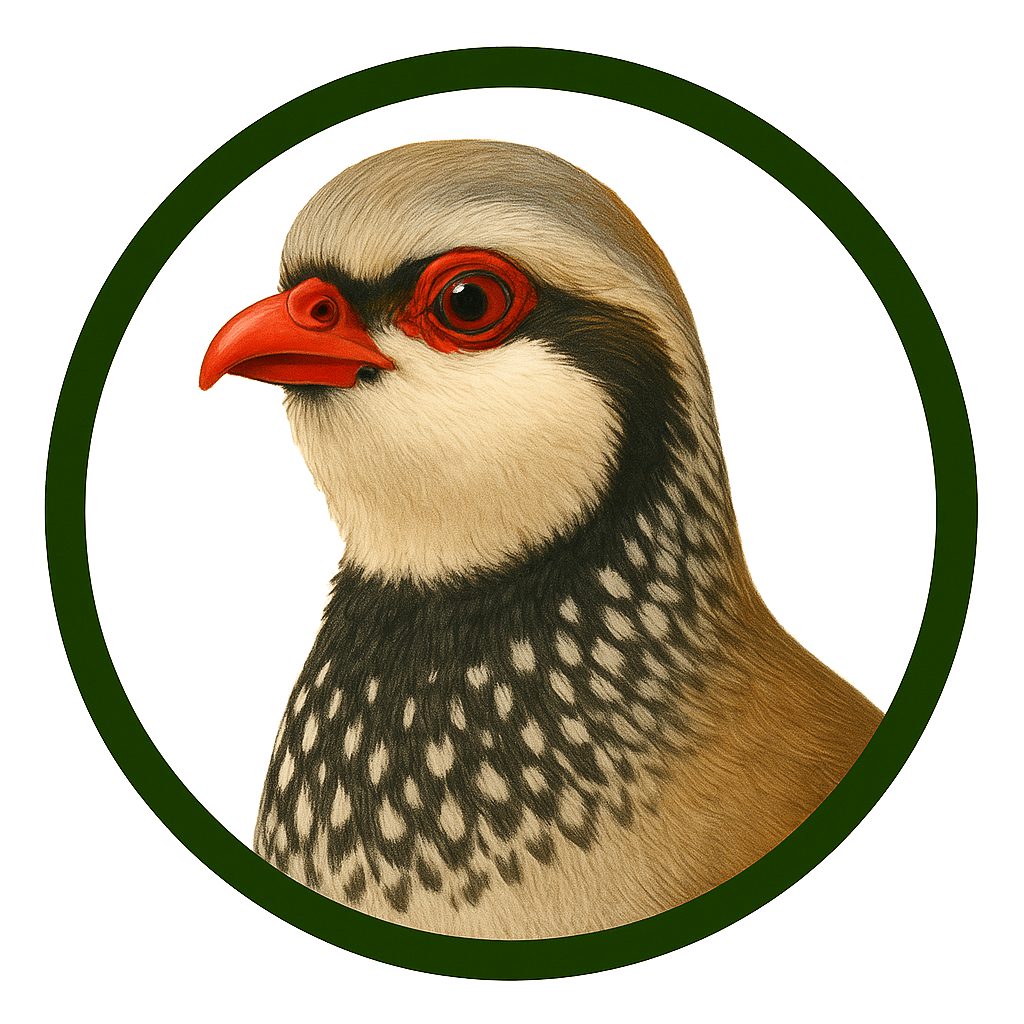
The red-legged partridge ( Alectoris rufa ) is a galliform bird of the family Phasianidae, described by Linnaeus in 1758. It is characterised by its thick neck, short tail and intense red bill, slightly curved downwards, which matches the eye ring.
| Kingdom | Animalia |
| Phylum | Chordata |
| Class | Aves |
| Order | Galliformes |
| Family | Phasianidae |
| Genus | Alectoris |
| Species | Alectoris rufa |
The red-legged partridge (Alectoris rufa) is a galliform bird of the family Phasianidae, described by Linnaeus in 1758. It is characterised by its thick neck, short tail and intense red bill, slightly curved downwards, which matches the eye ring. It has a black collar framing the white throat and flanks barred with white, red and chestnut bands. It measures between 34 and 38 cm and weighs between 400 and 480 g.
Males have a spur on the tarsus, larger than 8.6 mm, which is absent or smaller in females. Juveniles show greyish-brown tones without the characteristic flank barring.
It is native to south-western Europe: France, the Iberian Peninsula, north-western Italy, Corsica and the Balearic Islands, and has been successfully introduced to southern Great Britain. It occupies open plains and low scrub in dry climates, such as non-irrigated farmland and open rocky areas.
It is mainly a herbivorous species, eating cultivated cereals, grass, leaves and wild fruit; the chicks supplement their diet with insects and small invertebrates, an essential source of protein in their first weeks of life.
Breeding begins between January and February with intense fights between males over females, and mating takes place in March and April. The clutch consists of 12 to 18 large, oval, yellowish-red eggs with dark brown spots, which are incubated for about 23 days by the female and, occasionally, by the male. The chicks leave the nest as soon as they hatch and are able to fly after a month.
Outside the breeding season it forms coveys, and its footprint is characteristic because the central front toe is almost twice as long as the side toes. In Spain, its wild populations have fallen by around 33% in recent decades owing to the alteration of agricultural habitat and the use of pesticides.