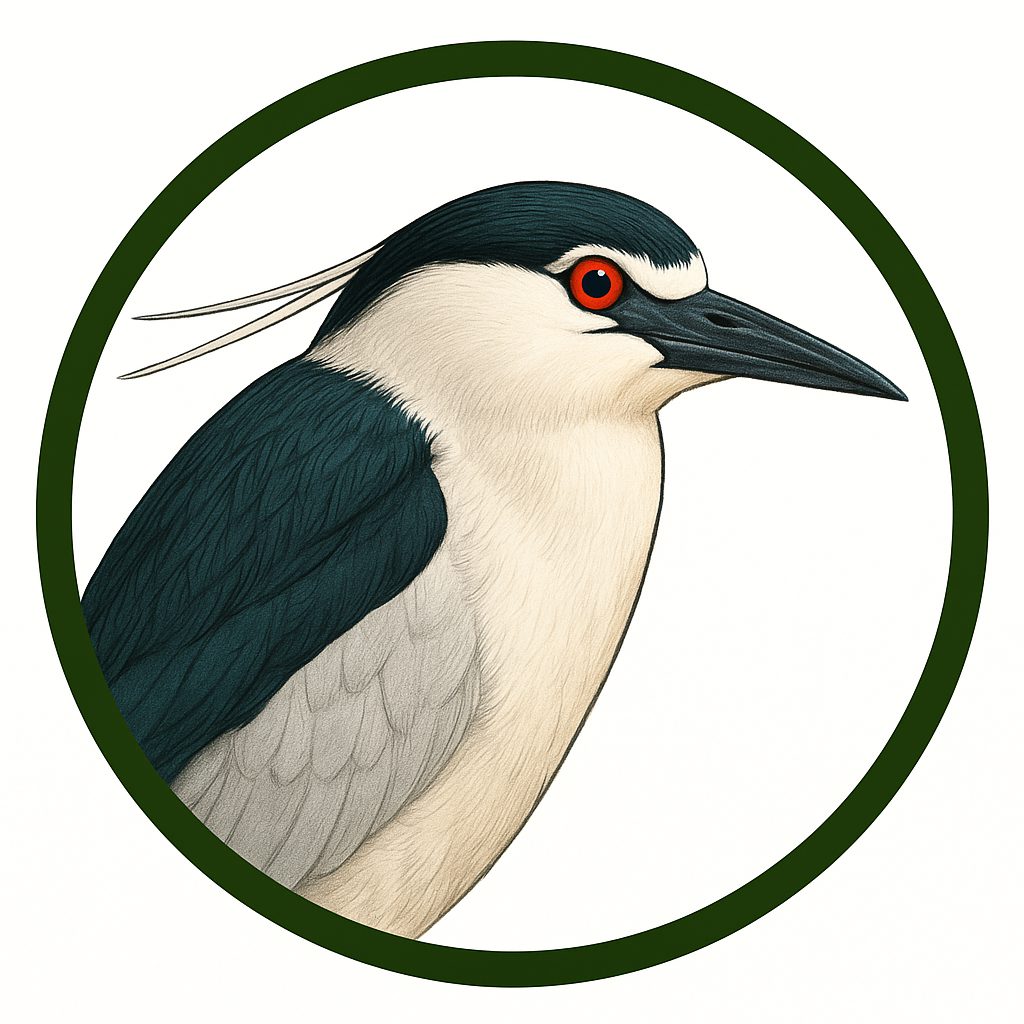
It is a stocky, medium-sized heron (between 60 and 65 cm), with a noticeably shorter neck than other herons such as the grey heron or the little egret.
| Kingdom | Animalia |
| Phylum | Chordata |
| Class | Aves |
| Order | Pelecaniformes |
| Family | Ardeidae |
| Genus | Nycticorax |
| Species | Nycticorax nycticorax |
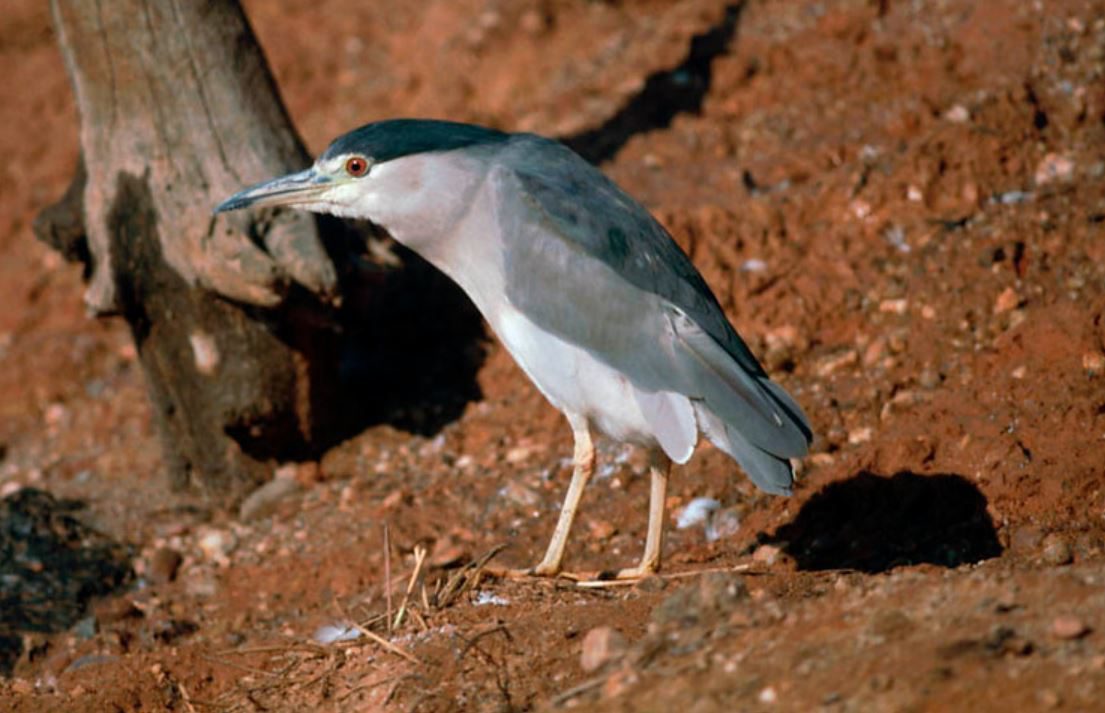
It is a stocky, medium-sized heron (between 60 and 65 cm), with a noticeably shorter neck than other herons such as the grey heron or the little egret. It is characterised by its intense red eyes and a robust bill, though not excessively long, greenish at the base and black on top.
The plumage of the underparts is mainly greyish-white, with a white or pale grey neck and a pure white face, throat and belly. The crown, nape and back are blackish, with a shifting sheen, and the wings are grey. Adults grow two or three long, narrow white feathers from the nape, slightly longer in the male than in the female, while the legs and feet are pale yellow, more intense in the breeding season. Juveniles show brown-and-white streaked plumage and honey-coloured or yellow eyes, and lack the nape feathers until they are a year old.
It is a species tied to wetlands for nesting, present in a patchy distribution across almost all of Spain, including both archipelagos, although practically absent from the Cantabrian coast, Galicia and the Pyrenean area. In the Iberian Peninsula it is mostly a summer visitor: it arrives in spring and stays until October, when it migrates to its wintering grounds in tropical Africa.
It feeds mainly on small fish, tadpoles and large insects, which it catches by stalking, especially during its crepuscular and nocturnal hours of activity.
It breeds in colonies alongside other herons, between May and July, building a small nest in trees or in riverside shrubby vegetation. The incubation period lasts between 21 and 23 days. In Spain, the species exceeds 150 breeding pairs in some years.
It is a bird of eminently crepuscular and nocturnal habits, although during the breeding season it can also be seen active in daylight, something unusual among the herons of our fauna.
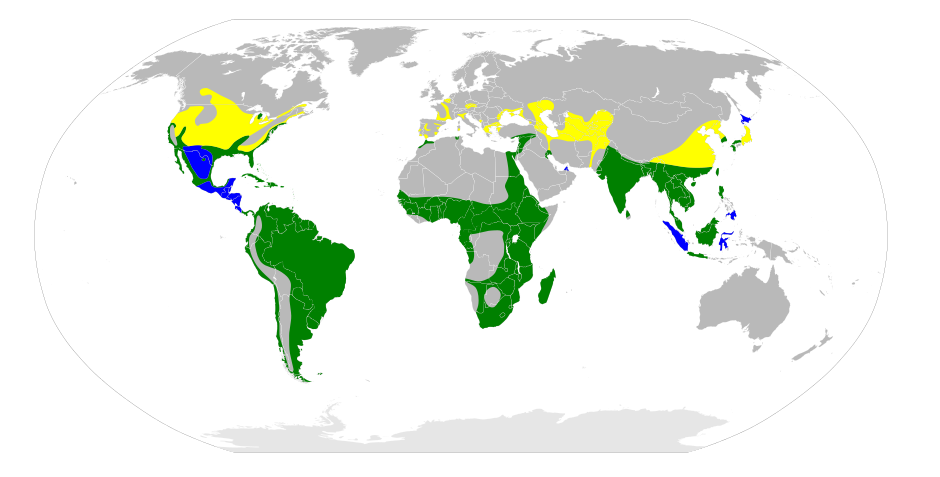 Source: Wikimedia Commons — Nycticorax nycticorax map.svg