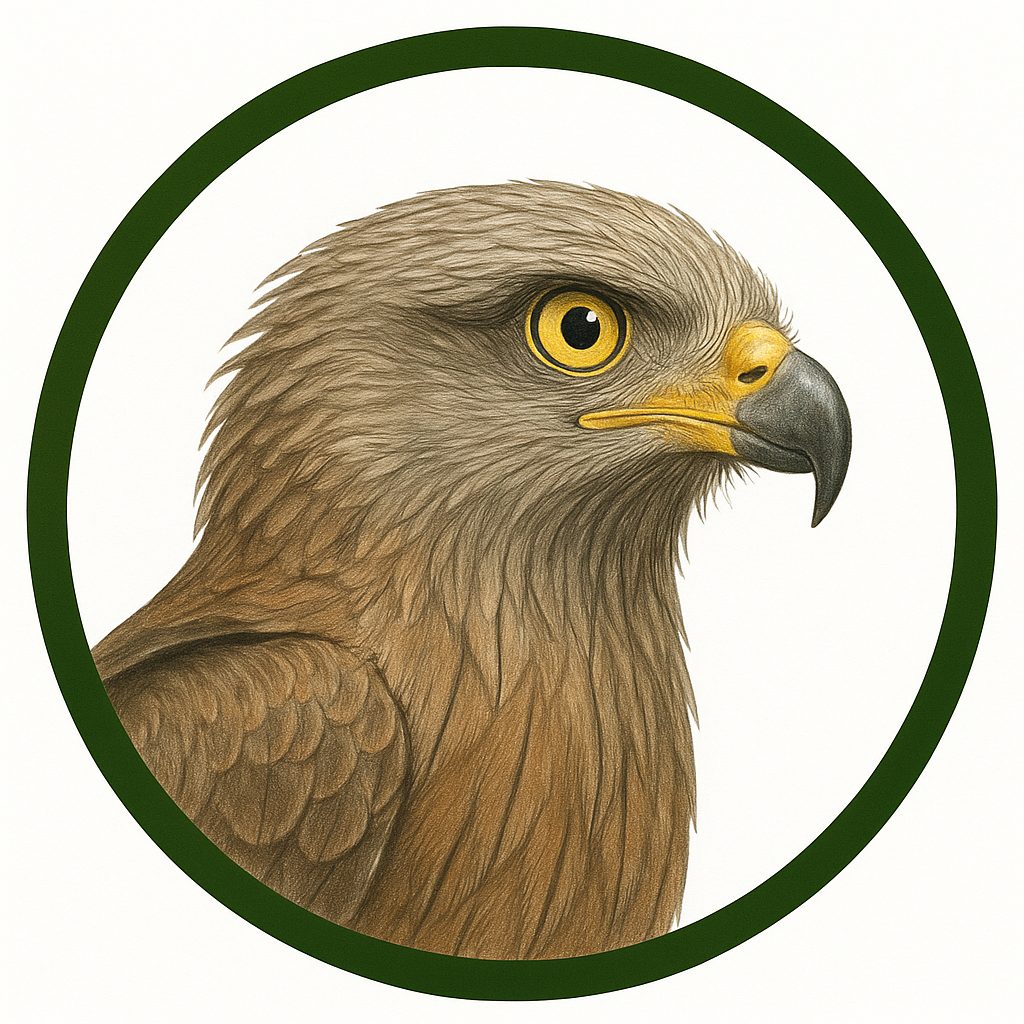
The black kite (Milvus migrans) is a species of accipitriform bird in the family Accipitridae. It is one of the most abundant raptors in the Old World. It is migratory and inhabits wide regions of Europe, Africa, Asia and Oceania.
| Kingdom | Animalia |
| Phylum | Chordata |
| Class | Aves |
| Order | Accipitriformes |
| Family | Accipitridae |
| Genus | Milvus |
| Species | Milvus migrans |
The black kite (Milvus migrans) is a species of accipitriform bird in the family Accipitridae. It is one of the most abundant raptors in the Old World. It is migratory and inhabits wide regions of Europe, Africa, Asia and Oceania. Seven subspecies are recognised according to region: Europe/Middle East, Siberia-India-China, the Indian subcontinent, Indonesia-New Guinea, Taiwan, Egypt/Arabia and sub-Saharan Africa.
It has a length of 50 to 60 cm, a wingspan of almost two metres (180 cm) and a weight ranging from 750 g to 1 kg. In flight it is easily recognised by its forked tail, slight but characteristic.
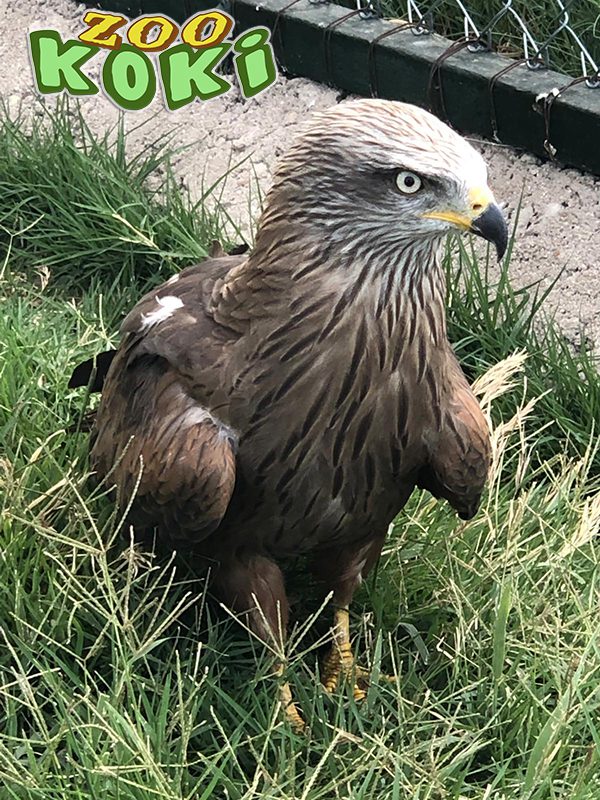
It nests mainly on mountain crags and in wooded areas near watercourses, and occupies an enormous range that spans Europe, Africa, Asia and Oceania. European populations are migratory and spend the winter in Africa.
It is an opportunistic hunter: it hunts birds, fish, small mammals, reptiles and amphibians, and can also feed on carrion. Gregarious and with a tendency to scavenge, it easily exploits resources such as roadkill, carrion dumps, rubbish tips, farms and slaughterhouses.
It usually nests on mountain crags and lays one to five eggs, which take about thirty days to hatch.
Its pronounced feeding opportunism leads it to fly frequently over landfill sites and rubbish tips in search of food, taking advantage of the resources generated by human activity; this gregarious, scavenging behaviour is one of the keys to its enormous success and abundance as a raptor.
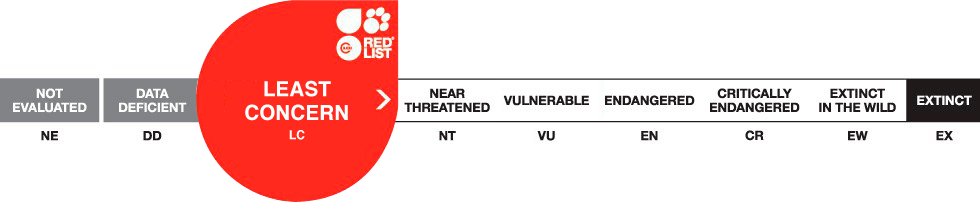
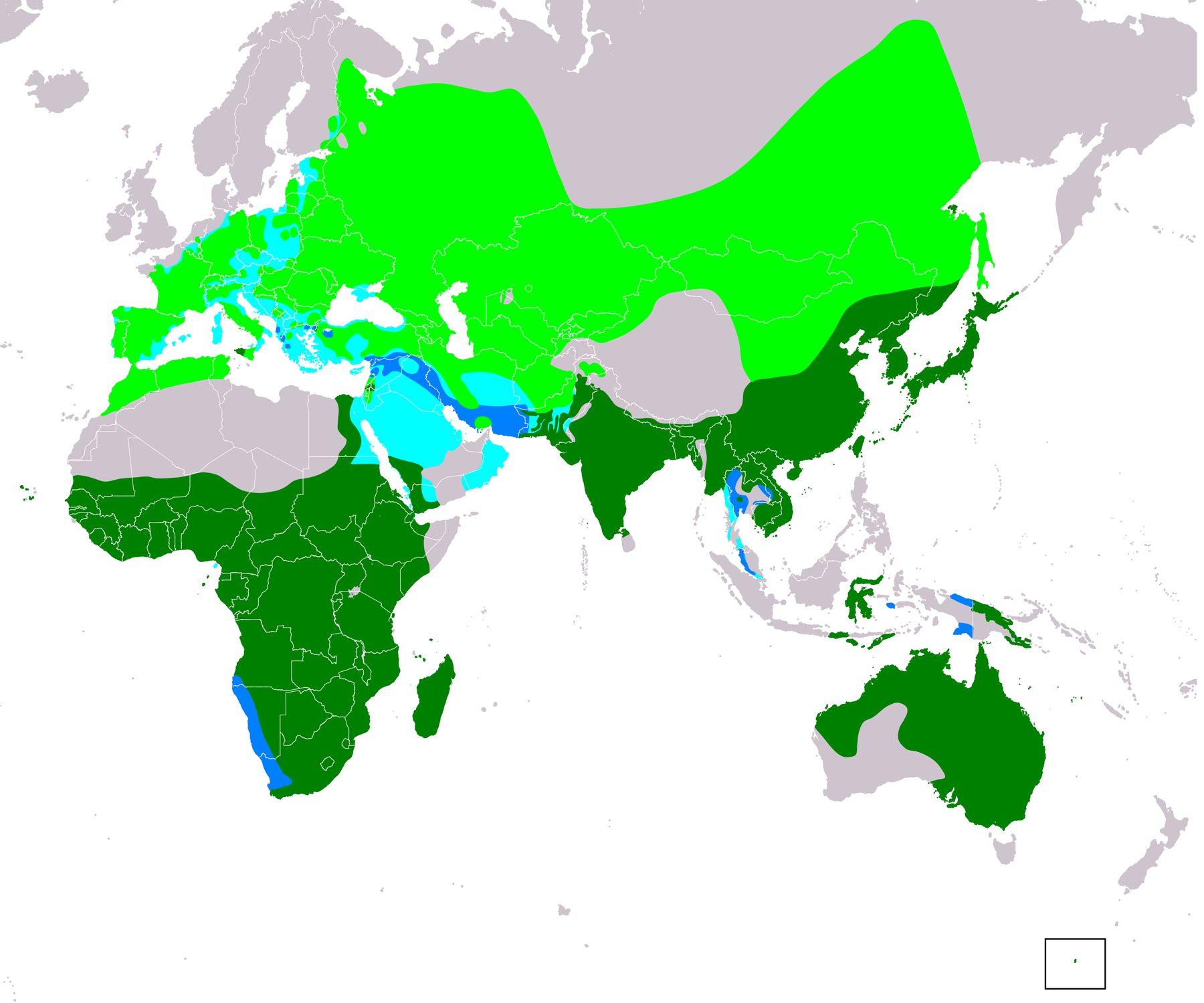 Source: Wikimedia Commons — MilvusMigransIUCNver2018 2.png