
The golden eagle (Aquila chrysaetos, from Latin: aquila, “eagle” and Greek: χρυσός, “golden” and ἀετός, “eagle”) is a species of accipitriform bird in the family Accipitridae.
| Kingdom | Animalia |
| Phylum | Chordata |
| Class | Aves |
| Order | Accipitriformes |
| Family | Accipitridae |
| Subfamily | Buteoninae |
| Genus | Aquila |
| Species | Aquila chrysaetos homeyeri |
The golden eagle (Aquila chrysaetos, from Latin: aquila, “eagle” and Greek: χρυσός, “golden” and ἀετός, “eagle”) is a species of accipitriform bird in the family Accipitridae. It is one of the best-known and most widely distributed birds of prey on Earth.
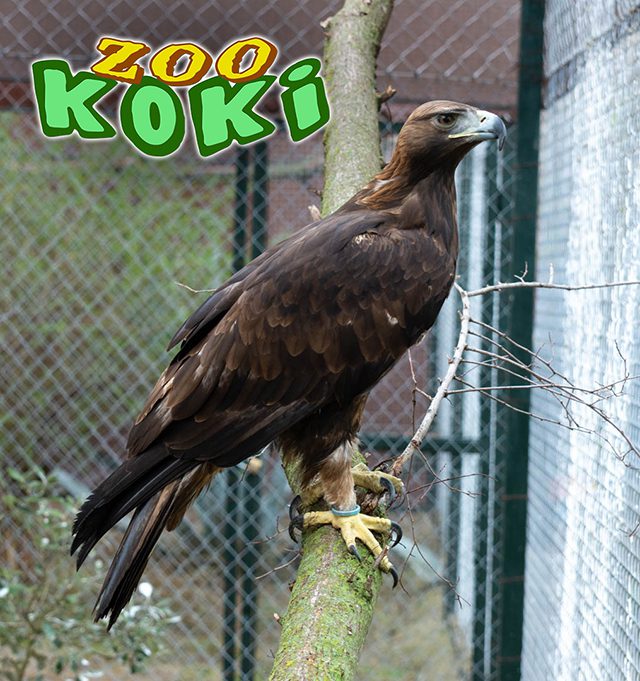
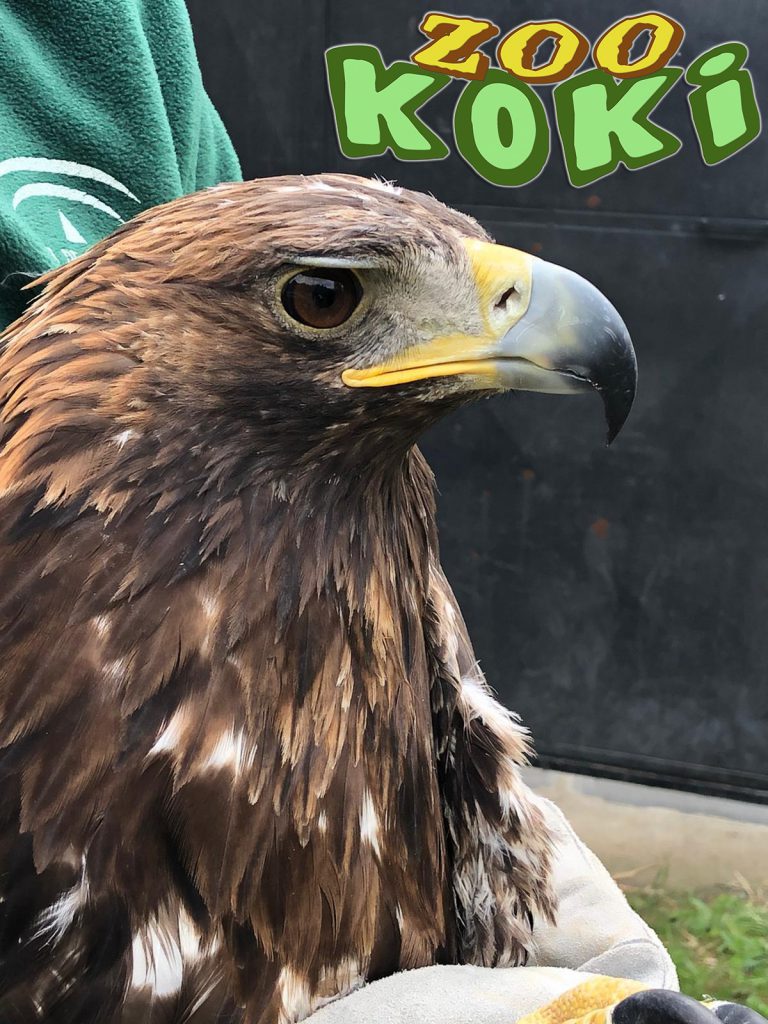
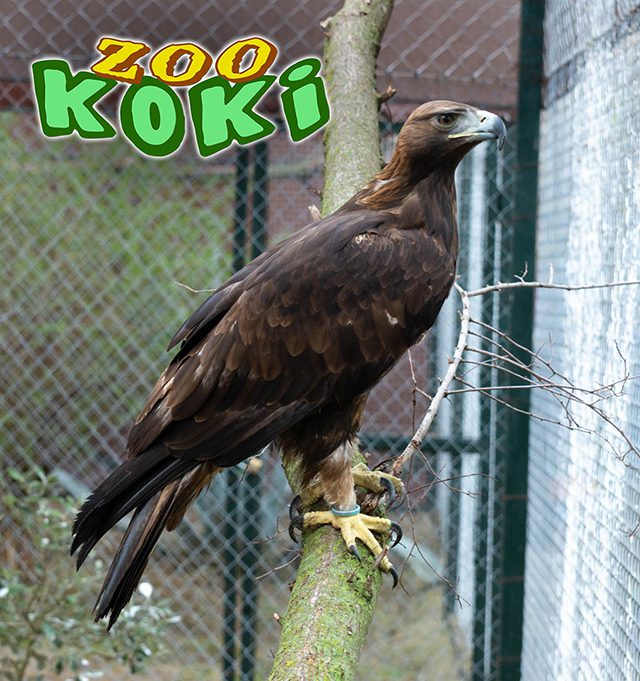
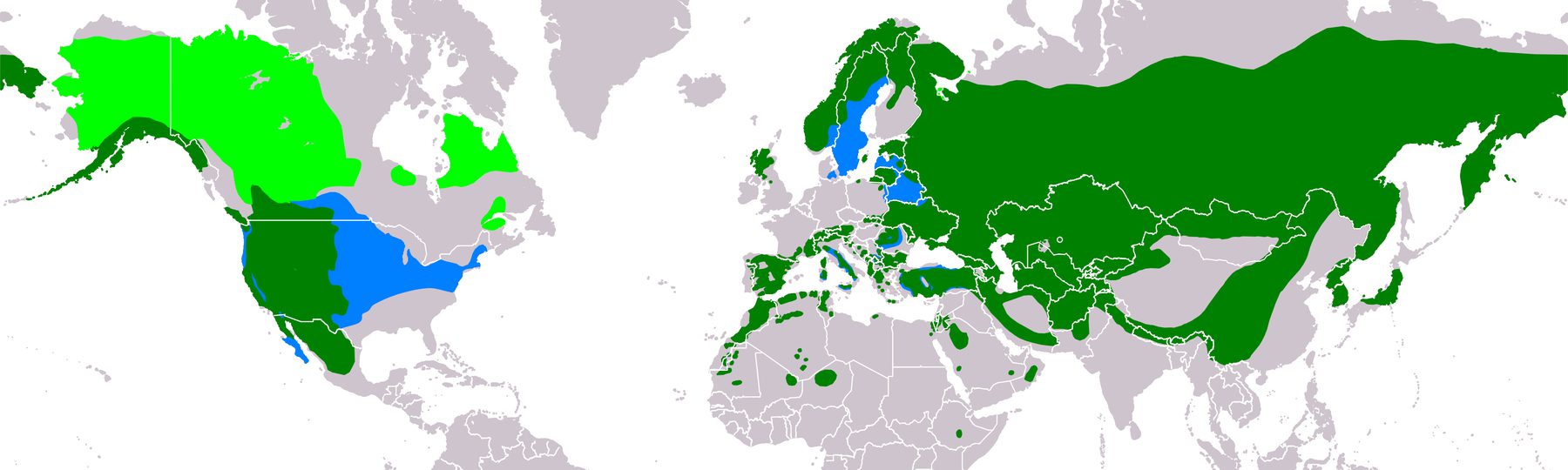
Its range covers much of North America, Eurasia and North Africa. It maintains resident populations even on several islands such as Great Britain, those of the Mediterranean and Japan. However, its population in central Europe has declined sharply in recent years because of human activity, and it has become extinct in many places where it was once abundant.
According to the different classifications, six subspecies of golden eagle are distinguished, differing in certain aspects of their appearance or behaviour (for example, whether they are migratory or resident):4
Both the bald eagle and the golden eagle hunt from the air, and to do so they are equipped with the typical weapons of their family: strong legs ending in well-developed talons, a hooked beak, great strength and speed, and powerful eyesight capable of spotting prey hundreds of metres away. Their prey comes in all sizes and shapes: mice, rabbits, hares, marmots, foxes, snakes, and even the young and old or sick individuals of wild goats, deer, wild boar and chamois, as well as flying and ground-dwelling birds.
Golden eagles are monogamous (they usually pair for life). They build several nests within their territory, which they use in alternate years, with a very simple structure. The base of the nest is built from three thick branches, on which the nest proper is laid out using sticks and thinner branches. Depending on the area, they nest in tall trees or on steep rocks and cliffs. Each new breeding season, new layers of branches are added to the nest, so it is not unusual for it to reach one and a half metres in height and two in diameter after several years of use.
The breeding season varies from one area to another between January and March, and may take place in the same area where the eagles live for the rest of the year or in another to which the pair migrates specifically to breed. After mating, the female lays one or two eggs, which she incubates for 45 days until the chicks hatch, completely covered in white down. Where there are two chicks in the nest, only one, the one that breaks out of its egg first, goes on to make its first flight at around 50 days of age. The younger, weaker sibling dies earlier, neglected by its parents or directly expelled by the stronger one.
In antiquity, the golden eagle was the symbol of courage and power because of its strength, size and the inaccessibility of its nests. In Greek and Roman mythology it soon became one of the symbols of Zeus/Jupiter, the king of the gods, and quickly replaced the bearded vulture as the head and talons of the fearsome griffin. In Ancient Rome it went from being a religious symbol to a military and political one, as the emblem of the Empire. Whenever a Roman legion set off, one particular soldier, the aquilifer, marched at the front carrying the standard topped with the letters SPQR and the golden eagle.
 Source: Wikimedia Commons — AquilaChrysaetosIUCNver2018 2.png