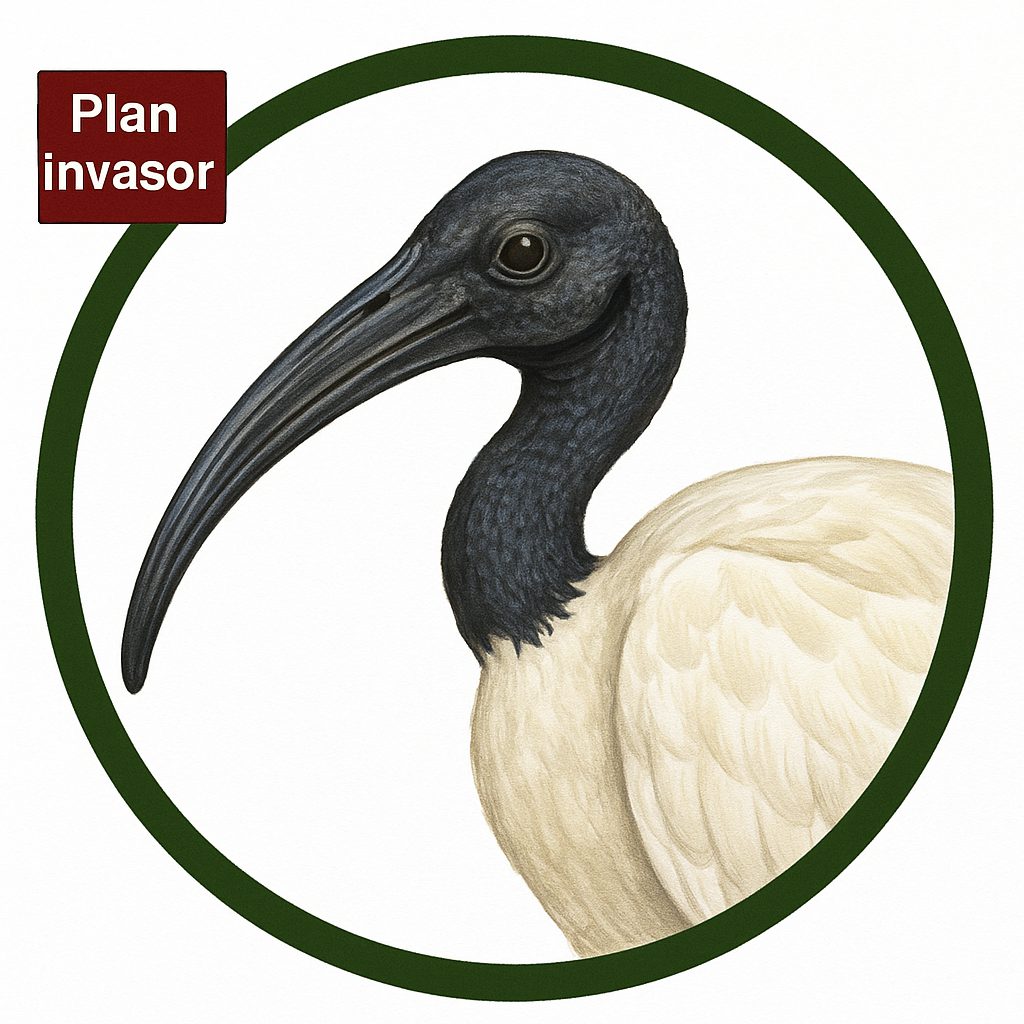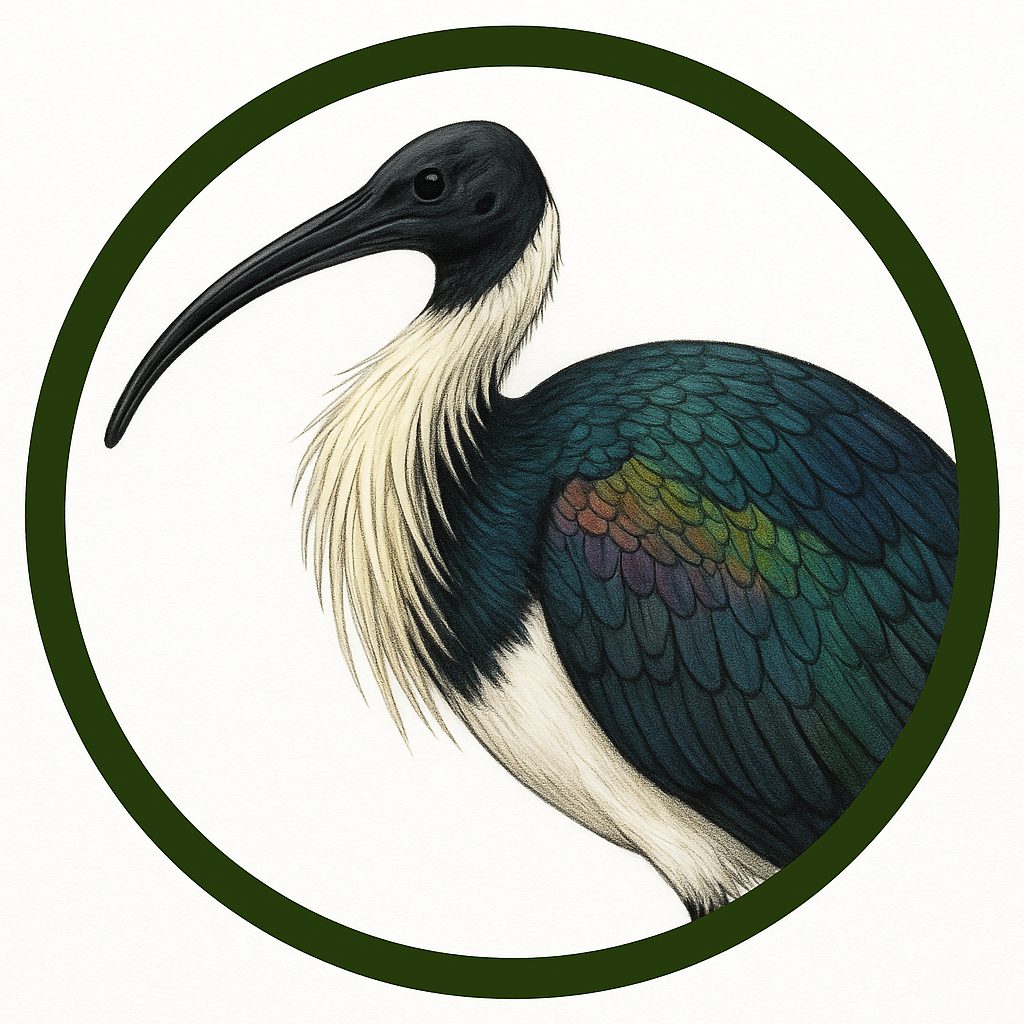
The glossy ibis ( Plegadis falcinellus ) is a wading bird in the family Threskiornithidae, the same family that includes ibises and spoonbills. It measures between 48 and 66 cm in length, with a wingspan of 80 to 105 cm and a weight of 485 to 970 grams.
| Kingdom | Animalia |
| Phylum | Chordata |
| Class | Aves |
| Order | Pelecaniformes |
| Family | Threskiornithidae |
| Genus | Plegadis |
| Species | Plegadis falcinellus |
The glossy ibis (Plegadis falcinellus) is a wading bird in the family Threskiornithidae, the same family that includes ibises and spoonbills. It measures between 48 and 66 cm in length, with a wingspan of 80 to 105 cm and a weight of 485 to 970 grams. Its dark reddish-brown plumage takes on bottle-green reflections during the breeding season, with very characteristic bronzy sheens on the wings.
It has a long, downward-curved bill, between 9.7 and 14.4 cm, adapted for probing mud for prey. On its face it has a V-shaped area of bare skin that turns cobalt blue in the breeding season.
It is the ibis with the largest range in the world, found in southern Eurasia, Africa, Australasia, the Caribbean and the North American Atlantic coast. It lives in freshwater or brackish wetlands with dense vegetation, such as reedbeds and papyrus, where it feeds in shallow water.
It feeds mainly on adult insects and larvae, such as water beetles, dragonflies and grasshoppers, as well as annelids, molluscs, crustaceans, frogs and tadpoles. Occasionally it may catch the chicks of other birds.
It builds its nest as a platform of twigs and vegetation at least a metre above the water. The clutch usually consists of three to four eggs, incubated for twenty to twenty-three days. The chicks leave the nest at around 28 days old.
The glossy ibis is the most widely distributed ibis on the planet: originally from the Old World, it naturally colonised South America in the nineteenth century and, shortly afterwards, North America too.