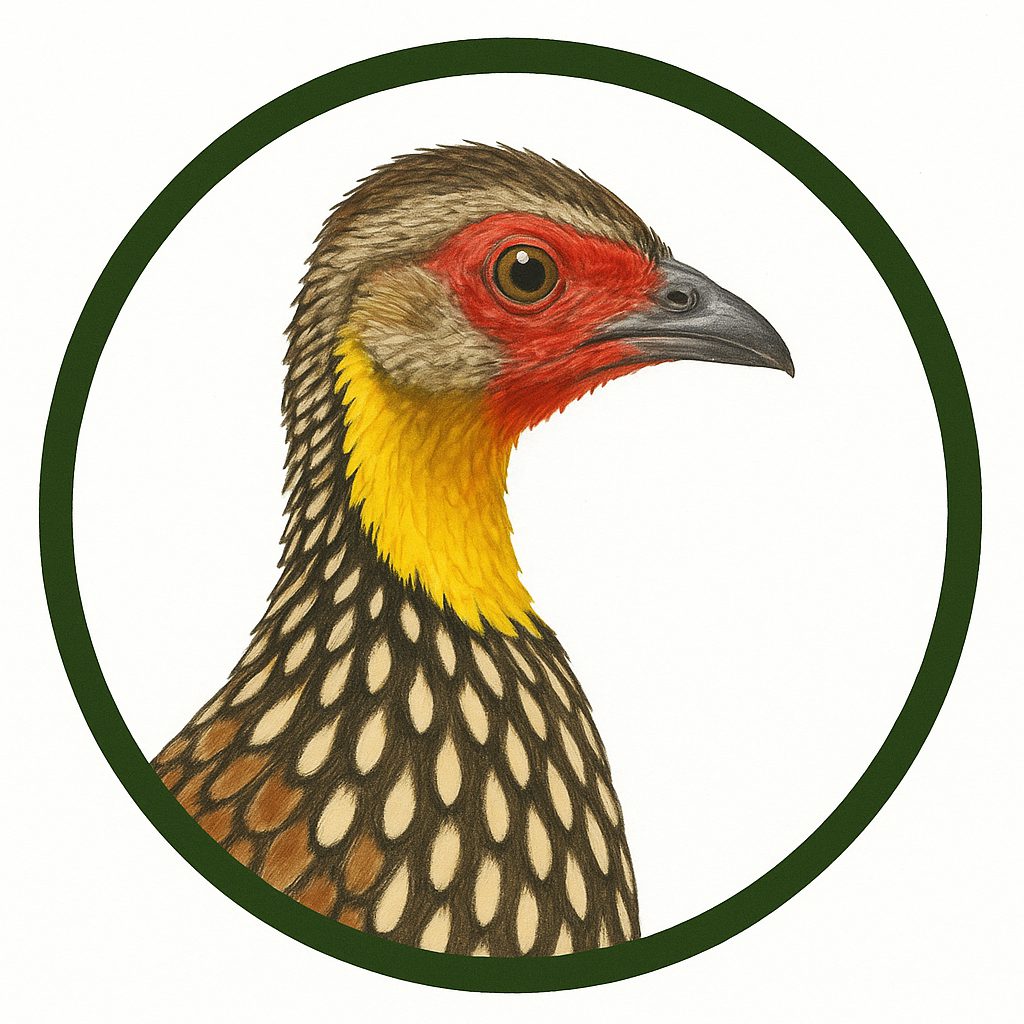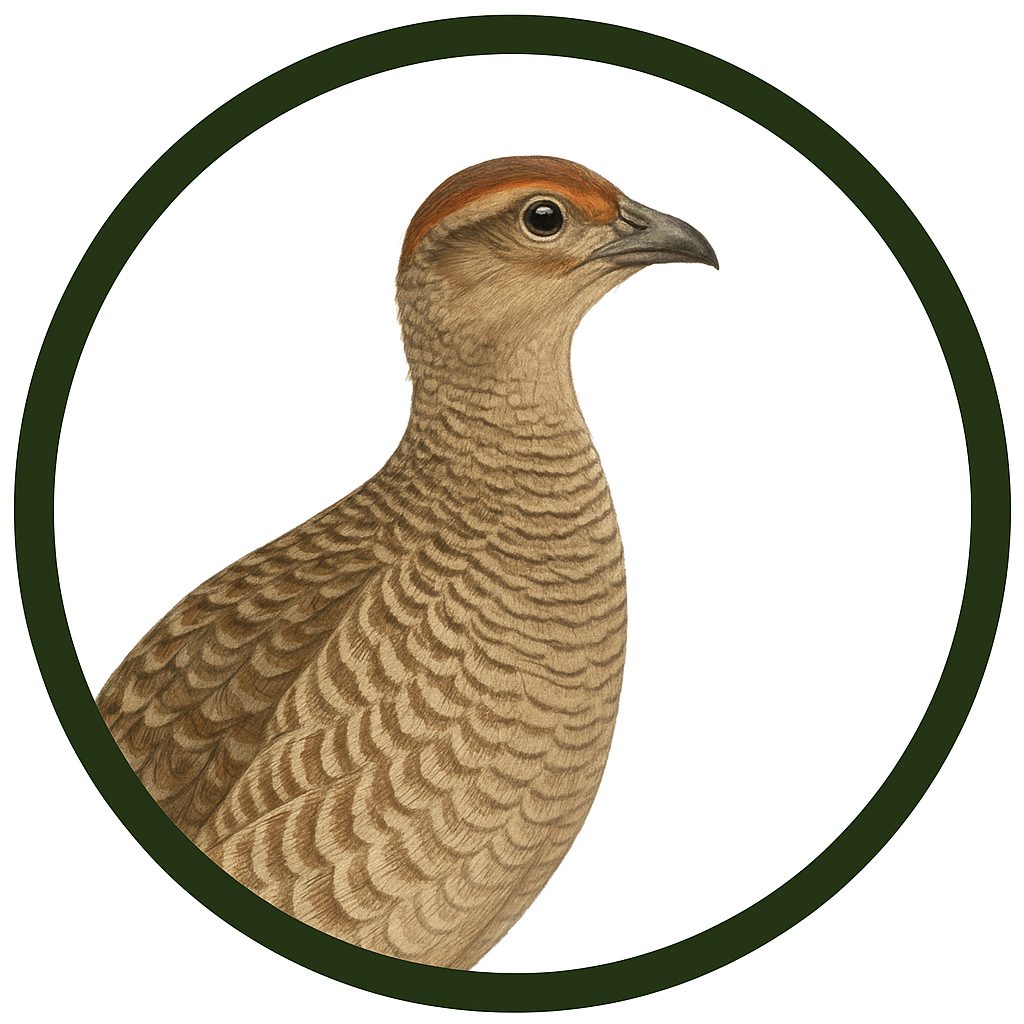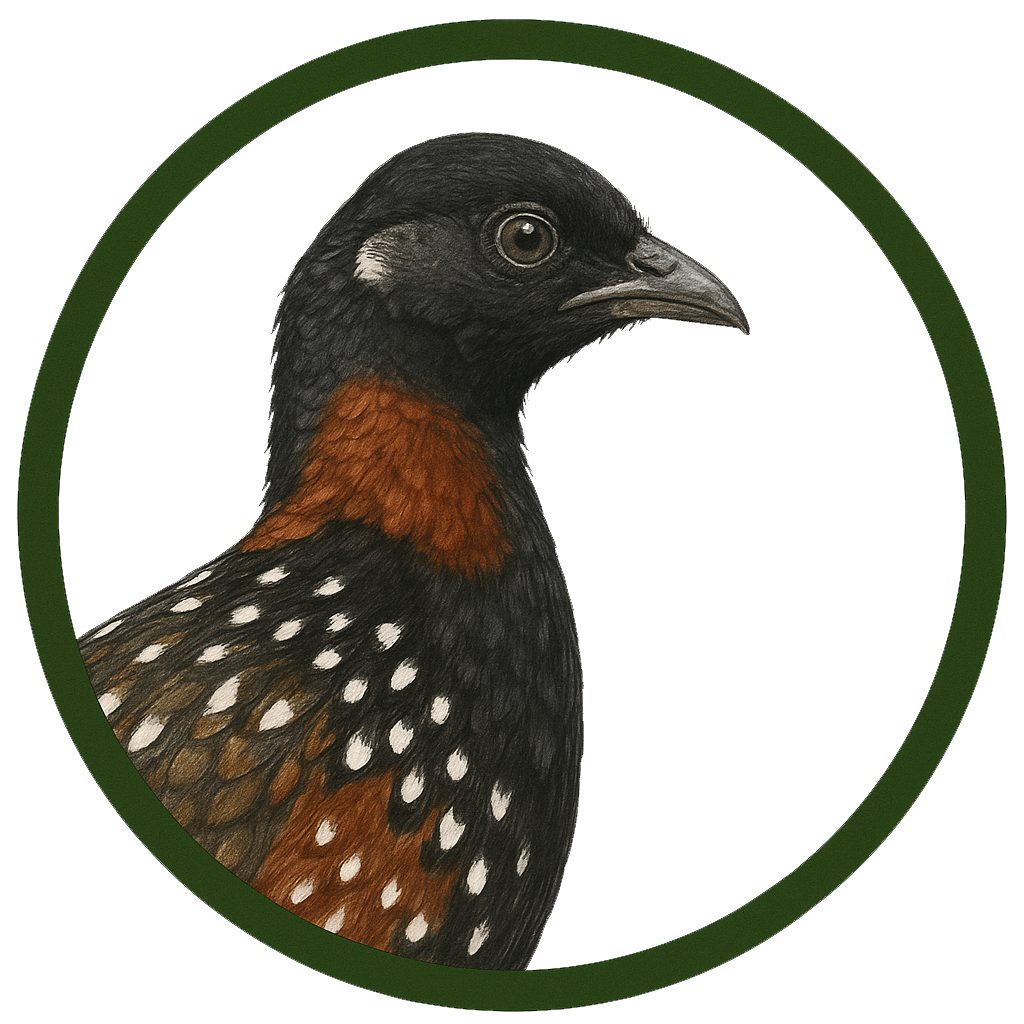
The black-breasted francolin ( Francolinus francolinus ) is a galliform bird of the family Phasianidae and the type species of the genus Francolinus . It measures between 33 and 36 cm in length and weighs around 450 grams.
| Kingdom | Animalia |
| Phylum | Chordata |
| Class | Aves |
| Order | Galliformes |
| Family | Phasianidae |
| Genus | Francolinus |
| Species | Francolinus francolinus |
The black-breasted francolin (Francolinus francolinus) is a galliform bird of the family Phasianidae and the type species of the genus Francolinus. It measures between 33 and 36 cm in length and weighs around 450 grams. The male has very showy plumage, with a black body speckled with white spots on the flanks, a white patch on the cheek and a chestnut collar, while the female is a much more discreet brown, with a chestnut nape.
Both sexes give a harsh, powerful call, audible from quite a distance, which makes the bird easy to identify even when it stays hidden among the vegetation.
It is naturally distributed from south-eastern Turkey to north-eastern India and Bangladesh, passing through Iran, occupying lowlands and mountainous areas up to 1,600 m above sea level. It prefers scrubland habitats with crops and dense vegetation near watercourses, along the edges between grasslands and scrub. It is worth noting that this species formed part of the Iberian fauna for some six centuries, after being introduced to Catalonia, Valencia and the Balearic Islands by the Crown of Aragon in the thirteenth century, a population that eventually died out.
It is a bird that forages on the ground and feeds mainly on plant material — grass seeds, grain, fallen berries, shoots and tubers — which it supplements with small invertebrates such as termites and ants.
The breeding season runs from late March to May, depending on the region. The female builds the nest in tall grassland and lays a relatively large clutch of 10 to 14 eggs, which she incubates for 18-19 days. Both parents take part in caring for the chicks, which stay with them until their first winter.
It is the state bird of the Indian state of Haryana, where it is popularly known as "kaala teetar", and it was introduced to the Iberian Peninsula as early as the thirteenth century by the Crown of Aragon, remaining part of the Spanish fauna for some six centuries before dying out.