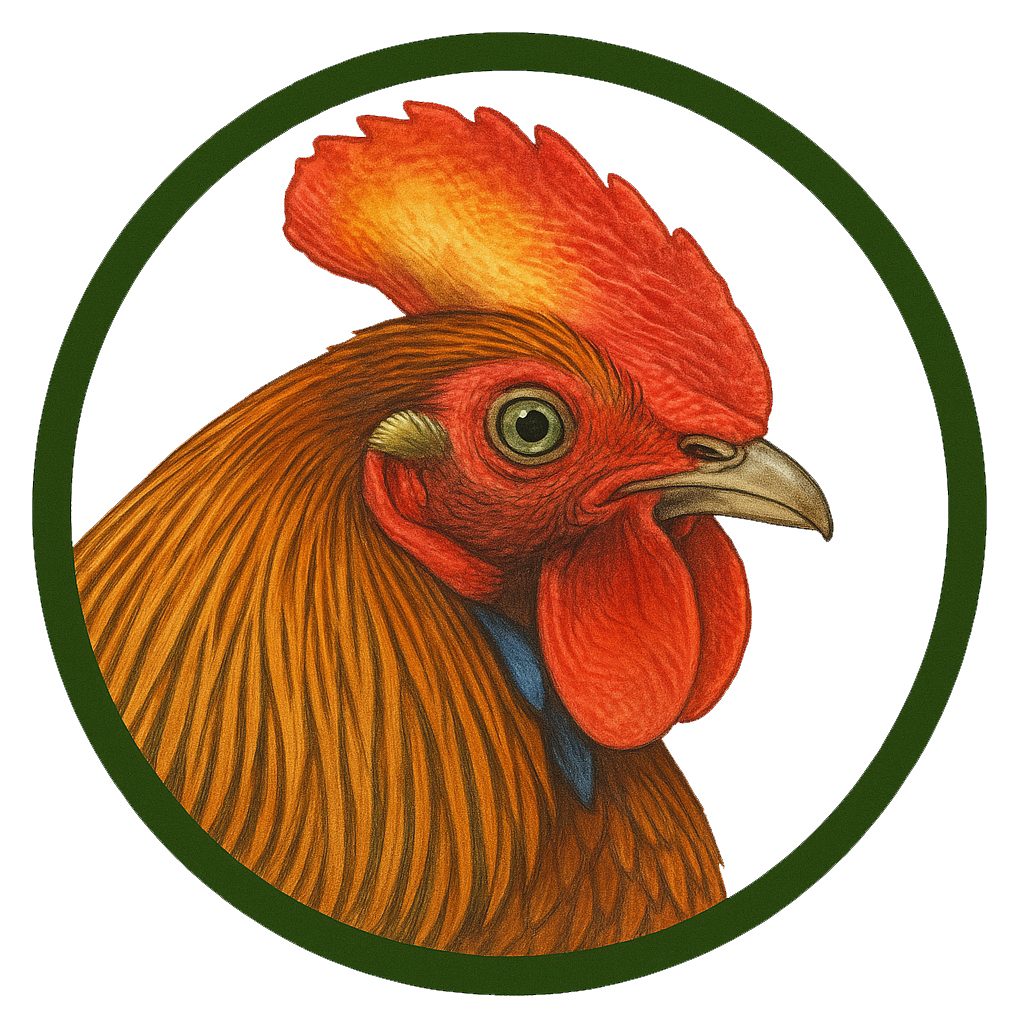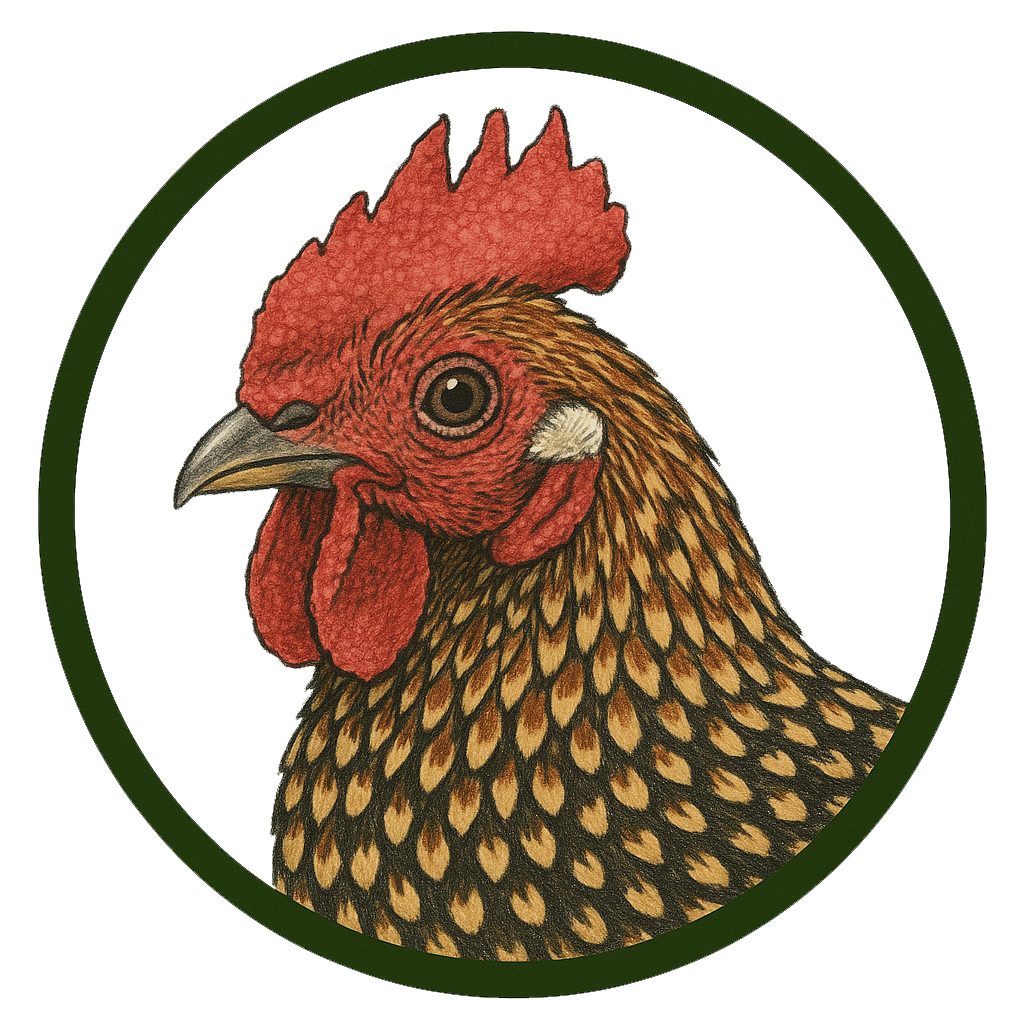
The grey junglefowl or Sonnerat's junglefowl ( Gallus sonneratii ) is a galliform bird of the family Phasianidae endemic to India.
| Kingdom | Animalia |
| Phylum | Chordata |
| Class | Aves |
| Order | Galliformes |
| Family | Phasianidae |
| Genus | Gallus |
| Species | Gallus sonneratii |
The grey junglefowl or Sonnerat's junglefowl (Gallus sonneratii) is a galliform bird of the family Phasianidae endemic to India. It is a wild relative of domestic poultry and is found mainly in peninsular India and towards its northern border; it sometimes hybridises in the wild with the red junglefowl (Gallus gallus).
They hybridise easily in captivity and, occasionally, with domestic fowl kept in homes near the forests where it lives. Its calls are loud and distinctive, and it has historically been hunted for its meat and for the long neck feathers, highly sought after for making artificial fishing lures.
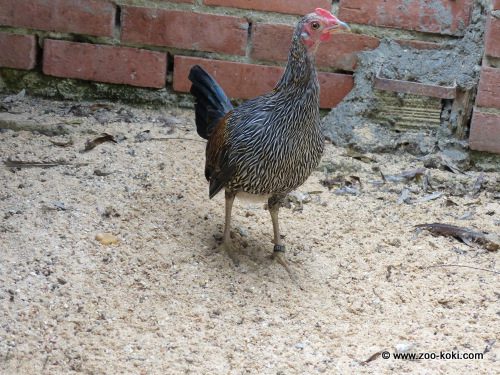
It lives in dry forests and scrubland in peninsular India, extending towards the north of the country, where it sometimes coexists with populations of domestic fowl settled near the forests.
It is omnivorous: it feeds on seeds, shoots, fruit and invertebrates, which it finds by searching through the leaf litter of the forest floor.
It reaches breeding maturity at around two years of age. The main laying season runs from February to May, although breeding can take place at any time of year. The female lays between 5 and 7 eggs, which she incubates for about 21 days.
Along with the red junglefowl, the grey junglefowl is one of the wild ancestors that have contributed genetically to today's domestic chicken (Gallus gallus domesticus), as recent genomic studies have confirmed.
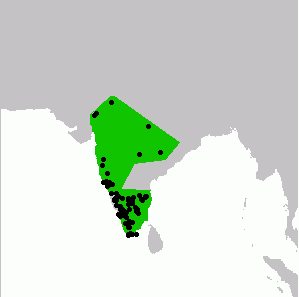 Source: Wikimedia Commons — GallusSonneratiiMap.png