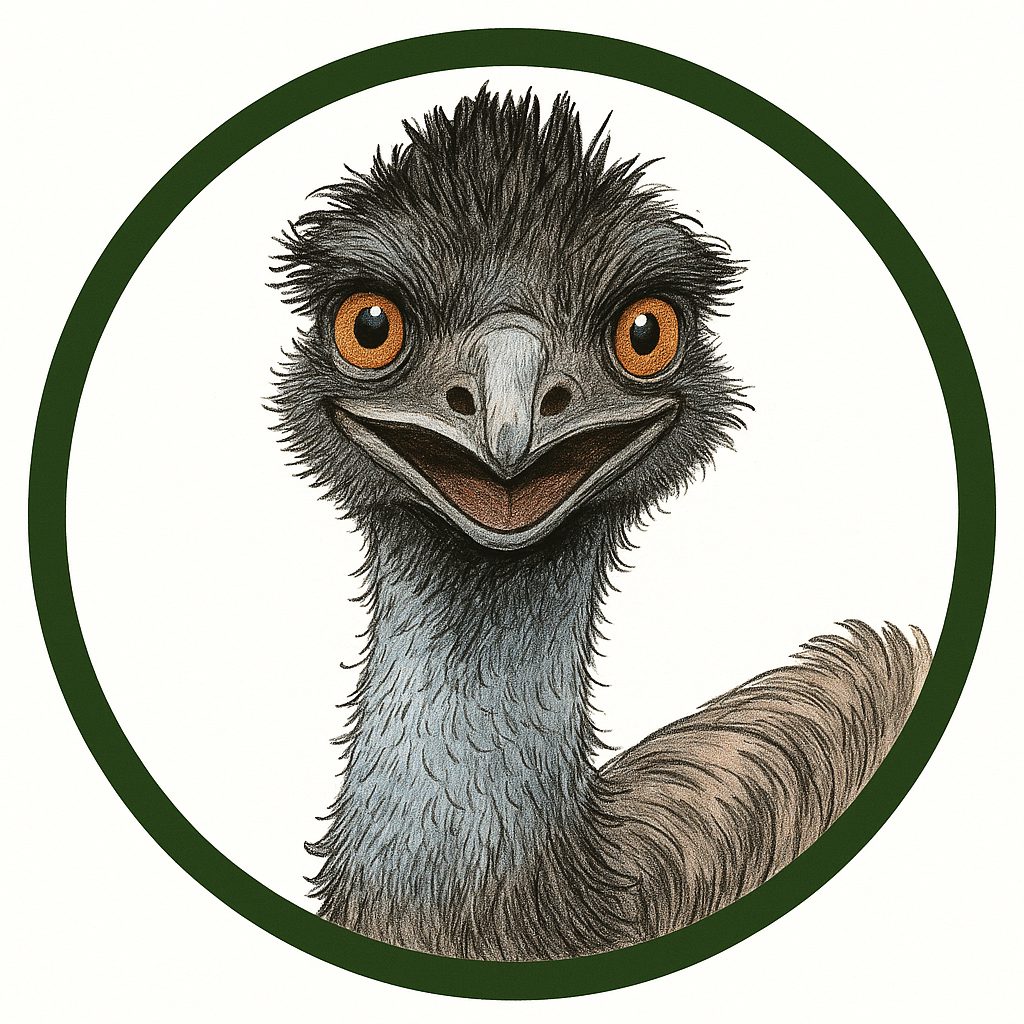
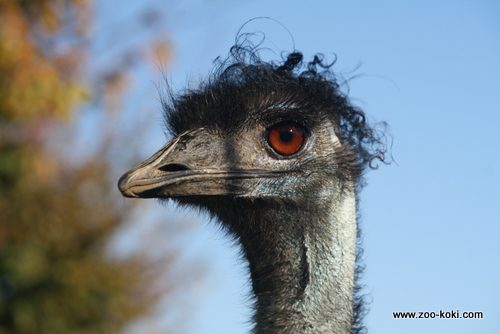
The emu is a ratite bird of the family Dromaiidae. It is a flightless bird and, after the ostrich, the second largest in the world. It is native to Australia and is the only living member of the genus Dromaius .
| Kingdom | Animalia |
| Phylum | Chordata |
| Class | Aves |
| Order | Casuariiformes |
| Family | Dromaiidae |
| Genus | Dromaius |
| Species | Dromaius novaehollandiae |
The emu is a ratite bird of the family Dromaiidae. It is a flightless bird and, after the ostrich, the second largest in the world. It is native to Australia and is the only living member of the genus Dromaius. These pale brown birds reach 2 metres in height and weigh around 45 kilograms.
It is found throughout the Australian continent, avoiding densely populated areas, dense forests and the most arid regions. They are nomadic animals that travel long distances in search of food, normally at a trot, although if necessary they can run at full speed, reaching 50 km/h for several kilometres. The Tasmanian emu subspecies became extinct shortly after the arrival of Europeans, in 1788. Today the emu is also farmed for its meat, oil and leather.
It is found across much of the Australian continent, avoiding very dense forest, the driest deserts and areas with a high density of human population.
It is an omnivorous bird: its diet consists mainly of plants (leaves, seeds and fruit) and insects, which it searches for as it covers long distances following the seasonal availability of food.
The breeding season takes place during the austral summer, between December and January. The female lays one egg every one or two days until a clutch averaging about 11 eggs is complete (up to 20 in some cases), large and dark green in colour. It is the male who incubates alone for around eight weeks, a period during which he does not eat, drink or defecate, and he can lose a third of his body weight, living off accumulated fat reserves. In a good season, the same female may nest up to three times.
During their almost two months of incubation, the male emu leaves the nest only about ten times a day, surviving solely on the fat stored in his body: a parental sacrifice that is very rare among birds.
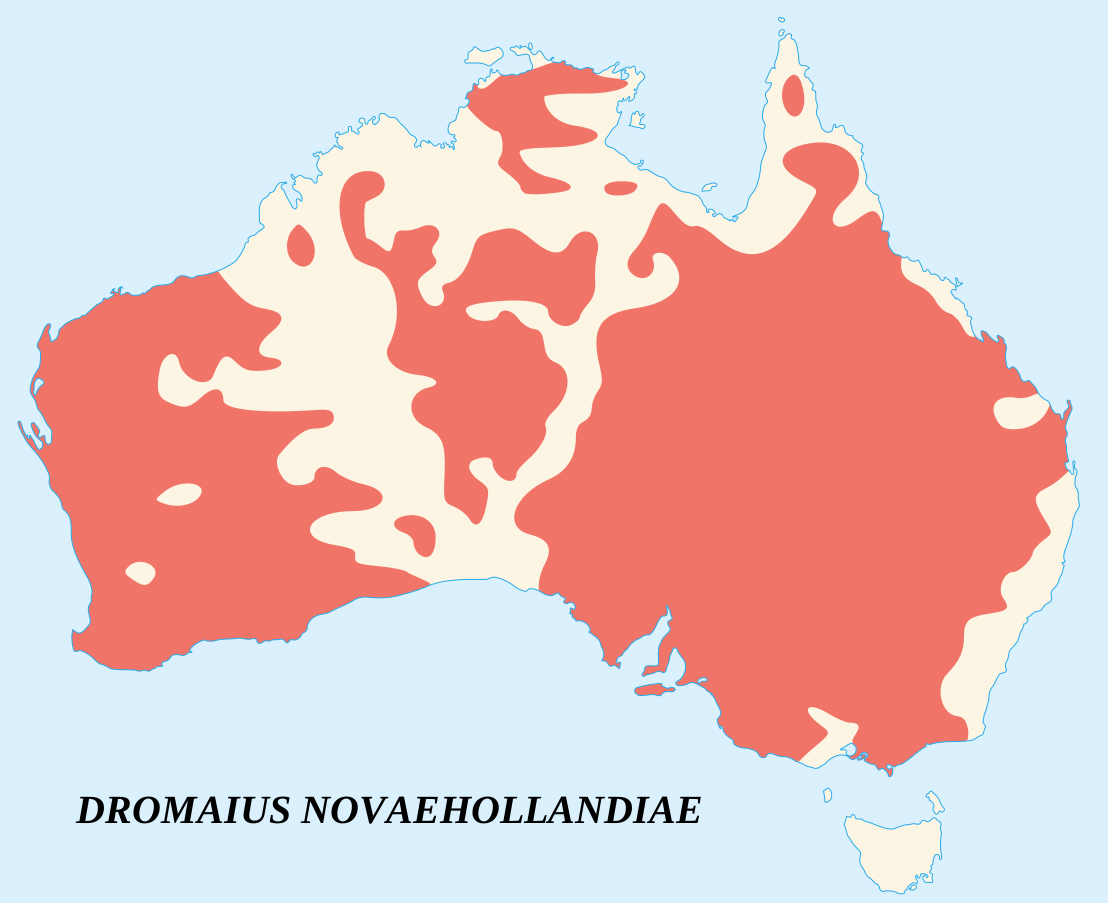 Source: Wikimedia Commons — Dromaius novaehollandiae map distribution 2.svg