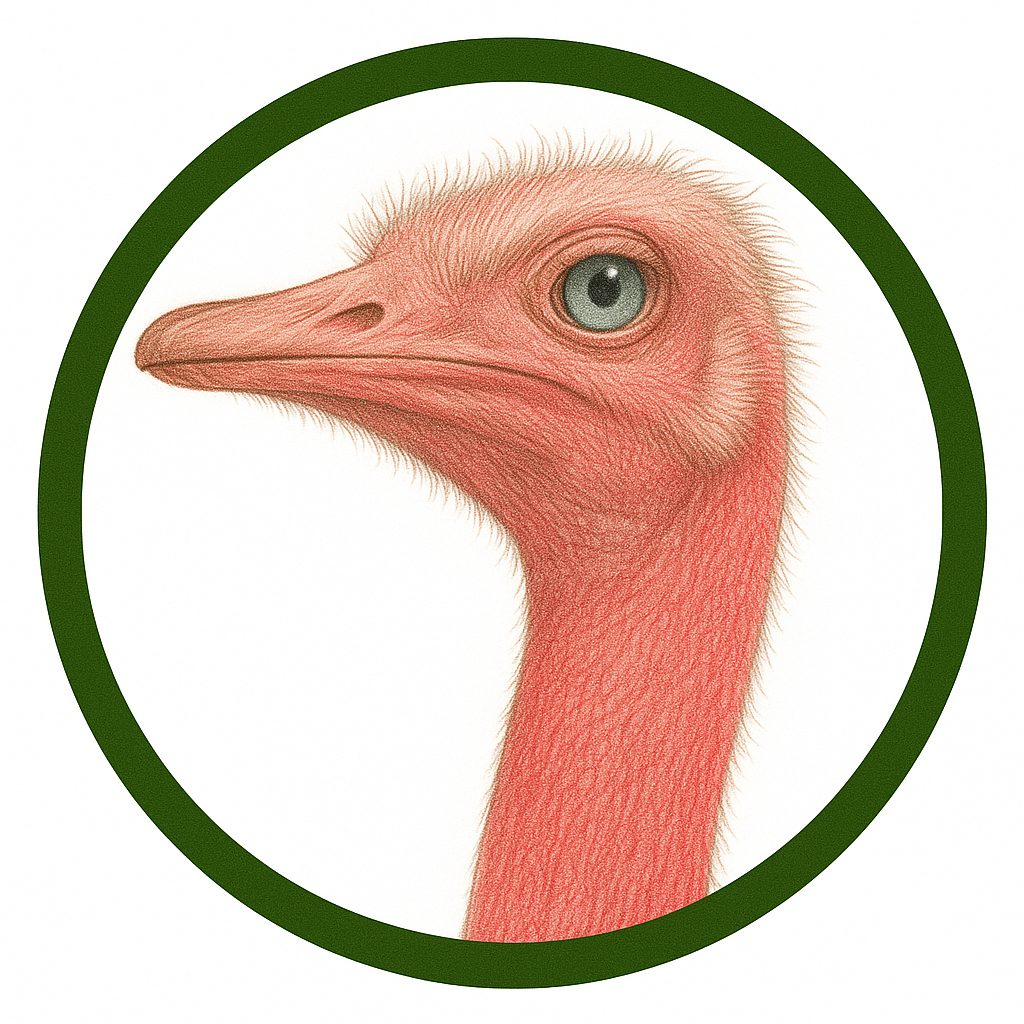
The Masai ostrich, also known as the pink-necked ostrich or East African ostrich, is a large subspecies of the common ostrich ( Struthio camelus ) native to eastern Africa.
| Kingdom | Animalia |
| Phylum | Chordata |
| Class | Aves |
| Order | Struthioniformes |
| Family | Struthionidae |
| Genus | Struthio |
| Species | Struthio camelus |
The Masai ostrich, also known as the pink-necked ostrich or East African ostrich, is a large subspecies of the common ostrich (Struthio camelus) native to eastern Africa. It was first described in 1898 by the German zoologist and ornithologist Oscar Neumann. Together with the other ostriches, it is the largest living bird in the world, and it is distinguished by the pinkish tone that the bare skin of the neck and legs of the males takes on, especially during the breeding season.
Like all birds of its genus, it has no keel on its breastbone and cannot fly, but it is perfectly adapted to running in open country thanks to its long, powerful legs.
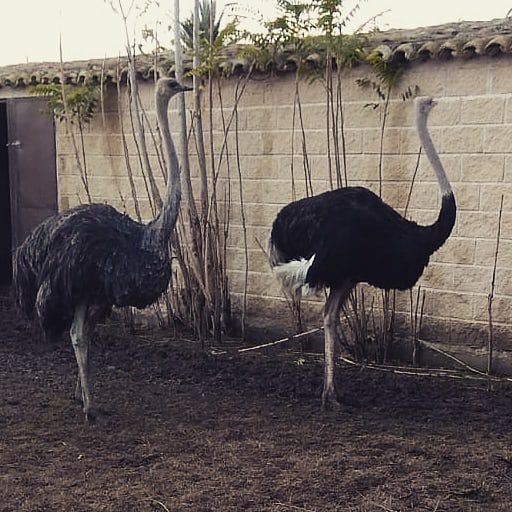
It inhabits the savannas and semi-arid plains of southern Kenya and Tanzania, in eastern Africa, where it shares its habitat with the great herds of African herbivores.
It is a practically herbivorous animal: it feeds on grasses, shrubs, herbs, leaves and succulent plants, and only occasionally eats flowers, fruit, seeds or small animal prey such as lizards and insects. Having no teeth, it swallows small stones, which accumulate in the gizzard to grind up its food.
The breeding season coincides with the dry season, between July and October. During courtship, the pinkish colouring of the male's neck and legs intensifies as a sexual signal. The female lays between 20 and 25 eggs, which are incubated for a period of 42 days.
Although it has no teeth, the Masai ostrich can carry up to a kilo of stones in its stomach, which it swallows on purpose to grind plant food before digesting it. Nowadays this subspecies is also farmed for its eggs, meat and feathers.
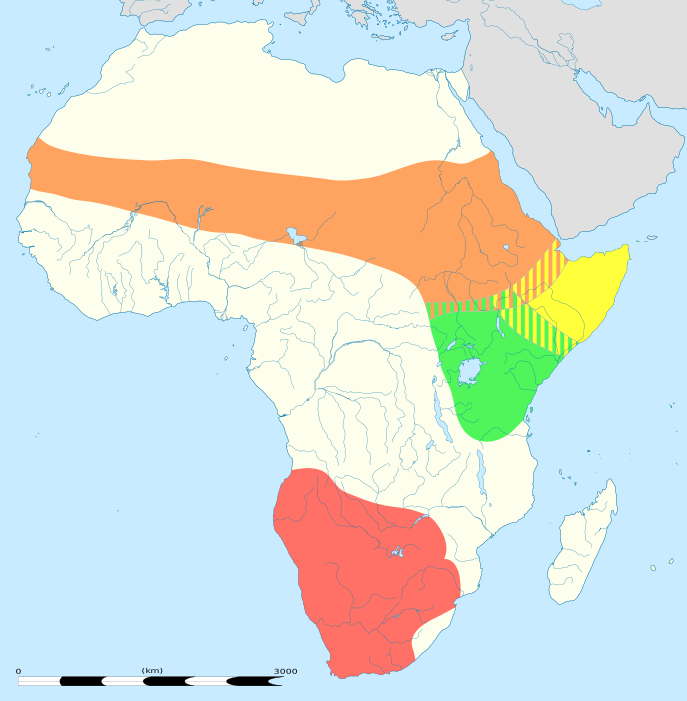 Source: Wikimedia Commons — Struthio camelus distribution.svg