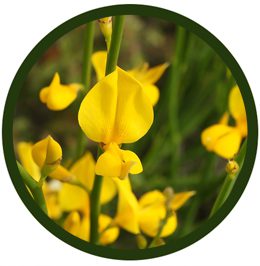
Retama is a shrub with an almost bare appearance and flexible green branches, typical of the dehesas and steppes of central Iberia.
| Kingdom | Plantae |
| Division | Magnoliophyta |
| Class | Magnoliopsida |
| Order | Fabales |
| Family | Fabaceae |
| Genus | Retama |
| Species | Retama sphaerocarpa |
It is a shrub of up to 3 metres with numerous slender, flexible, greyish-green branches, heavily branched and with almost no visible leaves for most of the year. In spring it is covered in small white flowers with yellowish centres, which are very rich in nectar for bees.
Its fruit is a small, rounded, almost spherical pod containing a single seed.
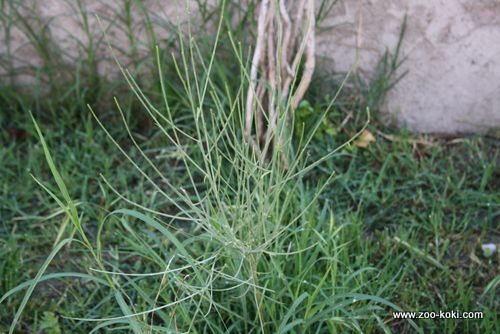
It is native to the Iberian Peninsula and North Africa. It is one of the most characteristic species of the dehesas and steppes of central and southern Spain, including the Toledo region, where it dots the pastures and wasteland with patches of green. Its deep roots allow it to survive long periods of extreme drought.
Its almost leafless appearance is no accident: photosynthesis is carried out mainly by its green stems, an adaptation that reduces the surface area for evaporation and allows it to withstand the heat and lack of water typical of the continental climate of the Meseta. It gives its name to numerous Spanish places and villages called “Retamar” or “Retamosa”.