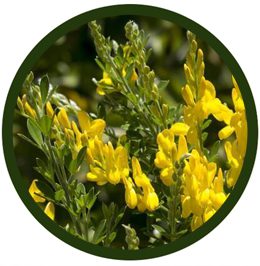
Broom, or common broom, is a deciduous shrub with green stems and yellow flowers that lights up Atlantic and Mediterranean scrubland in spring.
| Kingdom | Plantae |
| Division | Magnoliophyta |
| Class | Magnoliopsida |
| Order | Fabales |
| Family | Fabaceae |
| Genus | Cytisus |
| Species | Cytisus scoparius |
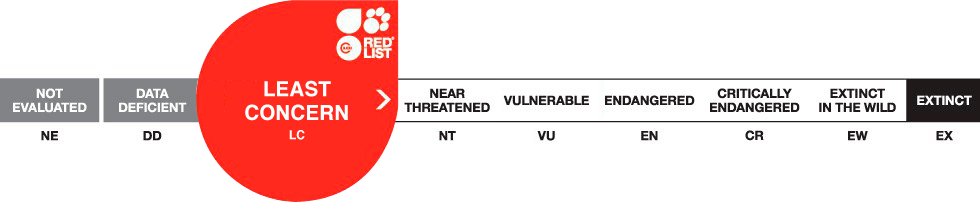
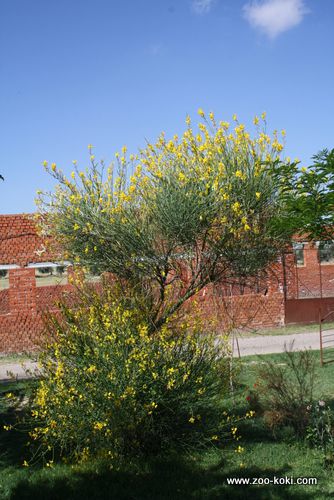
It is a deciduous shrub of up to 2-3 metres with numerous thin, angular green stems, which carry out a good part of the plant's photosynthesis. Its leaves are small and sparse, so at first glance the plant looks almost bare of foliage.
In spring it becomes covered in abundant yellow butterfly-shaped flowers, typical of legumes, followed by flat black pods that twist as they dry and burst open suddenly, ejecting the seeds.
It is native to western and central Europe, including the Iberian Peninsula, where it colonises acidic, poor soils, woodland clearings and roadsides. Introduced to other continents as an ornamental plant, it has become an invasive species in parts of the Americas and Oceania.
Its common name, “broom”, and its scientific epithet “scoparius” (from the Latin “scopa”, broom) recall the traditional use of its flexible branches to make rustic brooms. On hot days, its ripe pods burst with a characteristic crack that scatters the seeds several metres away.