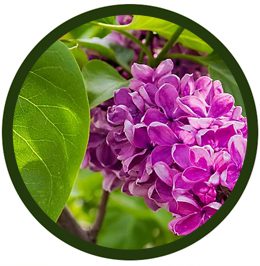
The lilac or common lilac (Syringa vulgaris) is a deciduous shrub of the olive family, native to the Balkans and cultivated all over the world for its showy, fragrant spring flowers.
| Kingdom | Plantae |
| Division | Magnoliophyta |
| Class | Magnoliopsida |
| Order | Lamiales |
| Family | Oleaceae |
| Genus | Syringa |
| Species | Syringa vulgaris |
The lilac is a deciduous shrub, or small multi-stemmed tree, that usually reaches between 4 and 7 metres in height. Its leaves are opposite, simple, heart-shaped or oval, and fall in autumn after turning yellowish.
Its most characteristic feature is its flowers, small and tubular, grouped in dense panicles 8 to 18 cm long that appear in spring. Their colour ranges from lilac to mauve and white depending on the variety, and they give off a sweet, intense perfume much appreciated in gardening. After flowering, dry capsule-shaped fruits with winged seeds form.
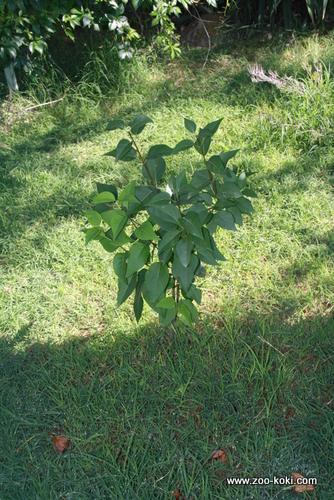
It is native to the rocky, mountainous areas of the Balkans in south-eastern Europe, where it grows wild on stony, sunny slopes.
Thanks to its hardiness and tolerance of cold, it has become naturalised and widely cultivated in central and northern Europe, as well as in the Americas, and today it is one of the most popular ornamental shrubs in temperate-climate gardens, flowering profusely between April and May.
The lilac is the official flower of the US state of New Hampshire, chosen as a symbol of the strong, resilient character of its inhabitants, able to bloom year after year despite the cold.
Hundreds of horticultural varieties have been created from the original species, from white flowers to very dark lilacs, including double forms in which the stamens turn into extra petals, which greatly increases the showiness of their clusters.