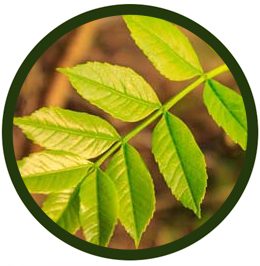
The narrow-leaved ash (Fraxinus angustifolia) is a deciduous tree of the olive family, typical of riverbanks in southern Europe and highly representative of the gallery forests of the Iberian Peninsula.
| Kingdom | Plantae |
| Division | Magnoliophyta |
| Class | Magnoliopsida |
| Order | Lamiales |
| Family | Oleaceae |
| Genus | Fraxinus |
| Species | Fraxinus angustifolia |
It is a deciduous tree that can exceed 30 metres in height, with a broad, rounded crown and greyish bark that cracks lengthwise with age. Its leaves are compound, made up of 7 to 9 oval-lanceolate leaflets with the margin finely toothed in the upper half.
One feature that distinguishes it from close relatives, such as the common ash (Fraxinus excelsior), is its light brown buds, as opposed to the black buds of the latter. Its inconspicuous flowers, which have no petals, appear before the leaves and give rise to winged fruits called samaras, linear-lanceolate in shape, which are dispersed by the wind.
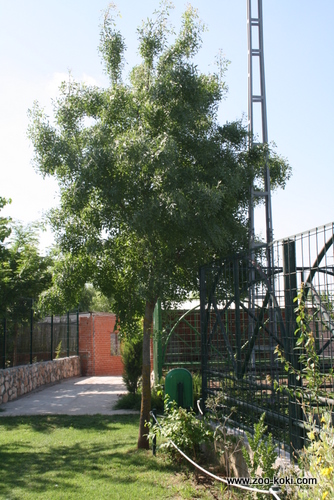
It is native to southern Europe, south-west Asia and north-west Africa, and on the Iberian Peninsula it is the dominant ash species in Mediterranean riparian forests. It prefers siliceous soils with a fluctuating water table, typical of the floodplains and flood meadows of rivers and streams.
Together with poplars, willows and elms, it forms the so-called gallery forests that line watercourses, ecosystems of great value for the shade, moisture and shelter they provide to many animal and plant species.
It has traditionally been managed by pollarding, a technique that involves periodically cutting the upper branches to obtain firewood and fodder, giving rise to the characteristic pollards with thick trunks and renewed crowns that can still be seen along some Spanish riverbanks.
As early as Roman times, the agronomist Columella recommended its leaves as feed for livestock, a use that remained alive in traditional farming for centuries. In addition, its trunks support numerous lichen communities and help to stabilise the banks of rivers and streams.