The wild olive is the wild variety of the olive tree, an evergreen shrub or small tree typical of Mediterranean scrubland from which the cultivated olive varieties are derived.
| Kingdom | Plantae |
| Division | Magnoliophyta |
| Class | Magnoliopsida |
| Order | Lamiales |
| Family | Oleaceae |
| Genus | Olea |
| Species | Olea europaea var. sylvestris |
It is an evergreen shrub or small tree, squatter and thornier than the cultivated olive, which rarely exceeds 5-8 metres in height in the wild. Its leaves are opposite and lanceolate, greyish-green on the upper side and silvery underneath.
It produces small whitish flowers grouped in clusters, from which the fruit develops: the “acebuchina”, a wild olive that is smaller and has less flesh than that of the cultivated olive.
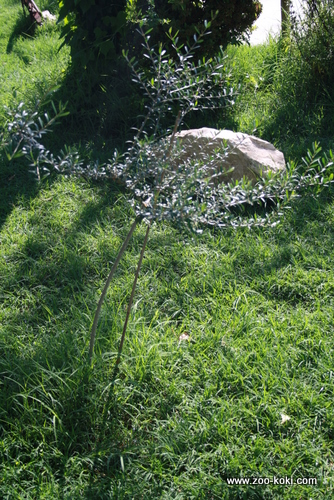
It is typical of the Mediterranean basin, where it is part of the scrub and sclerophyllous forest, in formations known as wild olive groves (“acebuchales”). It is regarded as the wild ancestor of the cultivated olive (Olea europaea var. europaea), from which it differs by its smaller leaves, greater thorniness and smaller fruit.
Wild olive groves are recognised as a habitat of Community interest in the European Union because of their high ecological value. In addition, thanks to its hardiness and resilience, the wild olive has traditionally been used as a rootstock onto which cultivated olive varieties are grafted.