
The white poplar is a deciduous riverside tree, easily recognisable by the whitish, velvety undersides of its leaves, which shimmer in the wind.
| Kingdom | Plantae |
| Division | Magnoliophyta |
| Class | Magnoliopsida |
| Order | Malpighiales |
| Family | Salicaceae |
| Genus | Populus |
| Species | Populus alba |

It is a deciduous tree of upright habit that can reach about 25 metres in height. The bark, the young branches and, above all, the undersides of the leaves are covered in a white, felty down that contrasts with the dark green of the upper surface.
When the wind moves its crown, the contrast between the two sides of the leaf produces a characteristic silvery effect.
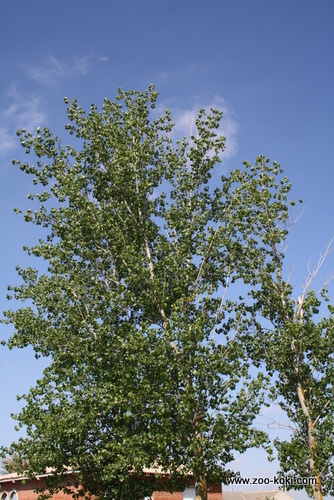
It is native to Europe and western Asia, and grows naturally in riparian woodland beside rivers and in damp areas, in regions with warm summers and cool winters. In Spain it is common along riverbanks and in poplar groves across much of the peninsula.
Leonardo da Vinci is believed to have painted the Mona Lisa on a panel of white poplar wood, a material prized since ancient times for its lightness and fine grain, and still used today in light carpentry and in the manufacture of paper pulp.