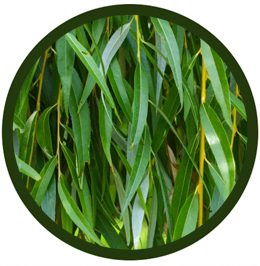
The weeping willow is a deciduous tree with an unmistakable silhouette, with long, hanging branches that almost brush the ground or the water.
| Kingdom | Plantae |
| Division | Magnoliophyta |
| Class | Magnoliopsida |
| Order | Malpighiales |
| Family | Salicaceae |
| Genus | Salix |
| Species | Salix babylonica |
It is a medium-sized tree, between 8 and 12 metres tall, with a broad, rounded crown made up of slender, flexible, strongly drooping branches. Its leaves are narrow and elongated, with a finely serrated edge, and turn yellow in autumn before falling.
It is native to central and eastern Asia, especially northern and central China, from where it spread as an ornamental tree along rivers and ponds all over the world thanks to the beauty of its weeping habit.
Its scientific name, “babylonica”, is due to Linnaeus wrongly believing that the species came from Babylon, in Mesopotamia, confusing it with the willows mentioned in Psalm 137 (“By the rivers of Babylon”). In reality, the weeping willow is native to China.