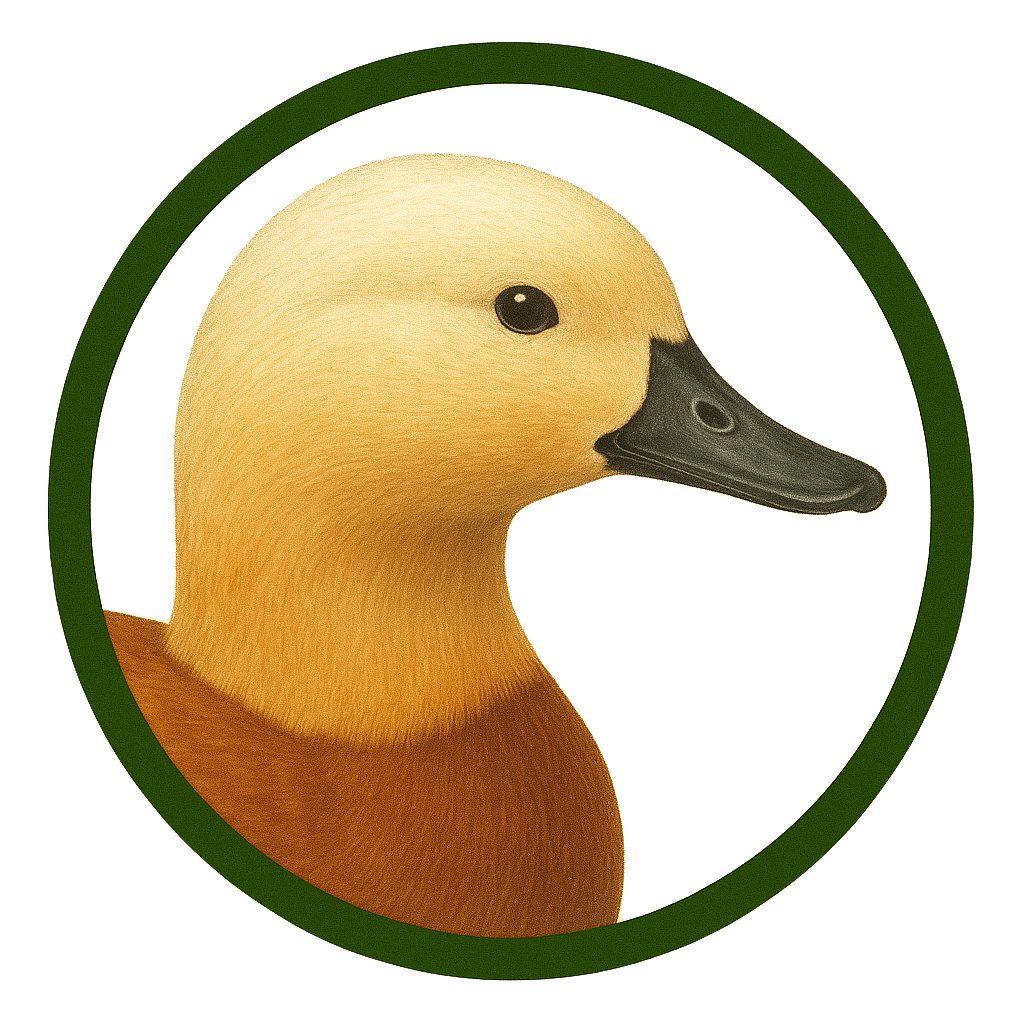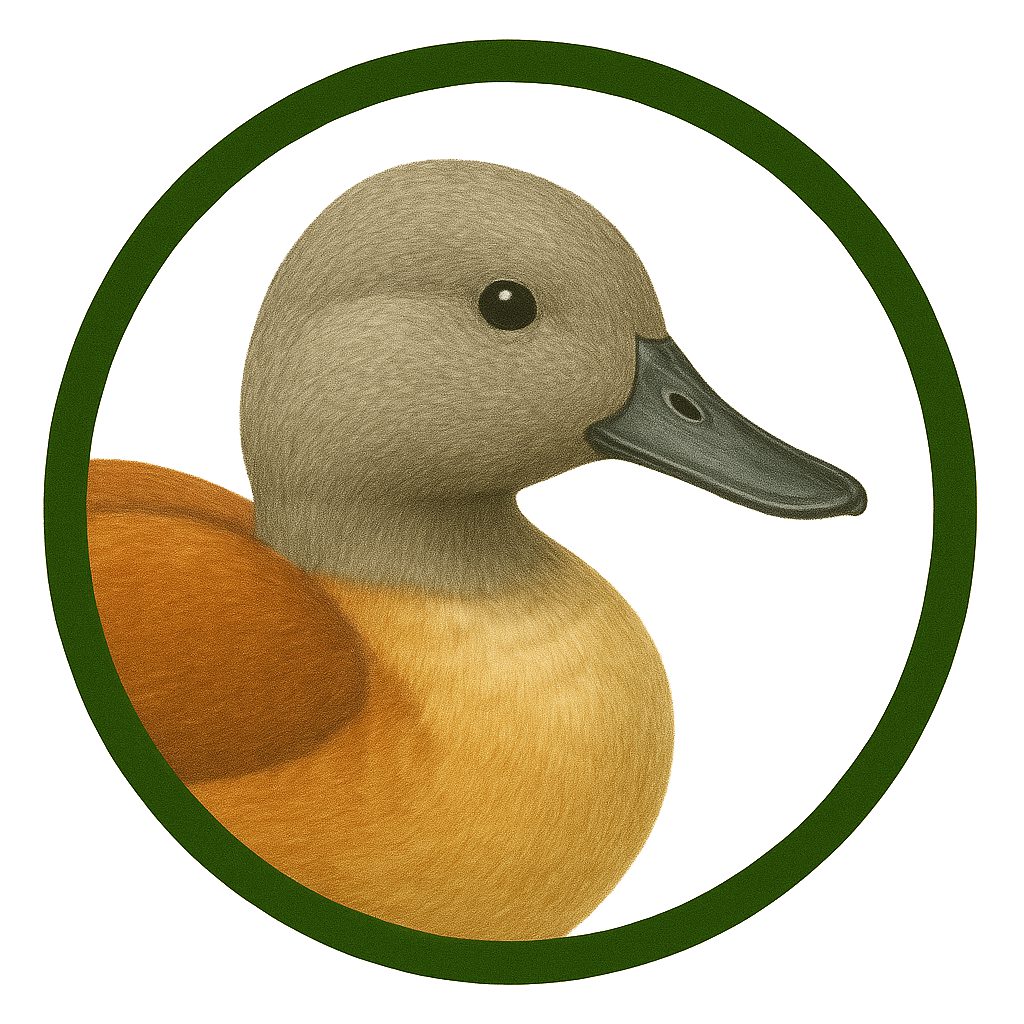
The Cape shelduck (Tadorna cana) is native to the far south of Africa.
| Kingdom | Animalia |
| Phylum | Chordata |
| Class | Aves |
| Order | Anseriformes |
| Family | Anatidae |
| Genus | Tadorna |
| Species | Tadorna cana |
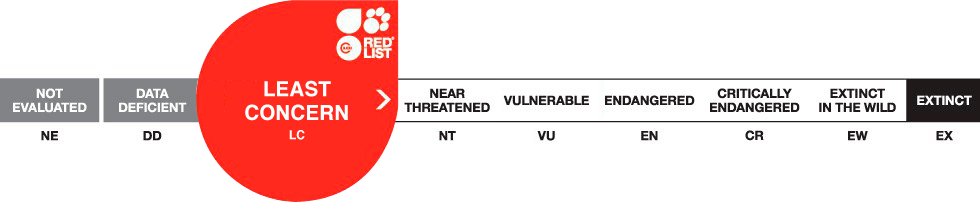
The Cape shelduck (Tadorna cana) is native to the far south of Africa. It measures about 64 cm in length and shows marked sexual dimorphism: the male has a grey head, while the female has a white face with a dark grey crown, nape and sides of the neck; both share a reddish body with wings streaked with black, white and green.
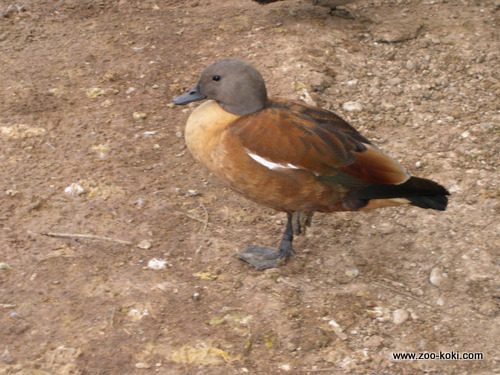
It lives on rivers and lakes in the far south of Africa, where it can be seen in large flocks. It is a sedentary bird, although it travels to lakes far from its breeding areas to moult. It is considered common within its range, although this range is limited.
It feeds on plants, leaves and flowers, algae and grains; it also eats small invertebrates.
The breeding season begins in spring, in May. They nest in holes in the ground or among rocks; the nest may be as much as two kilometres from the nearest water source. The clutch consists of 6 to 15 eggs; the mother incubates them for about 30 days, while the father stays nearby during this time. The pair shows strong fidelity and stays together for several years.
To nest, the Cape shelduck often makes use of abandoned burrows of other burrowing animals, such as those of the aardvark, reusing underground shelters instead of building its own nest from scratch.