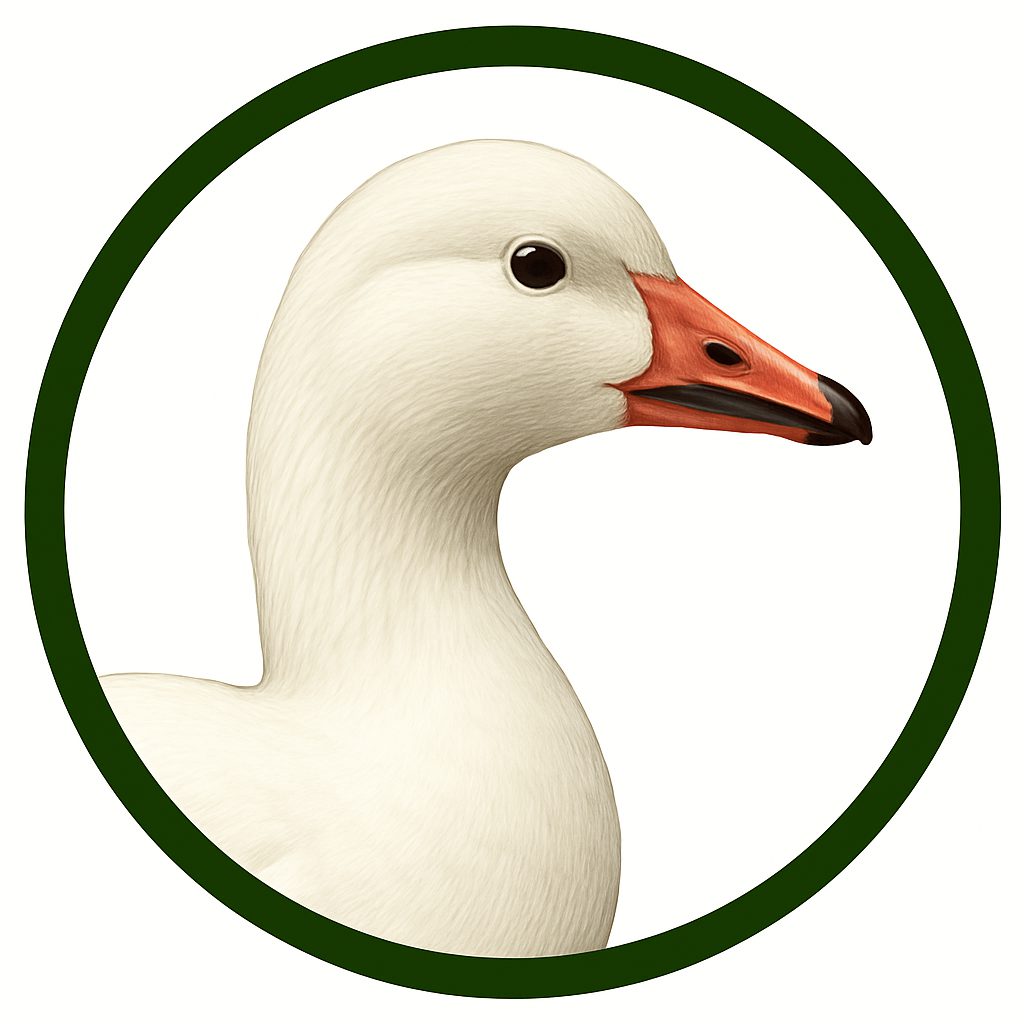
The snow goose ( Anser caerulescens ) is a medium-to-large goose, 63 to 79 cm long (up to nearly 90 cm in the larger subspecies), with a wingspan of 135 to 165 cm; the largest individuals can weigh more than 4 kg.
| Kingdom | Animalia |
| Phylum | Chordata |
| Class | Aves |
| Order | Anseriformes |
| Family | Anatidae |
| Genus | Anser |
| Species | Anser caerulescens |
The snow goose (Anser caerulescens) is a medium-to-large goose, 63 to 79 cm long (up to nearly 90 cm in the larger subspecies), with a wingspan of 135 to 165 cm; the largest individuals can weigh more than 4 kg. It occurs in two colour morphs: the white form, with entirely white plumage apart from the black wingtips, and the blue form, with bluish-grey plumage and a white head; for years the two forms were considered separate species.
It breeds on the northern coast of North America, Wrangel Island, Greenland and north-eastern Siberia, in marshy areas of the Arctic tundra, forming colonies that can gather thousands of pairs. In winter it migrates south to the southern United States and Mexico, where it forms large flocks.
It feeds by digging for roots and bulbs, and by grazing on the shoots and leaves of herbaceous and aquatic plants.
It is a highly social species, even during the breeding season, and pairs nest very close to one another. The nest is a hollow in the ground, shaped with the bill and lined with dry vegetation. The clutch consists of 4 to 5 eggs, which the female incubates for about 23 days, while the male later helps to look after and defend the goslings, which fly at 40-50 days old.
After breeding, snow geese set off on migrations in flocks that sometimes number several thousand individuals, one of the most remarkable migratory spectacles among North American waterfowl.