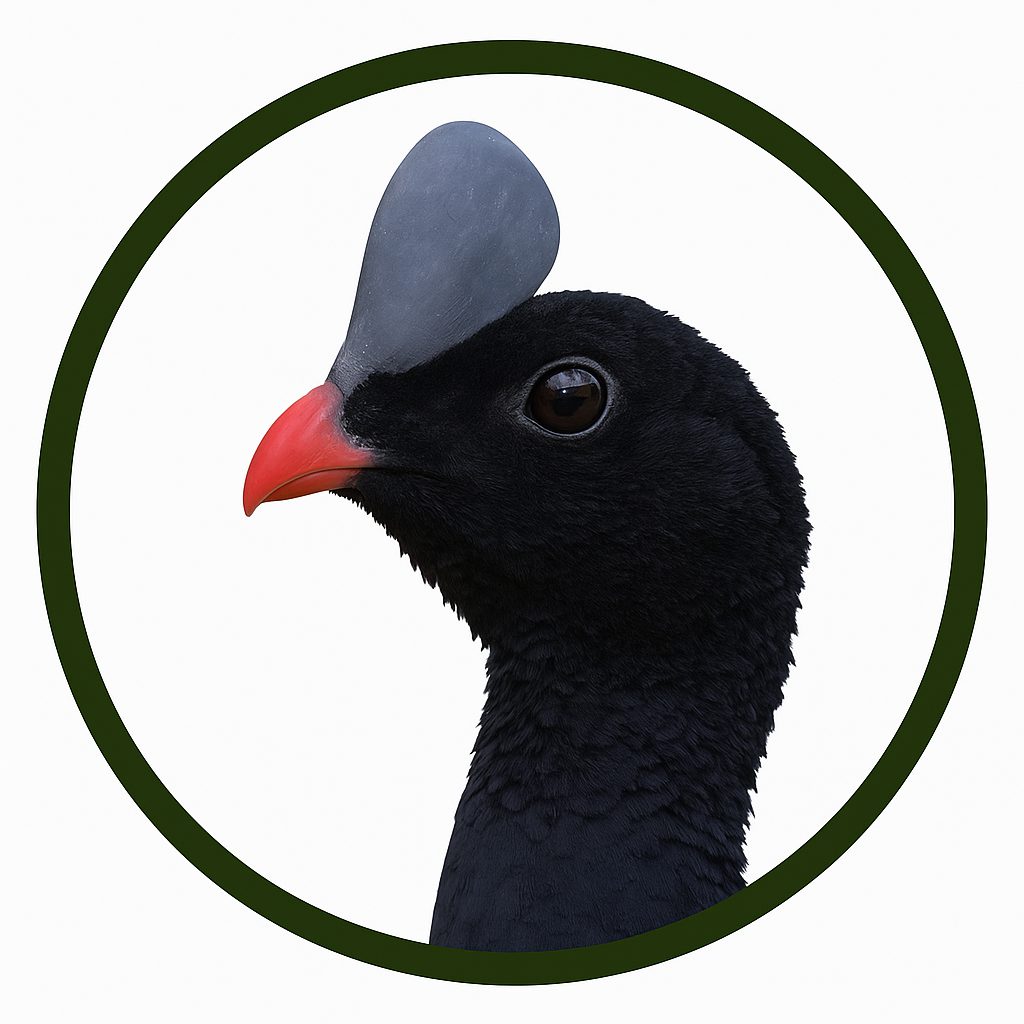
The helmeted curassow or casque-headed curassow ( Pauxi pauxi ) is a galliform bird of the family Cracidae, described by Linnaeus in 1766. It is a large species, 80 to 100 cm long; males weigh around 3.6 kg and females about 2.6 kg.
| Kingdom | Animalia |
| Phylum | Chordata |
| Class | Aves |
| Order | Galliformes |
| Family | Cracidae |
| Genus | Pauxi |
| Species | Pauxi pauxi |
The helmeted curassow or casque-headed curassow (Pauxi pauxi) is a galliform bird of the family Cracidae, described by Linnaeus in 1766. It is a large species, 80 to 100 cm long; males weigh around 3.6 kg and females about 2.6 kg. Its most distinctive feature is a horny frontal protuberance, bluish-grey or whitish in colour, located above the bill. The plumage is predominantly black with a greenish sheen, with white underparts and tail tip, a reddish or orange bill and pinkish-red legs.
It inhabits the montane cloud forests of north-eastern Colombia and north-western Venezuela, between 500 and 2,200 m above sea level, including the Cordillera de Mérida and the Serranía del Perijá, occupying mainly the understorey and the forest floor.
It feeds mainly on fallen seeds and fruit, which it looks for in small groups or alone on the forest floor, supplementing its diet with insects and small animals.
The breeding season runs from March to April. It builds its nest in trees, at a height of between 4 and 6 m, where the female lays two cream-coloured eggs, which she incubates for approximately 30-34 days.
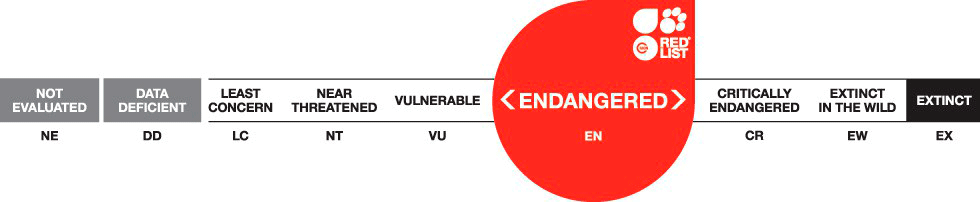
It is classed as Endangered by the IUCN, a category to which it was raised in 2008 after its decline was found to be faster than had been estimated. One of its main threats is hunting driven by unfounded beliefs about the supposed medicinal properties of its striking frontal casque.