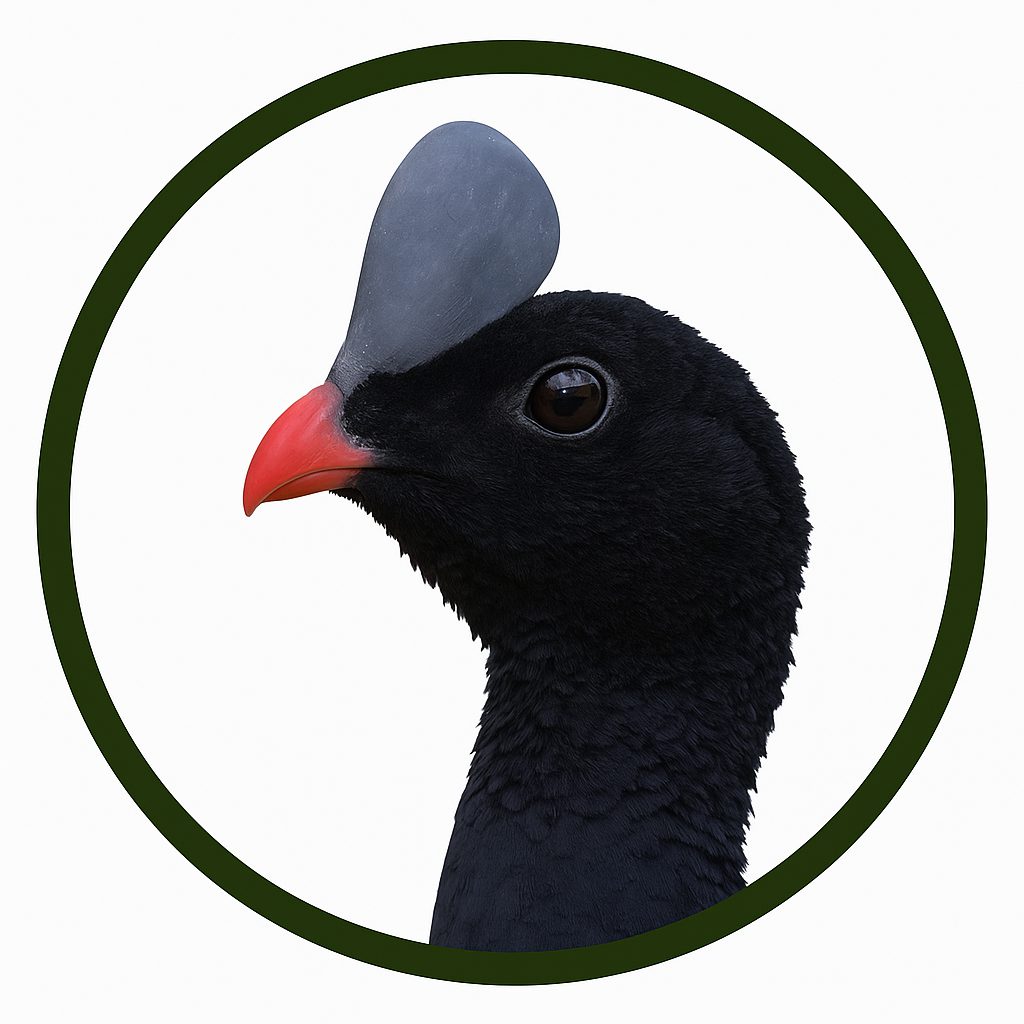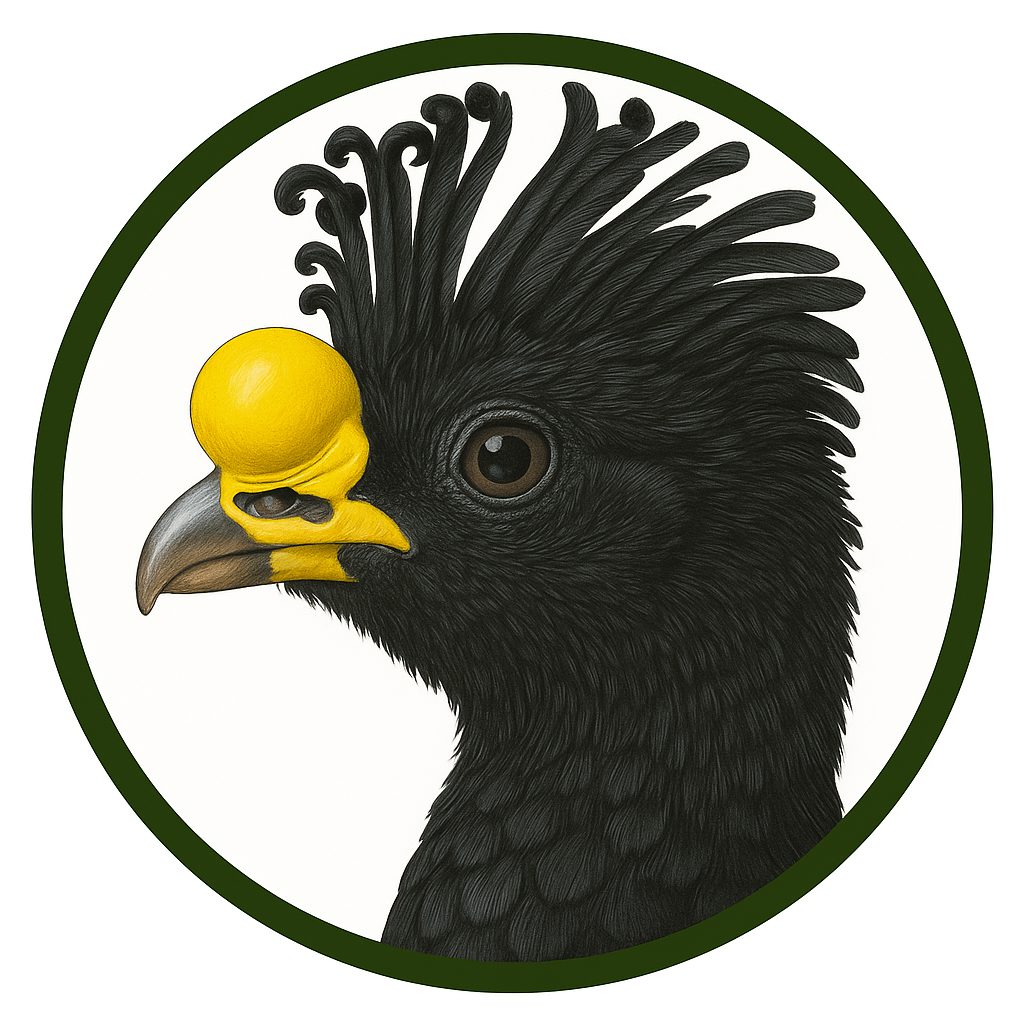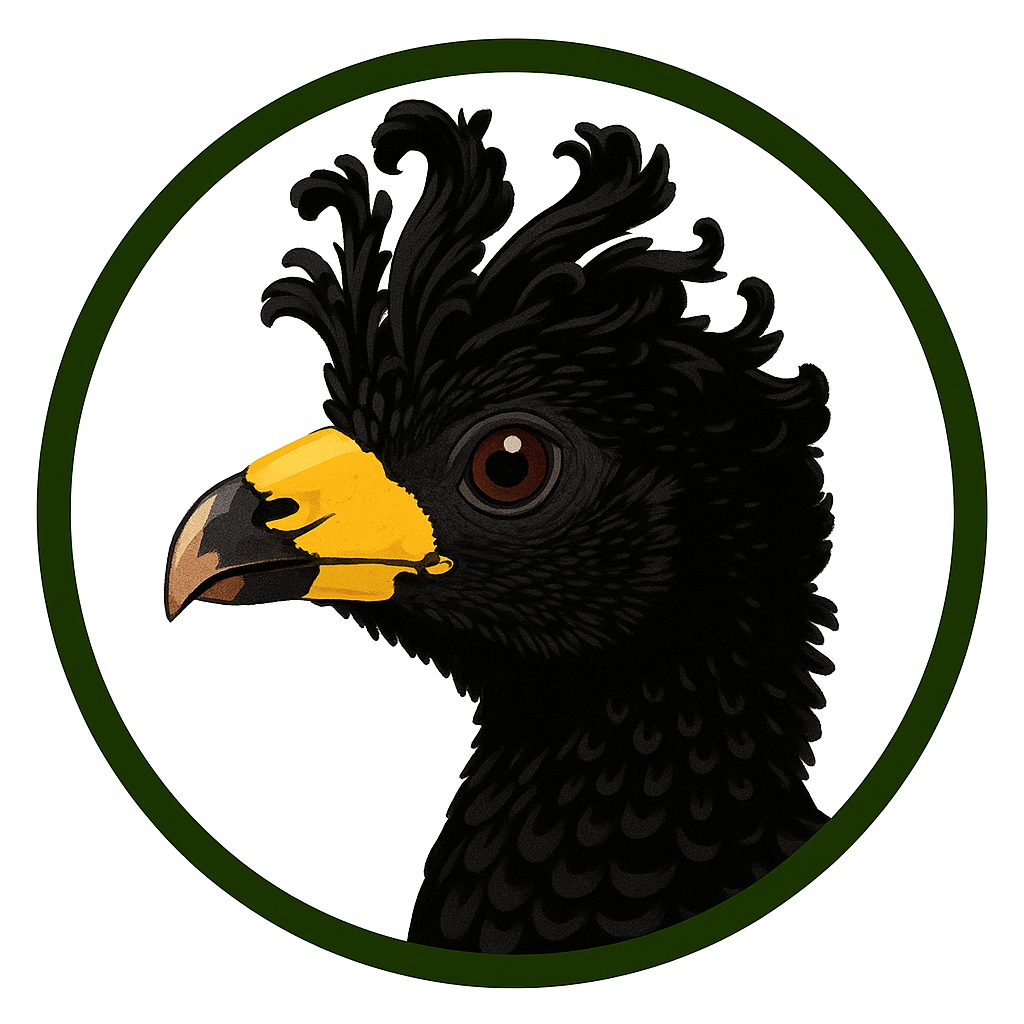
The razor-billed curassow or tubercle-billed curassow ( Mitu tuberosum ) is a galliform bird of the family Cracidae, described by Spix in 1825. It has glossy, bluish-black plumage, with white flanks, belly and tail tip.
| Kingdom | Animalia |
| Phylum | Chordata |
| Class | Aves |
| Order | Galliformes |
| Family | Cracidae |
| Genus | Mitu |
| Species | Mitu tuberosum |

The razor-billed curassow or tubercle-billed curassow (Mitu tuberosum) is a galliform bird of the family Cracidae, described by Spix in 1825. It has glossy, bluish-black plumage, with white flanks, belly and tail tip. It is recognisable by its red bill, which is laterally compressed and strongly curved, and by its orange legs. It measures approximately 83 cm in length.
It is typical of the Amazon region, occurring in Brazil, southern Colombia, the Peruvian Amazon and north-eastern Bolivia, where it inhabits humid rainforests and lowland forests.
Its diet is varied and includes seeds, fruit, leaves (mainly of ferns), palm stamens and invertebrates such as termites and other insects, occasionally supplemented by a small vertebrate.
The female incubates a clutch of two to three eggs alone. The nest described is a rounded basket built from branches, lianas and leaves; in northern Peru the breeding season runs from November to February. The chicks hatch already covered in down and are able to move shortly after hatching.
This species commonly follows columns of army ants (legionary ants) to catch the insects and small invertebrates that the ants flush out as they pass.